🏥 2026 MEDICARE GUIDE Updated March 2026 · Covering 2026 Plan Year Changes 🏥 MEDICARE 2026 · PARTS A B C D · MEDICARE ADVANTAGE · EDUCATIONAL GUIDE ONLY Medicare & Retirement Health Coverage · USA 2026 📅 March 2026 | ⏱ 12 min read | 🏥 65+ Americans — Read Before Enrolling What Every American Turning 65 — or Already on Medicare — Must Know Right Now Medicare 2026: What Changed, What It Costs, and How to Get the Most Coverage for Your Money 67 million Americans are enrolled in Medicare — and millions more become eligible every year. Yet most enrollees are paying more than they should, missing coverage they are entitled to, or stuck in plans that no longer fit their needs. Medicare changed in important ways for 2026. This is what you need to know — clearly, completely, and without the con...
$50M Physical Business · Real Revenue Nobody Is Doing These Yet 5 Physical Businesses That Can Make You $50 Million No apps. No crypto. No dropshipping. Five real-world businesses built with physical infrastructure — solving real human problems that exist right now, in every city on Earth, completely unsolved. 💧 Atmospheric Water 😴 Sleep Studios 🔥 Biochar Farms 🧬 Longevity Clinics 🦋 Urban Rewilding 💰 PHYSICAL BUSINESS IDEAS · $50M REVENUE PATH · REAL WORLD INFRASTRUCTURE · NOBODY DOING THIS YET · SOLVE REAL PROBLEMS · SCALE GLOBALLY · 2026 OPPORTUNITY · HUMAN NEEDS · NEW BUSINESS CATEGORY · 💰 PHYSICAL BUSINESS IDEAS · $50M REVENUE PATH · REAL WORLD INFRASTRUCTURE · NOBODY DOING THIS YET · SOLVE REA...
🚨 URGENT This Is Happening Right Now — March 2026 🚨 McKINSEY · WEF · GOLDMAN SACHS · MIT · OXFORD · ALL VERIFIED · 2026 AI & The Future of Work · The Most Urgent Article of 2026 📅 March 2026 | ⏱ 12 min read | 🚨 Read before it is too late The Report Every Working Adult Needs to Read — Right Now, In 2026 AI Is Making You Unemployable Right Now. And You Don't Know It Yet. You still have your job. Your salary came in last month. Your manager seems happy with your work. And according to three of the most comprehensive workforce studies ever conducted — by McKinsey, Goldman Sachs, and the World Economic Forum — the skills that got you that job are being automated right now, at a speed that most working adults have not yet registered. This is not a future warning. It is a present-tense eme...
What’s Really Happening Inside Your Body Right Now?
Discover the hidden biological changes happening inside your body every second. Simple explanation anyone can understand.
Please wait 0 seconds...
Scroll Down and click on Go to Link for destination
Congrats! Link is Generated
Future Biology · Mind & Body
The Invisible Revolution Happening Inside Your Body Right Now
Trillions of organisms living in your gut are quietly shaping your mood, your memories, and possibly your lifespan — and science is only beginning to understand what they want.
By Hezhinx2026 · 9 min read
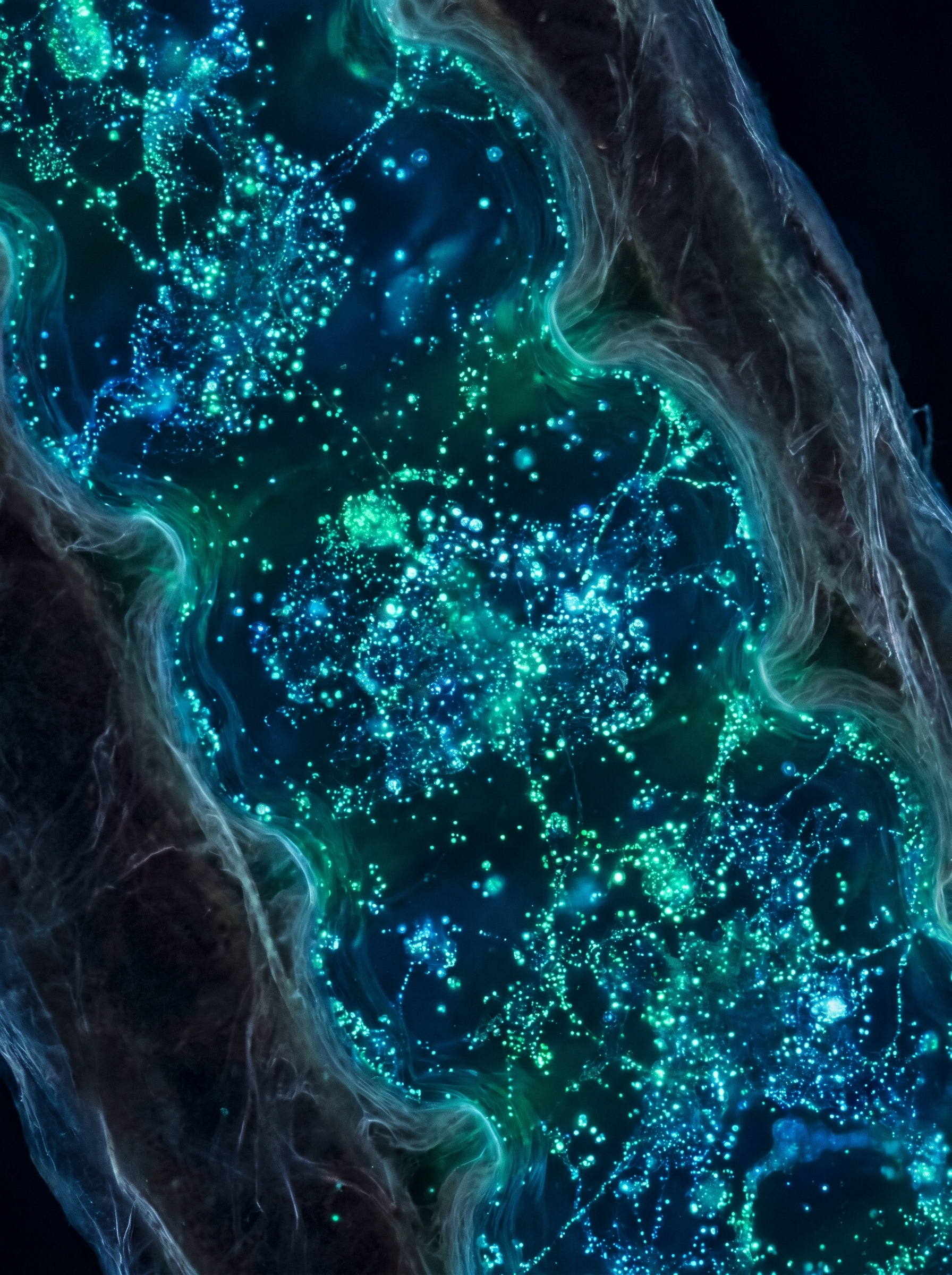
Concept: bioluminescent microbiome colonies inside the human gut — a universe few have seen, yet every one of us carries it.
Nobody told you there was a second brain inside you. You weren't warned about the 100 trillion living organisms that colonized you before you could speak, before you could walk, before you had any say in the matter. And yet here they are — bacteria, fungi, archaea, viruses — running metabolic processes your own cells can't handle, sending chemical signals up your vagus nerve, and quietly influencing decisions you believe are entirely your own.
This isn't science fiction. The human microbiome is, at this point, one of the most aggressively researched frontiers in medicine. And what researchers keep finding keeps rewriting what we thought we knew about the human body.
100TMicrobial cells in your gut
~90%Of serotonin made in gut
1.5 kgWeight of your microbiome
The Gut That Thinks
For most of modern history, the gut was a pipe. Something you put food into, waited, and the useful parts came out the other end. The enteric nervous system — the dense web of 500 million neurons lining your gastrointestinal tract — was treated as administrative plumbing. Not a decision-maker. Not a communicator.
That picture has been shattered. The enteric nervous system operates with enough complexity that neuroscientists have started calling it the "second brain," and it doesn't just process food — it processes feelings. Anxiety lives there. Grief can settle there. Some antidepressants work, in part, because of what they do to gut neurons, not just to the ones in your skull.
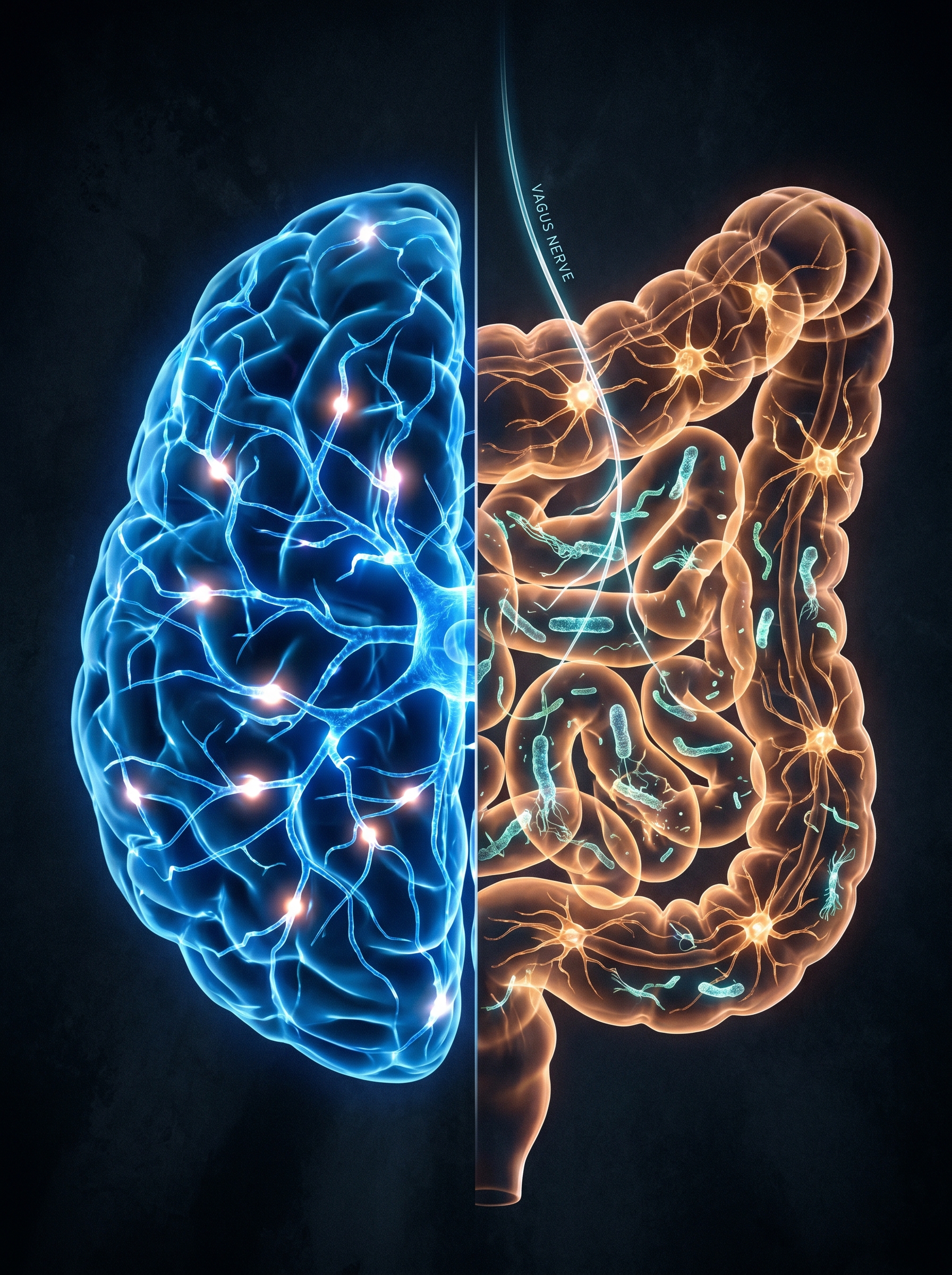
What makes this stranger is the direction of traffic. Most people assume the brain tells the gut what to do. In reality, roughly 90% of the signals on the vagus nerve — the long communication highway between gut and brain — travel upward. From gut to brain. Your intestines are talking to your prefrontal cortex far more often than your prefrontal cortex is talking back.
Your gut microbes produce over 30 neurotransmitters — including the same serotonin that makes antidepressants work. And they've been doing this for a hundred thousand years, with or without your permission.
— Frontier Neurogastroenterology Research, 2024
Your Mood Is a Microbial Negotiation
Here's the uncomfortable part. When you feel a sudden dip in mood on a Tuesday afternoon with no obvious cause, the leading suspects are increasingly not your thoughts. They're your microbes.
Gut bacteria produce short-chain fatty acids that regulate inflammation. They synthesize GABA, the brain's primary calming neurotransmitter. Certain strains — Lactobacillus rhamnosus, for instance — have been shown in peer-reviewed trials to reduce anxiety behaviors in mice as effectively as certain benzodiazepines. Researchers at University College Cork have linked specific bacterial compositions to resilience against clinical depression. And critically, the microbiome composition changes with your diet — sometimes within 24 hours.
What you eat for breakfast on Monday is already beginning to change the community that governs your emotional baseline by Wednesday.
The vagus nerve: a two-way highway where most traffic, contrary to common assumption, runs upward — from gut to brain.
The Memory Connection Nobody Is Talking About
Alzheimer's researchers made a quiet, startling discovery a few years back. Patients with early-stage Alzheimer's disease show measurably different gut microbiome compositions compared to people of the same age with healthy cognition. The association is consistent enough that some researchers are now asking whether gut dysbiosis — a disruption of the microbial ecosystem — might precede cognitive decline, not merely accompany it.
A 2023 study out of Wuhan University transplanted gut bacteria from elderly humans into young, germ-free mice. Within weeks, those young mice were performing worse on memory tasks. Their brains showed early markers of neuroinflammation. The bacteria weren't just passengers — they were drivers.
This line of research is still early. Causality is hard to establish. But the momentum is unmistakable: we may one day treat early cognitive decline not with a drug designed to clear amyloid plaques, but with a personalized cocktail of bacteria delivered as a pill.
What the Research Has Confirmed So Far
Anxiety & Depression: Low microbial diversity consistently correlates with higher rates of anxiety disorders across multiple large population studies.
Immunity: Roughly 70–80% of your immune cells reside in or around the gut. The microbiome trains them constantly.
Sleep: Gut bacteria regulate melatonin precursors and circadian-linked metabolites. Disrupted microbiomes link to disrupted sleep cycles.
Longevity: Centenarians in Sardinia, Okinawa, and the Caucasus share unusually high microbial diversity — and similar dietary patterns that cultivate it.
Parkinson's Disease: Early-stage Parkinson's patients show gut inflammation and microbial changes up to a decade before motor symptoms appear.
The Coming Era of Personalized Microbiome Medicine
The pharmaceutical industry has already noticed. Venture capital poured over $4 billion into microbiome-focused startups between 2020 and 2024. The FDA approved the first-ever microbiome-based drug — Vowst — in 2023, a live bacterial cocktail to treat recurrent C. difficile infections. It was the first domino in what most researchers expect will be a cascade.
Within the next decade, the plausible clinical pipeline includes psychobiotics — live bacteria prescribed specifically to treat depression or anxiety — along with dietary protocols designed not for weight loss but for microbiome optimization, and fecal microbiota transplants refined to target specific neurological conditions. The weird science of transplanting someone else's gut ecosystem is quickly becoming real medicine.
What's more disruptive than any single drug is the framework shift. Medicine built around targeting individual molecules — one drug, one receptor — is beginning to give way to a systems approach where we manage communities of organisms to shift health outcomes at scale. It's ecology applied to the body. And it changes everything about how treatment is designed.
We are not single organisms. We are ecosystems in motion. And the sooner medicine treats us that way, the sooner the real breakthroughs begin.
— Dr. Erica Sonnenburg, Stanford Human Food Project
What You Can Actually Do Right Now
Here's the thing about all of this research that rarely makes it into the headlines: the interventions with the strongest evidence are not exotic or expensive. They are, embarrassingly, the oldest advice on Earth.
Dietary fiber feeds the bacteria that produce the butyrate that maintains the gut lining that keeps inflammation out of your bloodstream and your brain. Fermented foods — kimchi, kefir, plain yogurt, miso — introduce live microbial diversity that most modern diets have quietly stripped away. Antibiotic courses, necessary as they sometimes are, wipe out communities that may take months or years to recover, and sometimes never fully do.
The microbiome also responds to sleep, to exercise, and to chronic stress — specifically cortisol, which alters bacterial composition in measurable ways within days. Stress is not just in your head. It is, quite literally, in your gut, rewriting the ecosystem that talks back to your brain.
Science is telling us something our grandmothers knew by feel and our physicians dismissed for generations: that the body is not a machine with independent parts, but a conversation between communities — and most of those conversations start somewhere we've barely begun to listen to.
The gut-brain axis research referenced in this piece draws on published work from the Sonnenburg Lab at Stanford, the APC Microbiome Ireland institute, Wuhan University's 2023 cognition studies, and publicly available data from the Human Microbiome Project. Clinical applications remain in varying stages of trial and regulatory review.