🏥 2026 MEDICARE GUIDE Updated March 2026 · Covering 2026 Plan Year Changes 🏥 MEDICARE 2026 · PARTS A B C D · MEDICARE ADVANTAGE · EDUCATIONAL GUIDE ONLY Medicare & Retirement Health Coverage · USA 2026 📅 March 2026 | ⏱ 12 min read | 🏥 65+ Americans — Read Before Enrolling What Every American Turning 65 — or Already on Medicare — Must Know Right Now Medicare 2026: What Changed, What It Costs, and How to Get the Most Coverage for Your Money 67 million Americans are enrolled in Medicare — and millions more become eligible every year. Yet most enrollees are paying more than they should, missing coverage they are entitled to, or stuck in plans that no longer fit their needs. Medicare changed in important ways for 2026. This is what you need to know — clearly, completely, and without the con...
$50M Physical Business · Real Revenue Nobody Is Doing These Yet 5 Physical Businesses That Can Make You $50 Million No apps. No crypto. No dropshipping. Five real-world businesses built with physical infrastructure — solving real human problems that exist right now, in every city on Earth, completely unsolved. 💧 Atmospheric Water 😴 Sleep Studios 🔥 Biochar Farms 🧬 Longevity Clinics 🦋 Urban Rewilding 💰 PHYSICAL BUSINESS IDEAS · $50M REVENUE PATH · REAL WORLD INFRASTRUCTURE · NOBODY DOING THIS YET · SOLVE REAL PROBLEMS · SCALE GLOBALLY · 2026 OPPORTUNITY · HUMAN NEEDS · NEW BUSINESS CATEGORY · 💰 PHYSICAL BUSINESS IDEAS · $50M REVENUE PATH · REAL WORLD INFRASTRUCTURE · NOBODY DOING THIS YET · SOLVE REA...
Neuroscience · Identity World First · hezhinx You Might Be One of Them The 1% of Humans Who See the World Completely Differently — And Why You Might Be One Science has documented a specific pattern of brain activity — measurable, reproducible, and extraordinarily rare — that causes certain people to perceive connections, patterns, and possibilities that are genuinely invisible to the people around them. This is not a gift. It is not a curse. It is a different operating system. And the first sign you have it is that you have always felt slightly out of place in the world everyone else seems comfortable in. 1 in 100 Documented Divergent Thinkers · Real Neuroscience 🧠 Real Neuroscience 💎 Rare Perception 🔗 Pattern Recognition ❓ Are You One of Them? 💎 DIVERGENT THINKING DOCUMENTED · NEURAL CROSS-ACTIVATION PROVEN · 1% PATTE...
hezhinx is the science of being human.
We write verified, research-backed
articles on mind science, human
behaviour, body science, and business
ideas — told in a way nobody else does.
Real science. Real emotion. World
First insights every week.
We Can Now Change the Human Species — But Is It Right?
We are now entering an era where humans can directly edit the human genome. This raises powerful ethical questions about how far we should go,
Please wait 0 seconds...
Scroll Down and click on Go to Link for destination
Congrats! Link is Generated
Genetics · CRISPR · Future Science
We Can Now Edit the Human Species. Should We?
CRISPR gave science a tool so precise it can change a single letter in three billion. The question was never whether it would work. The question was always what we'd do once it did.
By Hezhinx2026 · 10 min read
CRISPR-Cas9 can locate a single genetic sequence among three billion base pairs and rewrite it with an accuracy that would have seemed like fantasy twenty years ago.
In November 2018, a Chinese scientist named He Jiankui stood before a conference room in Hong Kong and announced that he had edited the genomes of two human embryos, implanted them, and that the resulting twin girls — Lulu and Nana — had been born healthy. The room went very quiet. Then it went very loud. He Jiankui was subsequently arrested, tried, and sentenced to three years in a Chinese prison for practicing medicine illegally. But the girls exist. They are somewhere in the world right now, growing up, carrying in every cell of their bodies a genetic change that was designed in a laboratory, that will be passed to their children, and their children's children, for as long as their line continues.
That is what CRISPR makes possible. Not in theory. In practice. Already done.
The scientific community's fury at He Jiankui was not really about the technology. It was about the timing — he moved before the ethics caught up, before the safety data was sufficient, before anyone had agreed on the rules. But underneath the anger was something more uncomfortable: the recognition that the rules were always going to be the hard part. The technology was almost certainly going to work.
3BBase pairs in the human genome
1Letter CRISPR can change
7,000+Known genetic diseases
What CRISPR Actually Is
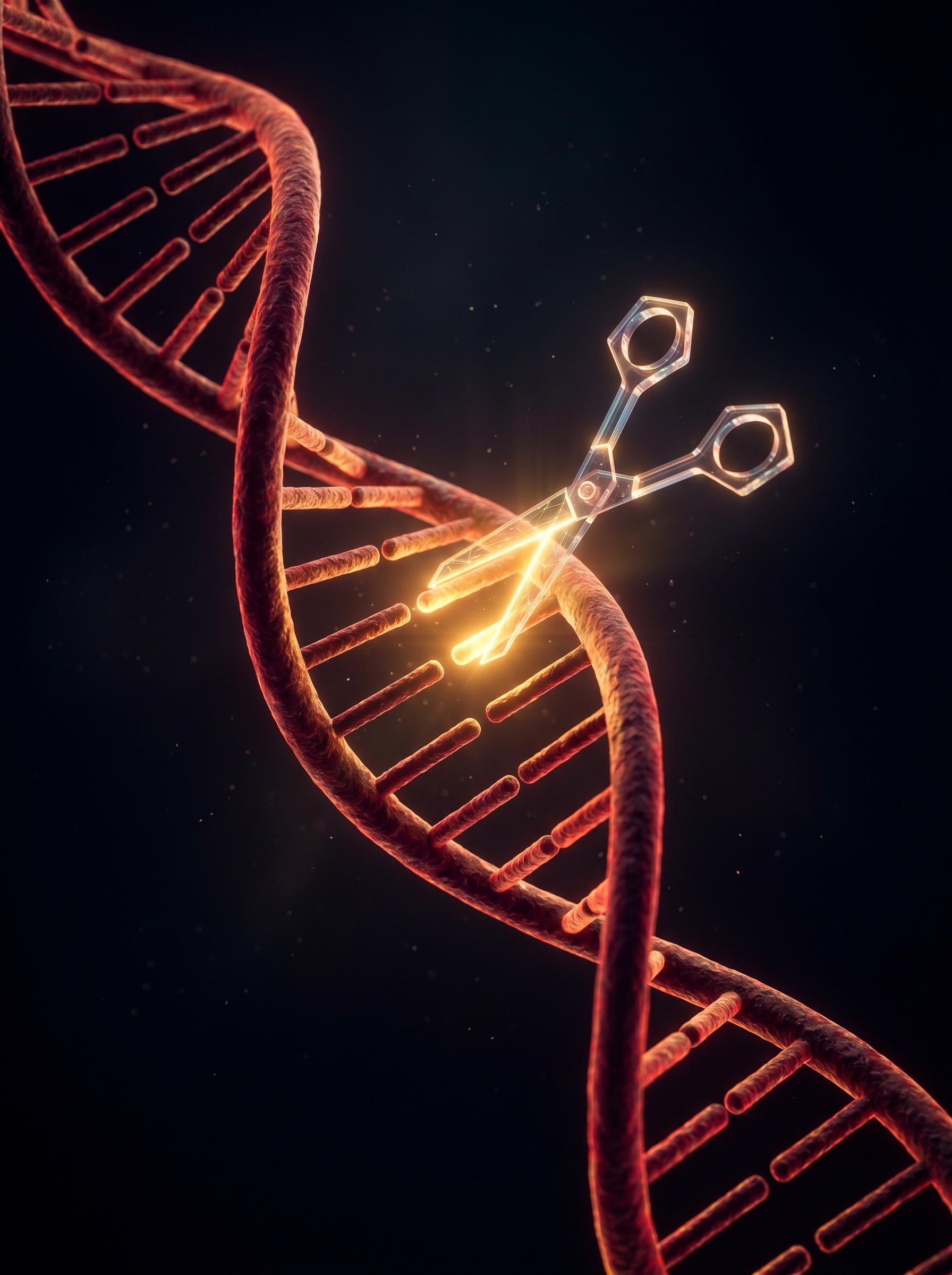
The name sounds designed by a marketing department, but it isn't. CRISPR stands for Clustered Regularly Interspaced Short Palindromic Repeats — a natural defense mechanism found in bacteria, used to store and recognize the genetic signatures of viruses that had previously attacked them. Scientists Jennifer Doudna and Emmanuelle Charpentier realized in 2012 that this bacterial immune memory could be repurposed as a molecular scissors — a programmable tool that could be sent to any location in any genome and told to cut.
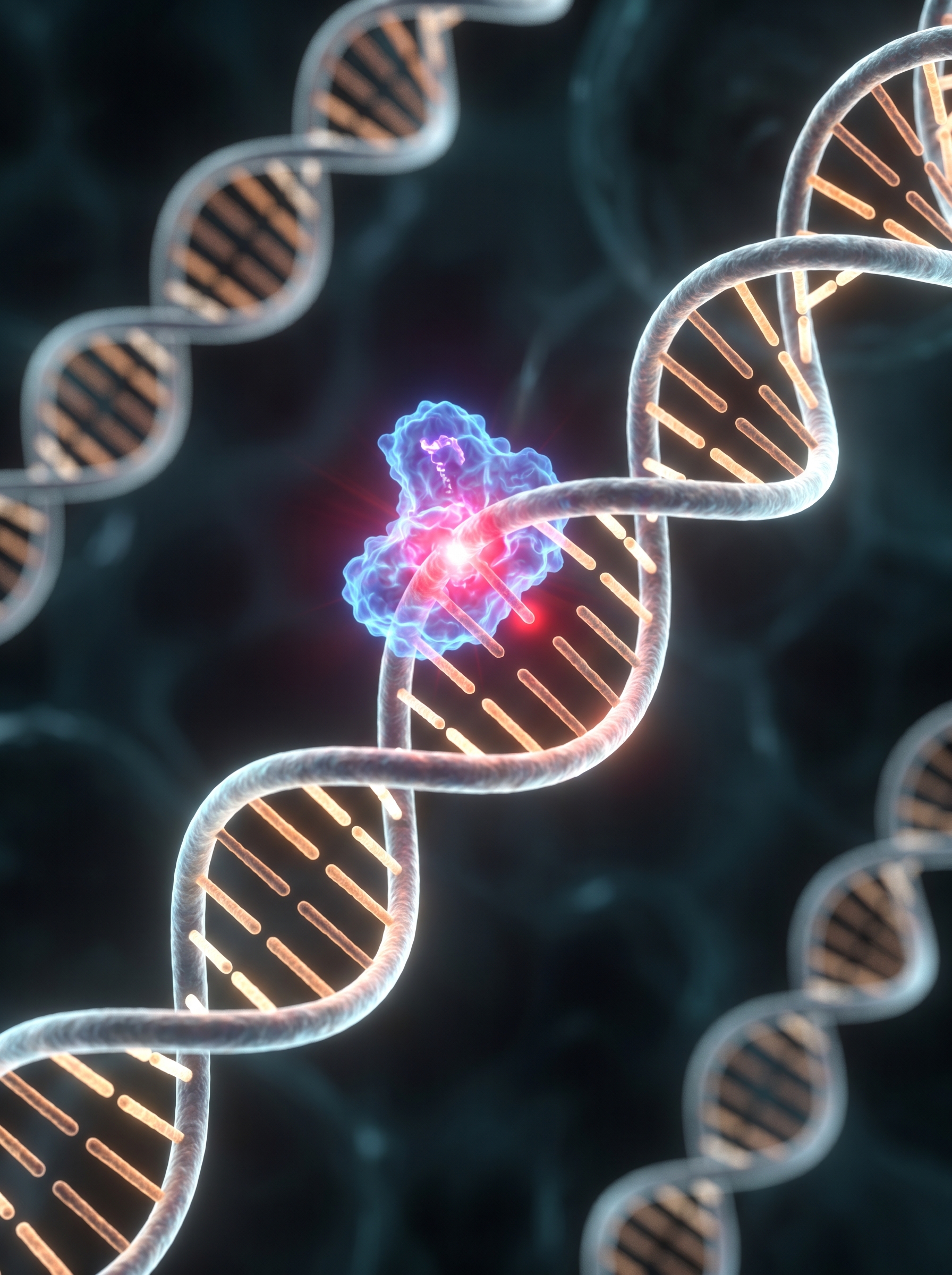
Pair it with a guide RNA that matches your target sequence, and CRISPR-Cas9 will find that exact location among three billion base pairs with remarkable accuracy. Cut the DNA there, and the cell's own repair mechanisms kick in. Direct those repair mechanisms correctly, and you can delete a gene, disable it, or replace it with a different sequence entirely.
Doudna and Charpentier won the Nobel Prize in Chemistry in 2020. By then, the technology had already escaped the lab and entered the clinic. The speed of that transition — from bacterial defense mechanism to Nobel Prize to approved human therapy in under a decade — is almost without precedent in the history of medicine.
I have never seen a technology move from discovery to clinical application this fast. And I have been in this field for thirty years. Nothing has moved like this.
— Dr. Francis Collins, Former Director, National Institutes of Health, 2022
What It Has Already Cured
In December 2023, the FDA approved two CRISPR-based therapies for sickle cell disease — a genetic condition that causes debilitating pain crises, organ damage, and shortened life expectancy, affecting millions of people worldwide and disproportionately those of African descent. One of them, Casgevy, developed by Vertex Pharmaceuticals and CRISPR Therapeutics, became the first CRISPR medicine ever approved for human use anywhere in the world.
The results from clinical trials were extraordinary by any standard. Patients who had suffered severe pain crises every year for their entire lives went crisis-free. Not reduced. Gone. One trial participant, Victoria Gray, had experienced so many hospitalizations that her children had stopped counting. After treatment, she described the absence of pain as something she had no prior frame of reference for. She had never known what that felt like.
Sickle cell was chosen as a first target not only because the need was urgent, but because the mechanism was clean — a single genetic mutation in a single gene, causing a single protein to fold incorrectly. Fix the gene, fix the protein, fix the disease. It was the ideal proof of concept. And it worked.
In clinical trials for sickle cell disease, CRISPR-based therapy eliminated severe pain crises in patients who had suffered them their entire lives. The FDA approved the first CRISPR medicine in December 2023.
The Pipeline Behind the Approval
Sickle cell disease was the opening act. Behind it is a clinical pipeline of staggering ambition. CRISPR therapies are in trials for beta-thalassemia, certain forms of blindness, Duchenne muscular dystrophy, and several cancers. Researchers at the University of Pennsylvania have used CRISPR to engineer T-cells that recognize and attack specific tumor types with a precision chemotherapy cannot approach. Early results in leukemia have drawn serious attention.
Beyond rare diseases, the implications extend into cardiovascular medicine. A condition called familial hypercholesterolemia — a genetic mutation that causes dangerously high LDL cholesterol regardless of diet — affects roughly one in 250 people globally and is a leading driver of early heart attacks. Intellia Therapeutics has demonstrated in human trials that a single CRISPR treatment can reduce LDL cholesterol by over 50%, potentially permanently, in a single dose. One shot. For life. That is not a marginal improvement over existing drugs. It is a different category of medicine.
CRISPR in the Clinic — Where Trials Stand in 2025
Sickle Cell Disease: FDA-approved (Casgevy, Dec 2023). First CRISPR therapy approved for human use. Trial data shows near-complete elimination of severe pain crises.
Beta-Thalassemia: Approved alongside sickle cell. Same mechanism — editing the gene that controls fetal hemoglobin production to compensate for the defective adult version.
High Cholesterol (PCSK9): Phase 2 trials showing 50%+ LDL reduction from a single in-vivo CRISPR treatment. Potential to replace daily statins permanently.
Blindness (Leber Congenital Amaurosis): Early trials showing partial vision restoration. First in-vivo CRISPR treatment delivered directly into a living patient's eye cells.
Cancer (T-cell therapies): CRISPR-engineered immune cells targeting specific tumors in early trials. Results in leukemia and multiple myeloma drawing significant research investment.
HIV: Experimental research stage. Goal: excise integrated viral DNA directly from infected cells. No approved therapy, but proof-of-concept demonstrated in animal models.
The Line Everyone Is Afraid to Cross
Everything described so far involves somatic editing — changes made to the cells of a living person, which affect only that person and die with them. This is the version of CRISPR that most scientists consider acceptable, provided the safety data supports it. The treatments are targeted, the changes are contained, and the individual consents.
Germline editing is different. Changes to an embryo's genome affect every cell in every person that embryo becomes — and every cell in every person descended from them. It is permanent in a way that somatic editing is not. Hereditary. The edit propagates forward through time indefinitely.
He Jiankui crossed that line. Most of the scientific community recoiled. But the debate that followed his arrest has been more complicated than the initial reaction suggested. Because the argument against germline editing is not that it can't work. It's that we don't yet know what we don't know. Off-target effects — edits that land in the wrong place — could be harmless. They could cause cancer in thirty years. We have no idea. And in germline editing, we won't know until the children are adults, and their children are born.
"We are the first species in the history of life on Earth with the ability to deliberately rewrite our own genome. The question of whether we should is not a scientific question."
The Question Underneath Everything
There is a version of this technology that looks unambiguously good: eliminating inherited diseases that have caused suffering for generations, giving people lives their genetics would otherwise have denied them. Nobody with a clear view of what sickle cell disease does to a child's body finds it easy to argue against that version.
But CRISPR does not stop at disease. The same tools that edit a mutation causing suffering can, in principle, edit traits that are simply variations — height, cognitive function, risk tolerance, aspects of personality with partial genetic architecture. The line between treatment and enhancement has never been clean in medicine, and it is not clean here. The moment you accept that an embryo's genome is something a parent can legitimately modify, you have accepted a premise with implications that extend far beyond the clinic.
The international scientific community has called for a moratorium on heritable human genome editing until safety and ethical frameworks are in place. Those frameworks do not yet exist. Meanwhile, the tools are becoming cheaper, more accurate, and more widely available every year. The moratorium is not enforced by any binding global mechanism. It is enforced by consensus and reputation — which is to say, it is enforced until someone decides it isn't.
The hard problem is not the biology. We're solving the biology. The hard problem is deciding, as a species, who gets to make these choices — and for whom.
— Dr. Jennifer Doudna, Nobel Laureate, UC Berkeley, 2023
Lulu and Nana are growing up somewhere. They didn't choose their edits. Neither did the generations that will follow them. That fact — that the most consequential genetic decisions in human history may be made for people who don't exist yet, by people who won't be held accountable when those people do — is the thing that keeps the serious thinkers in this field awake at night. Not the science. The science is moving exactly as expected.
It's everything else that hasn't caught up.
Research and positions cited draw on published work by Jennifer Doudna and Emmanuelle Charpentier, FDA approval documentation for Casgevy (Vertex Pharmaceuticals and CRISPR Therapeutics, December 2023), Intellia Therapeutics Phase 2 cardiovascular trial data, University of Pennsylvania T-cell engineering research, public statements by Francis Collins and Jennifer Doudna, and the International Commission on the Clinical Use of Human Germline Genome Editing 2023 report. He Jiankui case details drawn from published court records and Nature reporting.