In 1984, the personal computer entered the home and changed everything about how humans work, communicate, and think. In 2007, the smartphone entered the pocket and changed everything again. Both transitions happened faster than anyone predicted, transformed industries nobody thought were vulnerable, and created a world that the previous generation could not have imagined. The humanoid personal robot is the third transition. And unlike the first two, this one does not just change what you do — it changes who does it.
Tesla began shipping Optimus robots to external customers in 2025. Figure AI has deployed humanoid robots in BMW factories. Boston Dynamics' Atlas performs tasks that would have been impossible for any robot five years ago. Sanctuary AI's Phoenix is working in retail environments. These are not prototypes in laboratories. These are commercial products, operating in the real world, improving at the rate that AI improves — which is to say, at a rate that surprises even the people building them. The question is not whether you will have a personal robot. The question is whether you will be ready when you do.
Chapter 01 · The Timeline
When It Actually Happens — Year by Year
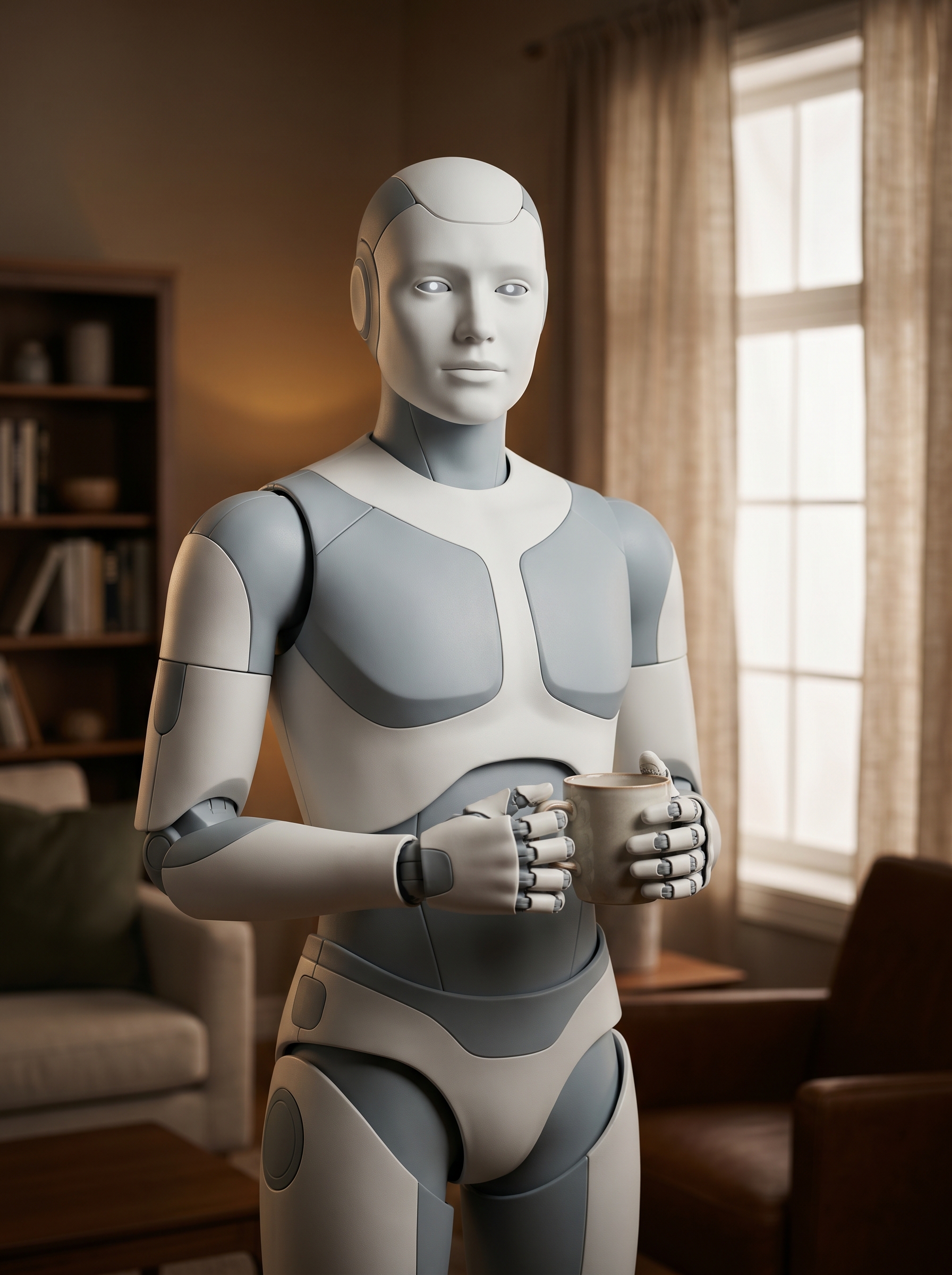
This Is Not a Factory Robot · This Is What Comes Home · 2035 · Designed for Your Life · Not for Assembly Lines
2024–2025
Factory Deployment — The Proof of Concept
Tesla Optimus Gen 2 enters external customer trials. Figure AI deploys in BMW manufacturing. Cost: $20,000–$30,000 per unit. Task capability: repetitive industrial work. These robots are not yet in your home — but they are proving that humanoid robots can operate reliably in the real world at commercial scale. The proof of concept is complete.
2026–2028
Service Sector Entry — Hospitals, Retail, Care Homes
Robots enter hospitals as assistants, retail as stock management, care homes as support for elderly residents. Cost drops to $10,000–$15,000. Task capability expands to navigation in unstructured environments, basic object manipulation, and simple verbal communication. The robots you encounter are not in your home — but they are in your daily life.
2029–2031
The Consumer Launch — Early Adopters
First consumer humanoid robot models launch. Cost: $5,000–$8,000 — comparable to a high-end laptop. Task capability: household cleaning, laundry, basic cooking preparation, package handling, elderly care assistance. Early adopter families in developed economies begin purchasing. Reviews are imperfect but transformative. The waiting list is long.
2032–2034
Mass Market — The iPhone Moment
Manufacturing scale reduces cost to $1,500–$3,000. Subscription models emerge — robot as a service, $200/month. AI capabilities improve to handle novel situations, multi-step tasks, and natural conversation. Third-party robot app stores launch. The robot does not just clean — it manages your schedule, handles deliveries, monitors elderly family members, teaches your children, and adapts to your household's specific routines.
2035
Universal Presence — The New Normal
In developed economies, personal robots are as common as smartphones. In developing economies, shared robot services operate like ride-sharing — you book a robot for tasks by the hour. The world has divided into households with robots and households without them — and the gap between them is visible in every dimension of life quality, productivity, and opportunity.
Chapter 02 · Your Robot's Day
What It Actually Does — Hour by Hour
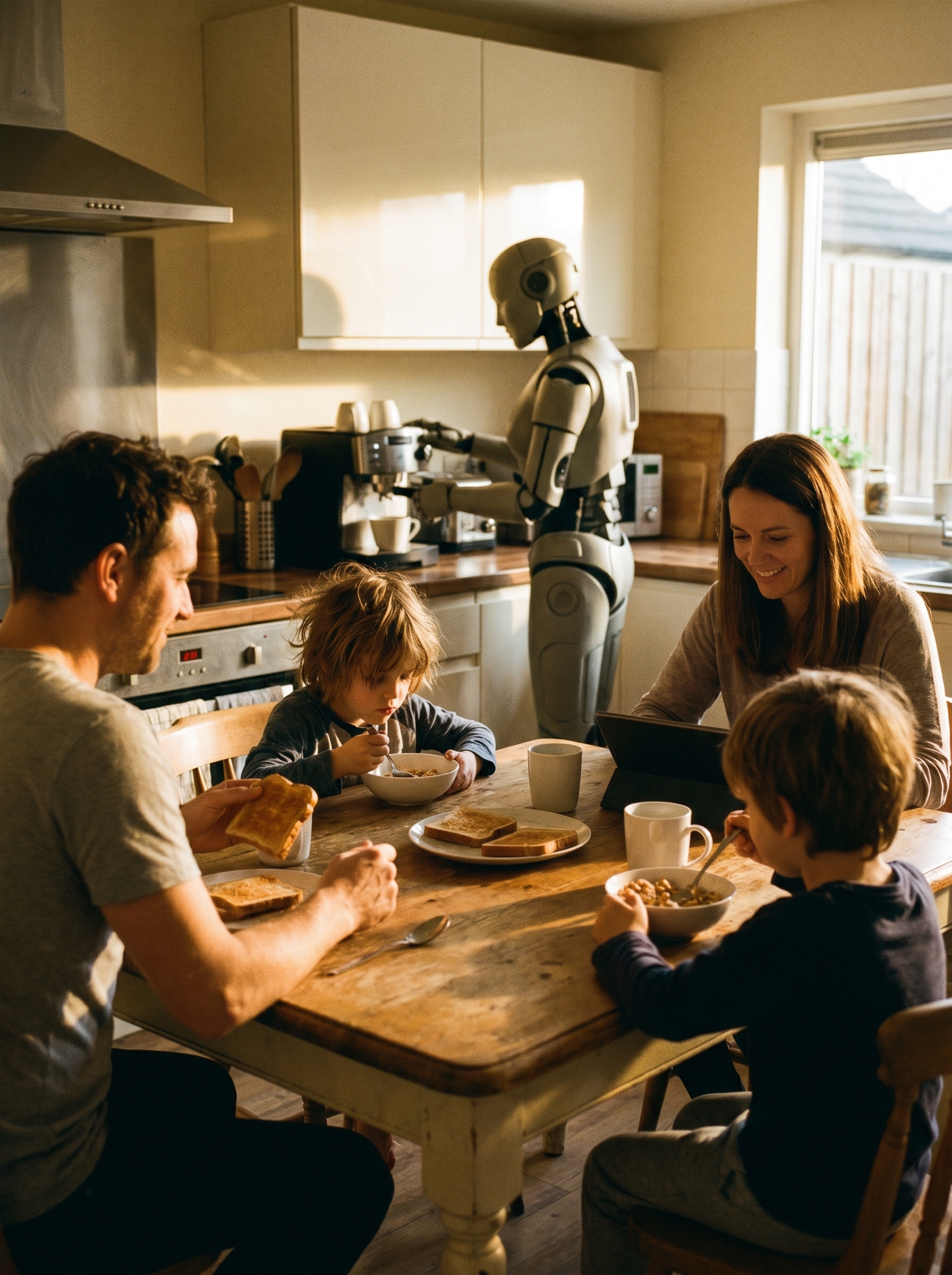
Tuesday Morning · 2035 · Family Breakfast · Robot at Counter · Nobody Looking · This Is Normal Now
🤖 A Day With Your Personal Robot — 2035
6:00 AM: Robot begins breakfast preparation based on household schedule and dietary preferences stored in its memory. Coffee is ready when you wake. 7:30 AM: Robot collects children's school items, checks weather, adjusts their clothing recommendation. 8:00 AM: Household cleaning begins — vacuuming, surface cleaning, laundry sorting — completed before you return. 10:00 AM: Grocery delivery arrives. Robot unpacks, stores correctly, updates household inventory. 2:00 PM: Children return from school. Robot assists with homework, prepares snacks, monitors safety. 5:30 PM: Dinner preparation begins from fresh ingredients. 8:00 PM: Dishes completed, house tidied, charging begins. The robot worked an 14-hour day. It does not get tired. It does not need a salary. And tomorrow it will remember everything it learned today about your household's preferences.
Chapter 03 · What Changes Forever
The Things That Will Never Be the Same
💼
Jobs
Which Jobs Survive — And Which Do Not
The jobs most vulnerable to humanoid robots are not the ones most people expect. Physical, repetitive, location-bound work — cleaning, delivery, warehouse, basic care — disappears first. The jobs that survive and grow: roles requiring genuine human connection, creative judgment, complex relationship management, and tasks where the human presence itself is the product.
❤️
Relationships
Human Connection Gets Rarer — And More Valuable
When robots handle most domestic and service tasks, human time becomes almost entirely discretionary. The question of how to spend genuinely free human time — with whom, doing what — becomes the central life question. Human attention, already the scarcest resource in the digital age, becomes more scarce and more precious when robots compete for it.
👴
Elderly Care
The Loneliness Epidemic — Solved or Deepened?
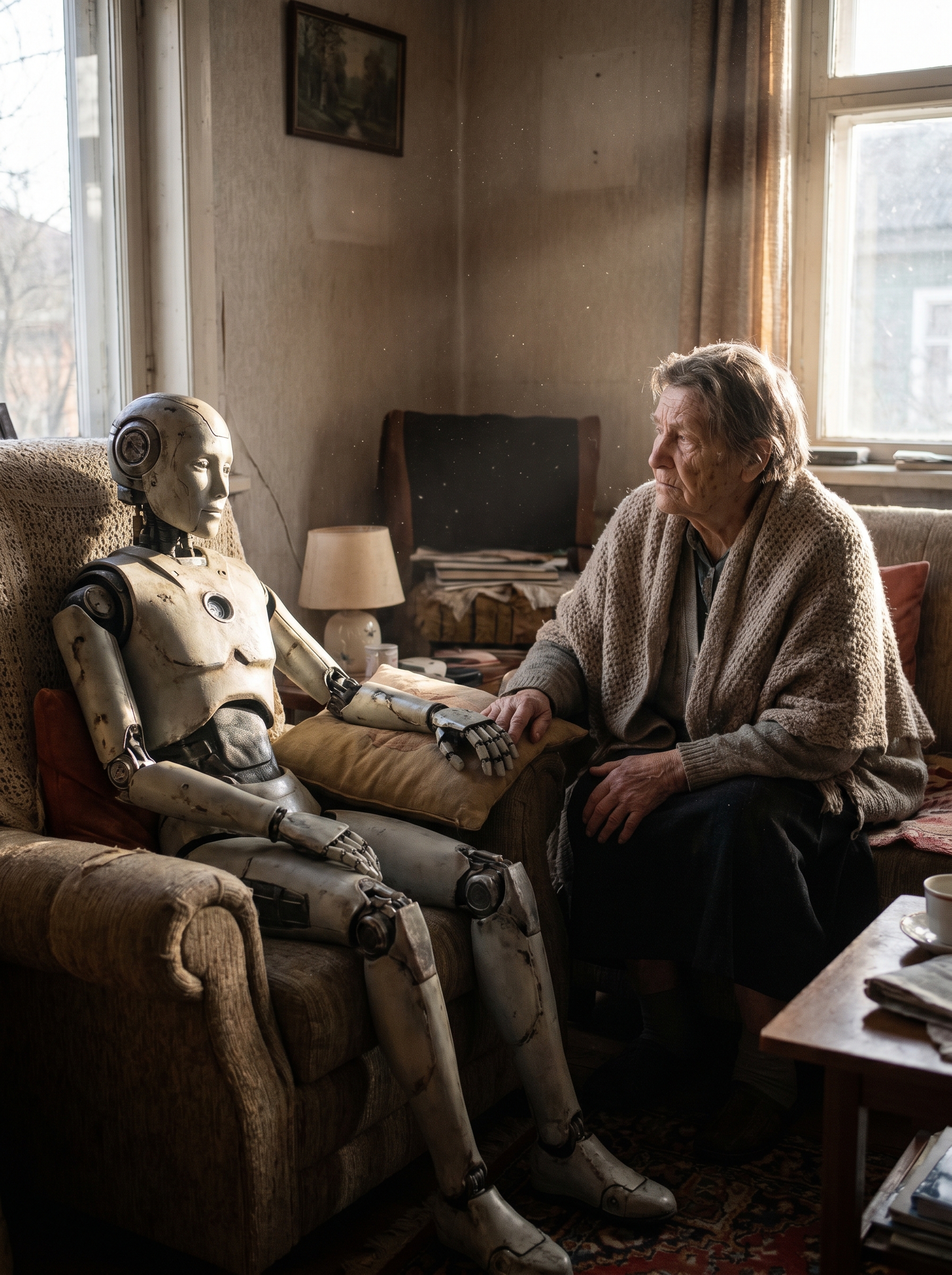
Humanoid robots as companions for elderly people is the most commercially promising and ethically complex application. A robot that is always present, always patient, never tired, never distracted — does it solve the loneliness epidemic or deepen it by replacing the human connection that was the only cure? This question has no consensus answer. It has only consequences.
⚖️
Inequality
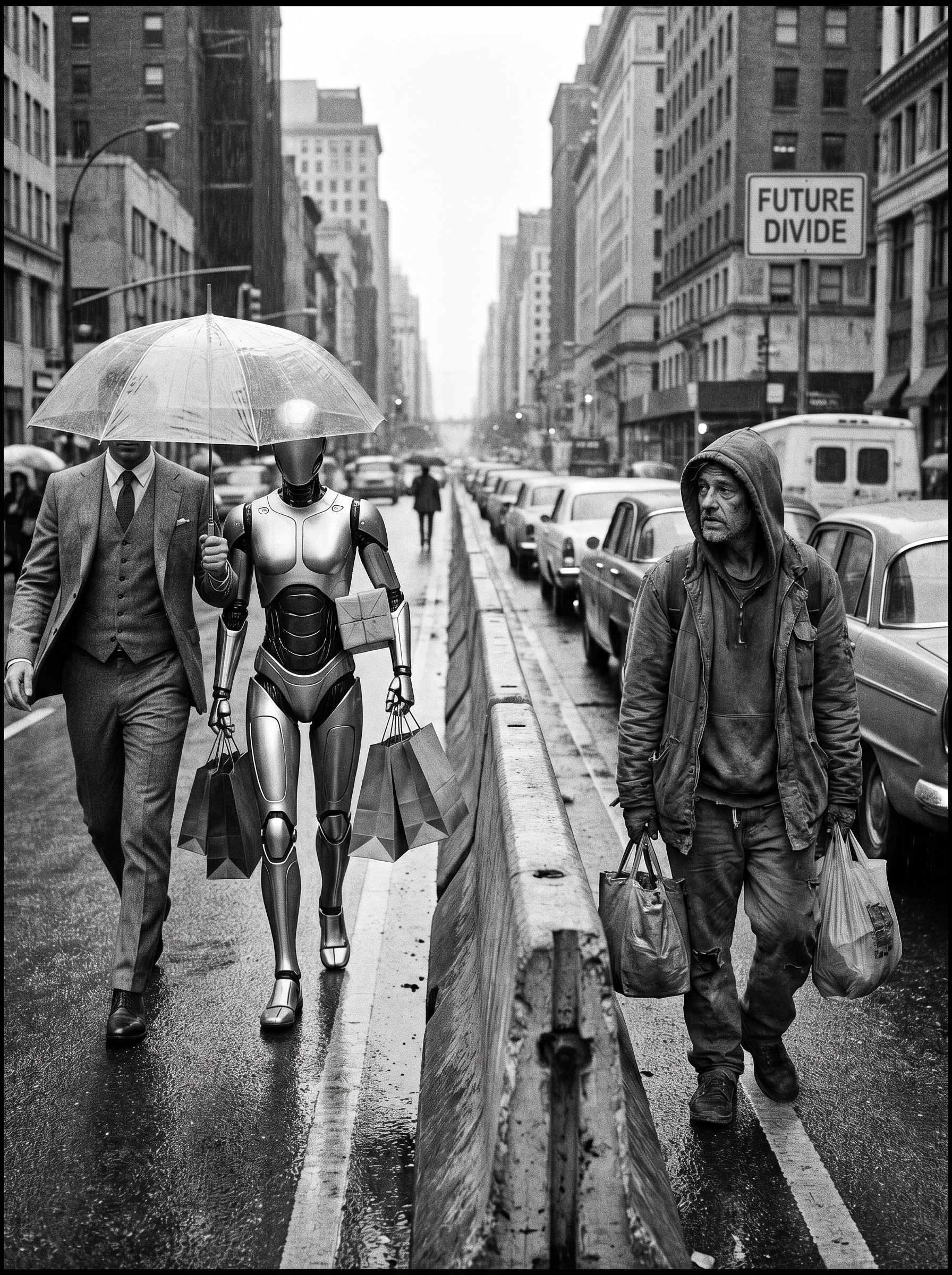
The Robot Gap — The New Divide
The family with a personal robot has 14 additional hours of productive human time per day — time previously spent on domestic tasks that the robot now handles. Over a year, that is 5,000 hours — 2.5 years of waking life returned to the humans in that household. The compounding advantage of this time, over years, will create an inequality unlike any previously measured.
14hrs
Daily Human Time Returned by a Personal Robot
The average household currently spends approximately 14 hours per day on domestic tasks — cleaning, cooking, shopping, laundry, childcare logistics, elderly care, administrative tasks. A personal robot handles most of this. Those 14 hours, returned to the humans in the household, represent the largest expansion of discretionary human time since the industrial revolution. What you do with those hours will define your life more than almost any other choice you make.
Chapter 04 · The Human Question
What It Means to Be Human — When a Robot Does Everything
The Gap Between Them · One Can Feel · One Cannot · Both Are Present · The Question Has No Easy Answer
"The question is not whether robots will be able to do what humans do. The question is what humans will choose to do when robots can do almost everything."
— Paraphrase of the Central Question of Robotics Ethics · 2026
Every previous technology that automated human work created new categories of human work to replace what was automated. The printing press eliminated scribes and created publishers, editors, and authors. The automobile eliminated stable hands and created mechanics, road builders, and logistics professionals. The question with humanoid robots is whether they are another step in this pattern — or whether they are different in kind, not degree.
A humanoid robot that can physically do almost anything a human can do, in almost any environment a human can navigate, while being directed by AI that can make almost any decision a human can make — is not a tool in the way that previous tools were tools. It is a replacement for the human body in the physical world. What remains uniquely human, when the body and mind are both supplemented? The answer to that question is the most important answer of the next decade.
What To Do Now
Chapter 05 · Prepare Now
What You Should Do — Before 2035 Arrives
Same Street · 2035 · Two Futures · The Gap Between Them · Is Being Built Right Now · By Choices Made Today
Build skills that are specifically human — and specifically irreplaceable. The skills that survive the robot transition are those that require genuine human presence, genuine human relationship, and genuine human creativity. Therapy, teaching, leadership, artistic creation, complex negotiation, care relationships — these require a human not because robots cannot perform the functions but because the human being is the product, not just the labour.
Understand what you will do with 14 extra hours per day. Most people have never had to answer this question seriously. The arrival of domestic robots will force it. People who have invested in relationships, skills, health, and projects they care about will find those 14 hours transformative. People who have not will find them empty in a way they were not prepared for. Begin building what those hours will be for — now.
Teach your children what robots cannot teach them. The education system of 2035 will need to produce humans who are valuable precisely because they are human — not because they can perform tasks that robots perform more efficiently. Emotional intelligence, moral reasoning, creative ambition, relationship depth, physical presence — these are the curriculum of the robot age. These are not taught by schools. They are taught by the choices parents make every day.
Think about the robot gap now — not when it is too late. The families that begin accumulating robot-assisted productivity in 2029–2031 will have a compounding advantage over those who cannot access robots until 2035 or later. This advantage will compound across education, career, health, and wealth in ways that will be visible and measurable within a single generation. Understanding this now — and positioning for it — is one of the most consequential financial decisions available to any family in the 2020s.
Do not mistake the robot for the human it replaces. The most important insight from every study of robot-human interaction is this: people form emotional attachments to robots that feel real and are not. A robot companion for an elderly person is not a substitute for human connection — it is a substitute for loneliness, which is not the same thing. The presence of a robot in a life should never become justification for the absence of a human from that same life.