There is one resource that Warren Buffett, the world's most successful investor, cannot buy. That Jeff Bezos, despite all his billions, receives in exactly the same quantity as the poorest person on Earth. That no technology has ever extended, no money has ever purchased, and no power has ever commanded. Every human being alive today woke up this morning with exactly the same amount of it. Most will spend today as though it costs nothing.
The luxury goods industry sells the idea that rarity creates value. A watch is valuable because few can afford it. A property is valuable because few can own it. A painting is valuable because only one exists. Time is the most valuable commodity in the world by every measure that matters — and it is distributed in perfect equality to every person who has ever lived. The billionaire and the bankrupt person receive the same 24 hours today. What they do with it is the only difference that matters.
Chapter 01 · The Real Luxury
Why Time Is Worth More Than Any Price Ever Paid
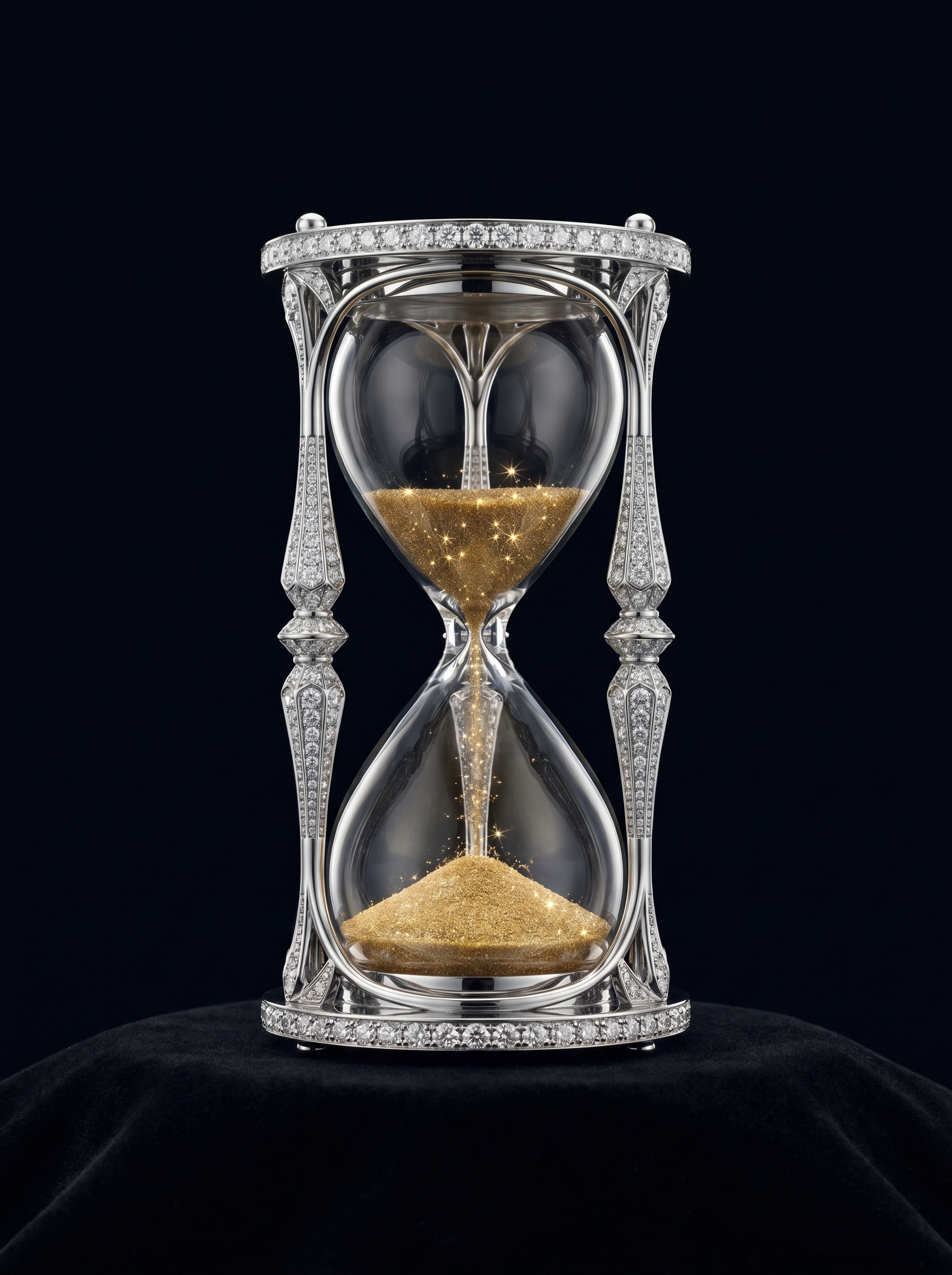
The Most Expensive Object Ever Photographed · It Belongs to Everyone · It Cannot Be Bought · Only Spent
28,835
Days · The Average Human Life · 79 Years · Already Started · Cannot Be Paused · Cannot Be Refunded
The average human life spans approximately 28,835 days. If you are 30 years old, approximately 10,950 of those days are already spent — irreversibly, regardless of what you achieved or failed to achieve in them. You have approximately 17,885 remaining. This is not a morbid calculation. It is the beginning of the most important financial literacy conversation most people never have — because most people never apply the logic of scarcity and value to the one resource that is genuinely, absolutely scarce and genuinely, absolutely valuable.
💰
The Proof
Why the Richest People Trade Money for Time
Warren Buffett pays for a private jet not because he cannot afford a first-class ticket — but because the hours saved are worth more to him than the cost difference. Bezos outsources every possible task not from laziness but from a precise calculation: his time has a value that makes delegation financially rational at almost any cost. The richest people in the world spend money to buy time. Most people spend time to make money. This reversal is the entire difference.
⚰️
The Proof
What Nobody Buys on Their Deathbed
The most consistent finding in palliative care research — studying what people say in the final weeks of their lives — is that nobody wishes they had worked more, accumulated more, or owned more. The universal wish is for more time — specifically, more time with specific people, doing specific things. The luxury people pay millions for throughout their lives is the same luxury they beg for at the end of it. Most never treat it as the luxury it is until it is almost gone.
📱
The Theft
What Is Stealing It — With Your Permission
The average person spends 6 hours and 37 minutes daily on screens — approximately 2,420 hours per year. Over a 40-year working life, that is 96,800 hours — equivalent to 11 full years of waking life spent consuming content designed by engineers whose job is to maximise the time you spend on their platform. The most sophisticated attention-capture technology in history has been pointed at your time. And it is working.
🔄
The Asymmetry
The One Transaction That Cannot Be Reversed
Every financial mistake can, in principle, be recovered from. A lost investment can be rebuilt. A failed business can be restarted. A missed opportunity can be replicated. A spent hour cannot be recalled. Time is the only resource with a genuinely one-way transaction. Every second spent is spent permanently. This is not a reason for anxiety — it is the precise fact that makes intentional spending of time the highest form of intelligence available to any human being.
Chapter 02 · The Equal Distribution
The Only Thing Money Has Never Changed
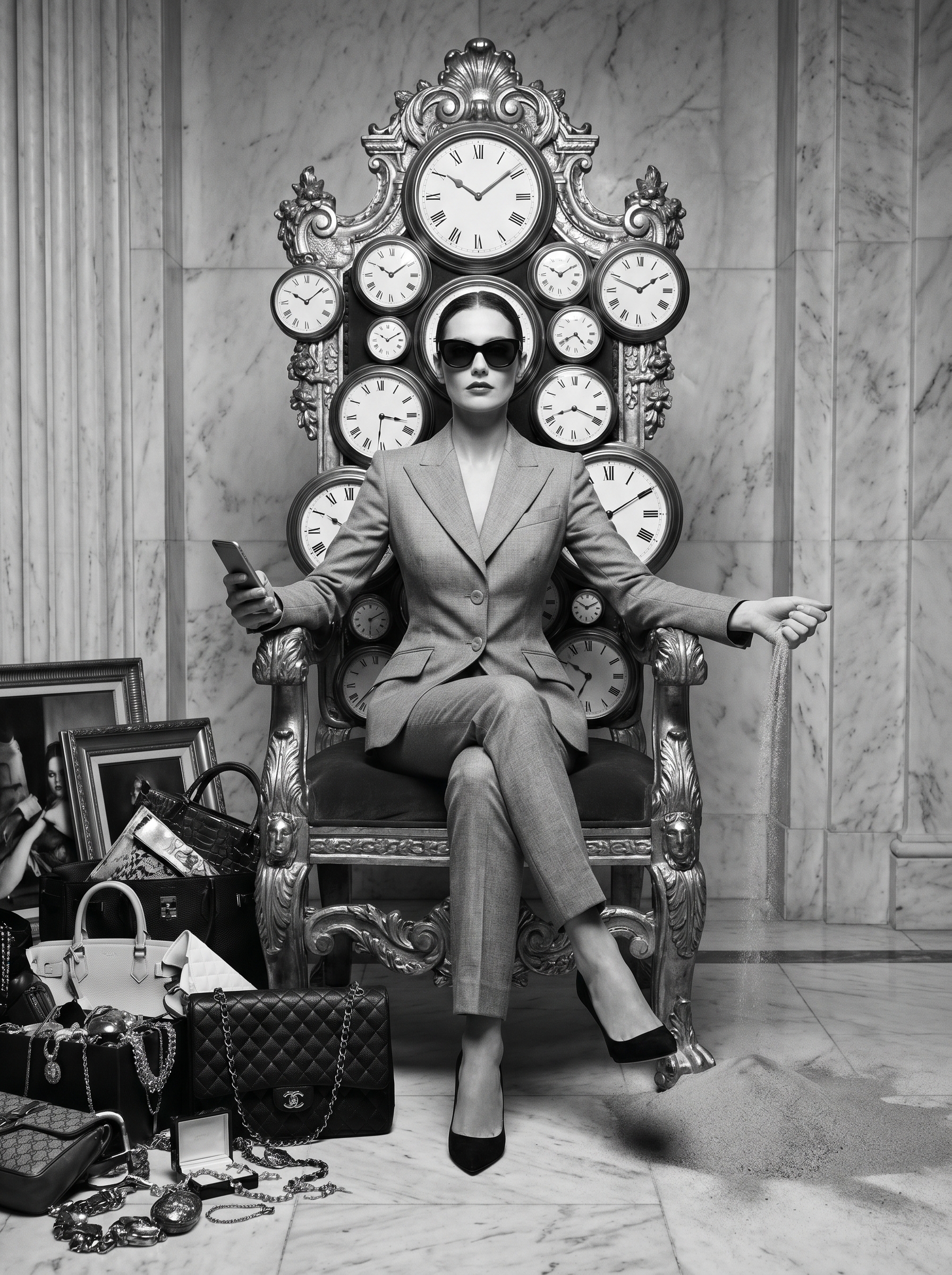
Everything Money Can Buy · Sitting on Time · Sand Falling Through Fingers · Unnoticed · The One Thing It Cannot Buy
In the history of human civilization, the distribution of almost every valuable resource has been profoundly unequal. Land, wealth, education, nutrition, healthcare, safety — all have been distributed according to power structures that have changed across millennia but never produced equality. Time is the single exception. The pharaohs of Egypt received the same 24 hours per day as their slaves. The medieval kings received the same allocation as their serfs. Every billionaire alive today receives the same daily time endowment as every person living in extreme poverty.
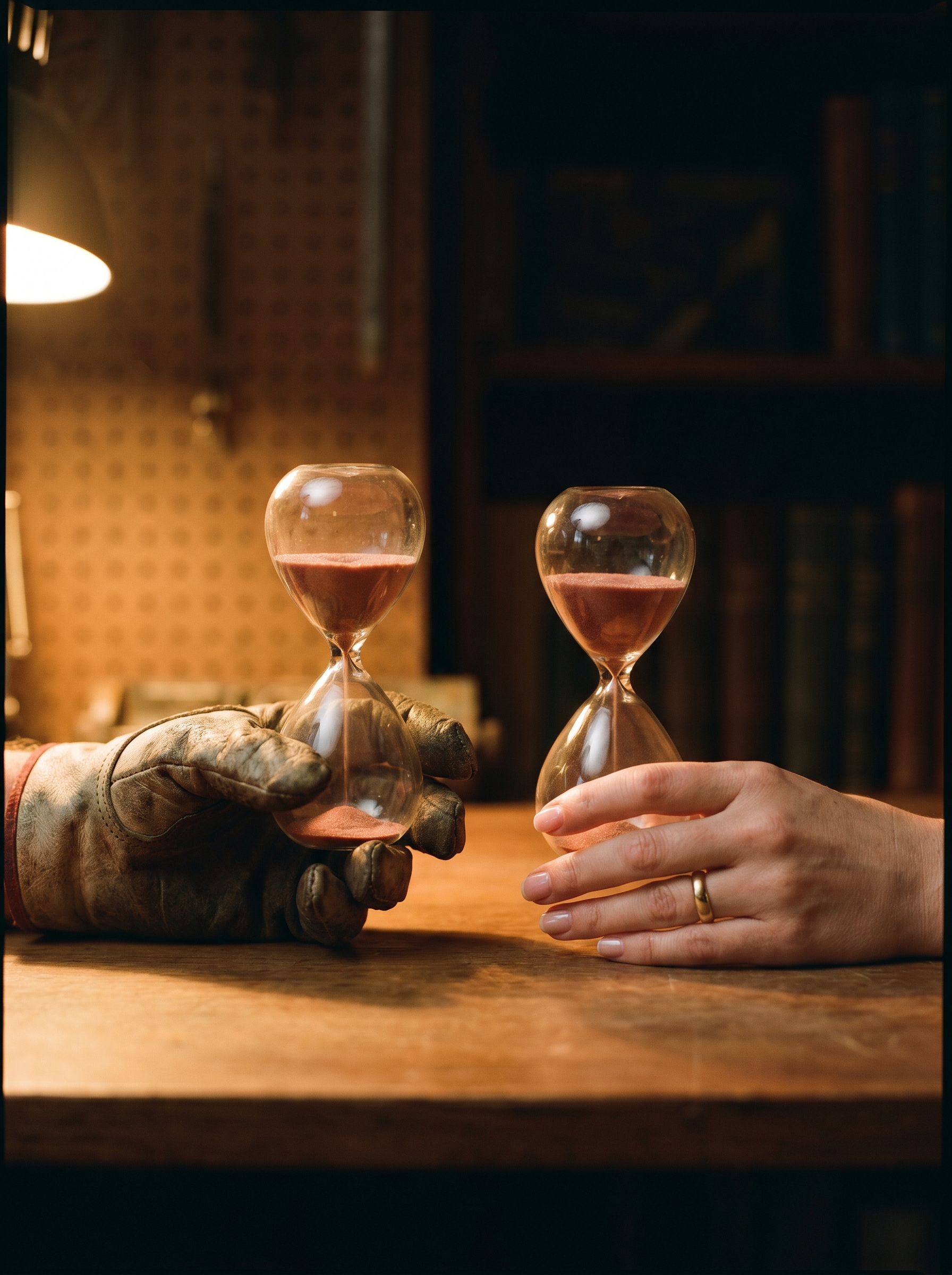
Two Hands · Different Lives · Identical Hourglasses · The Only Perfect Equality That Has Ever Existed
"Time is the coin of your life. It is the only coin you have, and only you can determine how it will be spent. Be careful lest you let other people spend it for you."
— Carl Sandburg · American Poet · 1878–1967
Chapter 03 · The Mathematics
The Calculation That Changes Everything
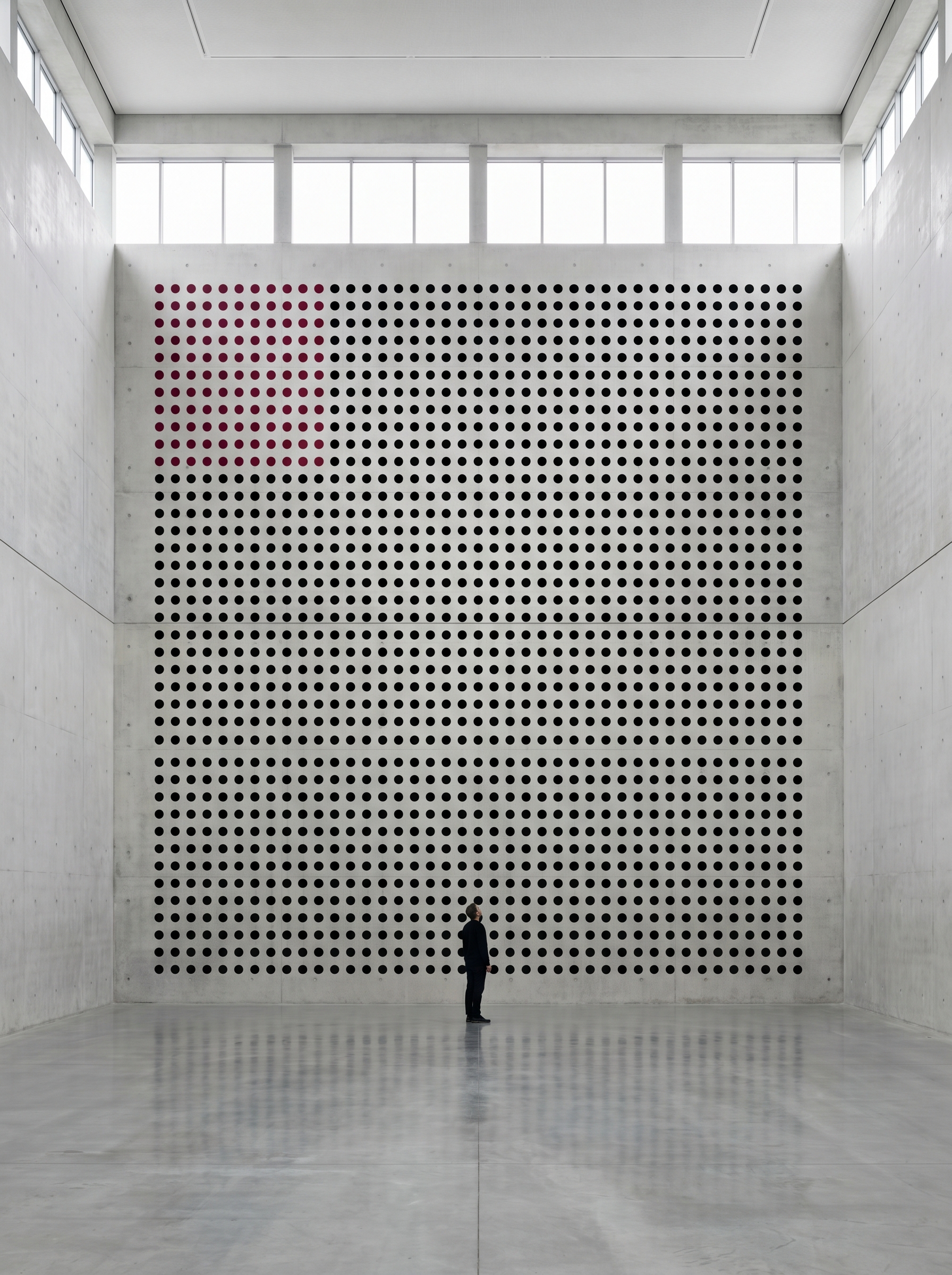
28,835 Dots · Each One a Day · Some Already Red · Most Still Black · The Person Looking Up · Is You
1,440
Minutes in Every Day — The Only Budget That Matters
Every day, without exception, every human being on Earth receives a budget of 1,440 minutes. It cannot be borrowed, saved, invested, or carried forward to tomorrow. Every unspent minute at midnight is permanently and irrevocably lost. The richest financial literacy question you will ever ask yourself is not "where does my money go?" — it is "where do my 1,440 minutes go?" Most people have never answered it with the same precision they apply to their bank statement.
🧮 The Real Cost Calculation
If you earn $50,000 per year and work 2,000 hours, your time costs $25 per hour. Every hour you spend doing something that could be delegated for less than $25 is a financial loss. Every hour you spend doing something that produces no value — to your relationships, your health, your skills, your finances, or your joy — is an hour of your most valuable resource spent at a negative return. Most people apply this logic to money obsessively and never apply it to the resource that is actually more valuable. Time cannot be made. It can only be directed. The person who directs it intentionally has the most valuable skill available to any human being.
How to Use It
Chapter 04 · The Practice
What the Most Time-Wealthy People Actually Do Differently
They know where their time goes before they spend it. The financially disciplined create a budget before they spend money. The time-wealthy create an intention before they spend time. This does not mean rigidly scheduling every minute — it means having a clear answer to "what is this hour for?" before it passes. The people who feel they never have enough time have almost always never audited where their time actually goes. The audit is always more shocking than expected.
They protect time from the trivial with the same vigilance they protect money from waste. Most people will decline to pay $10 for something they consider wasteful — but will freely spend an hour of their time on the equivalent. An hour of your time has a real, calculable value. If you would not pay $25 to watch one more hour of algorithmically curated content, why would you spend the hour? The logic is identical. The behaviour is completely different.
They invest time in things that compound. Money invested in assets produces compound returns. Time invested in skills, relationships, health, and knowledge produces compound returns that are not financial but are more valuable. The person who spends one hour daily reading across ten years builds an intellectual foundation that produces returns in every conversation, every decision, and every problem they face for the rest of their life. Compounding time investment is the highest-yield behaviour available to any human being.
They spend lavishly on experiences that produce lasting value. Research on happiness consistently shows that time spent in experiences — particularly with other people — produces more lasting wellbeing than time spent acquiring things. The memory of a meal shared with someone you love outlasts the memory of the car you drove to the restaurant. The most time-wealthy people are not those with the most free hours — they are those who have learned to extract the most meaning from the hours they have.
They have made peace with the finite nature of the resource. The awareness that time is limited — rather than producing anxiety — produces clarity. When you know that every hour spent on one thing is an hour not spent on another, choices become easier, not harder. Trivial decisions become obviously trivial. Important things become obviously important. The person who has genuinely internalised the scarcity of time does not have a difficult time deciding how to spend it — because the scarcity clarifies everything.