You live in the most connected era in human history. Every person on Earth is reachable in seconds. More communication happens every minute than happened in entire centuries of human civilisation. And yet — more people report feeling profoundly, physically, damagingly alone than at any measurable point in recorded history. The science of what this is doing to the human body is not comforting.
In 2023, the World Health Organisation declared loneliness a global health epidemic — a condition affecting an estimated one billion people worldwide and carrying measurable, documented, lethal consequences for human physical health. Not mental health. Physical health. The science connecting chronic loneliness to mortality, cardiovascular disease, immune dysfunction, and cognitive decline is not preliminary or contested. It is among the most robust findings in modern epidemiology. And almost nobody is treating it as the medical emergency it is.
Chapter 01 · The Science
What Loneliness Actually Does to Your Body
One Person · Surrounded By People · Completely Alone · The Epidemic No One Sees
The comparison to smoking is not metaphorical. In a landmark 2015 meta-analysis of 148 studies covering 308,849 participants, researchers Julianne Holt-Lunstad and Timothy Smith found that social isolation and loneliness increased mortality risk by 26% and 29% respectively — comparable to the mortality risk of smoking 15 cigarettes daily. Greater than the mortality risk of obesity. Greater than the risk of physical inactivity. Loneliness is not a feeling. It is a physiological state with measurable, lethal consequences for the body carrying it.
❤️
Cardiovascular
Heart Disease Risk +29%
Chronic loneliness is associated with a 29% increased risk of coronary heart disease and a 32% increased risk of stroke. The mechanism involves sustained activation of the stress response — elevated cortisol and inflammatory markers — that damages arterial walls over time.
🦠
Immune System
Immune Function Compromised
Lonely individuals show measurably different gene expression patterns in immune cells — with higher expression of inflammatory genes and lower expression of antiviral genes. The lonely body is biologically primed for inflammation and poorly defended against viral infection.
🧠
Cognition
Dementia Risk Doubles
A 2022 study in Nature Aging found that chronic loneliness is associated with a doubled risk of developing dementia — independent of depression, physical health, and other social factors. Social connection appears to be a primary protective factor for long-term cognitive health.
😴
Sleep
Sleep Architecture Disrupted
Lonely individuals show measurably more fragmented sleep, less restorative slow-wave sleep, and higher rates of micro-arousals during the night — a pattern evolutionarily consistent with an organism that perceives its social environment as unsafe. Loneliness keeps the body on guard, even in sleep.
85yrs
The Harvard Study — The Longest Human Happiness Research Ever Conducted
The Harvard Study of Adult Development began in 1938 and has tracked 724 men — and now their children — for over 85 years, making it the longest-running study of adult life in history. Its conclusion, stated by current director Robert Waldinger: the quality of your relationships is the single strongest predictor of your health and happiness in old age. Not wealth. Not career success. Not physical fitness. The people who stayed most connected lived longest and reported the most satisfaction with their lives.
Chapter 02 · The Paradox
More Connected Than Ever — More Alone Than Ever
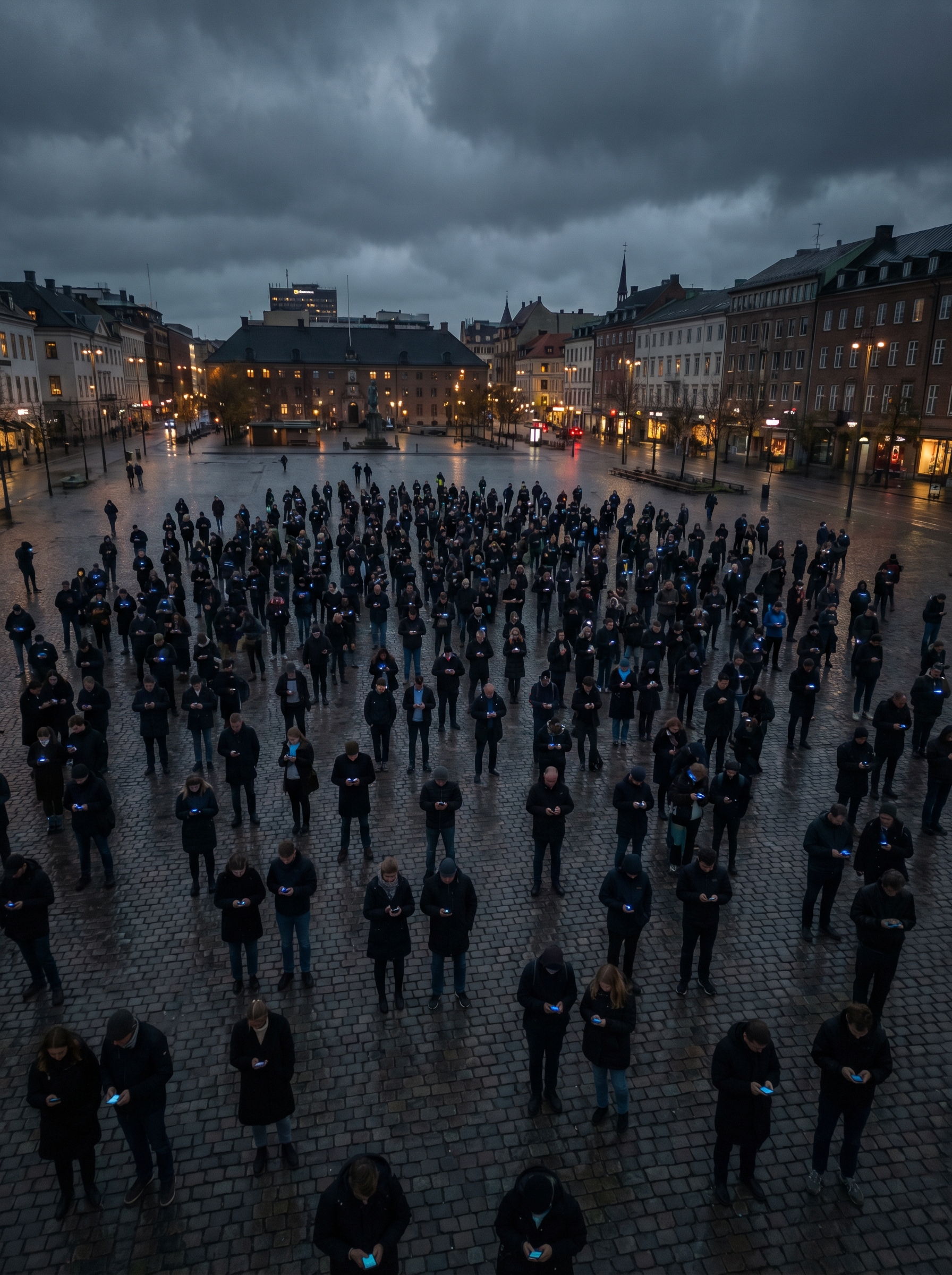
Hundreds of People · Not One Connection · The Paradox of the Most Connected Era in History
The loneliness epidemic is not the product of people becoming more antisocial or less capable of connection. It is the product of a specific collision between human evolutionary biology and the modern social environment. Human beings evolved for small, stable, face-to-face communities — groups of approximately 150 people, with frequent physical contact, shared physical space, and continuous daily proximity to a handful of deeply known individuals.
The modern world has systematically dismantled every structural feature of this environment. People move cities for work, severing geographic community roots. Families disperse across countries. Neighbours do not know each other's names. Social media creates the sensation of connection while delivering most of its neurological benefits poorly and none of its physical benefits at all. A liked photograph triggers a mild dopamine response — it does not trigger the oxytocin, the cortisol reduction, or the immune activation that physical proximity to a trusted person produces. The digital world is connection-shaped. It is not connection.
🔬 The John Cacioppo Research
The late Dr. John Cacioppo, founder of the field of social neuroscience, spent thirty years documenting the biological mechanisms of loneliness. His key finding: loneliness is a biological signal system — as fundamental as hunger or thirst — that evolved to motivate social reconnection. Like hunger, it becomes distressing and eventually harmful when chronically unmet. Unlike hunger, modern society has not treated its chronic non-satisfaction as a medical emergency. Cacioppo argued it should be treated with exactly that urgency.
"The good life is built with good relationships. Not wealth. Not fame. Not achievement. The single clearest finding from 85 years of research: the people who flourished most were the ones who leaned into relationships."
— Robert Waldinger · Director, Harvard Study of Adult Development · TED Talk, 2015
Chapter 03 · The Biology
Why Your Body Needs Other People to Survive
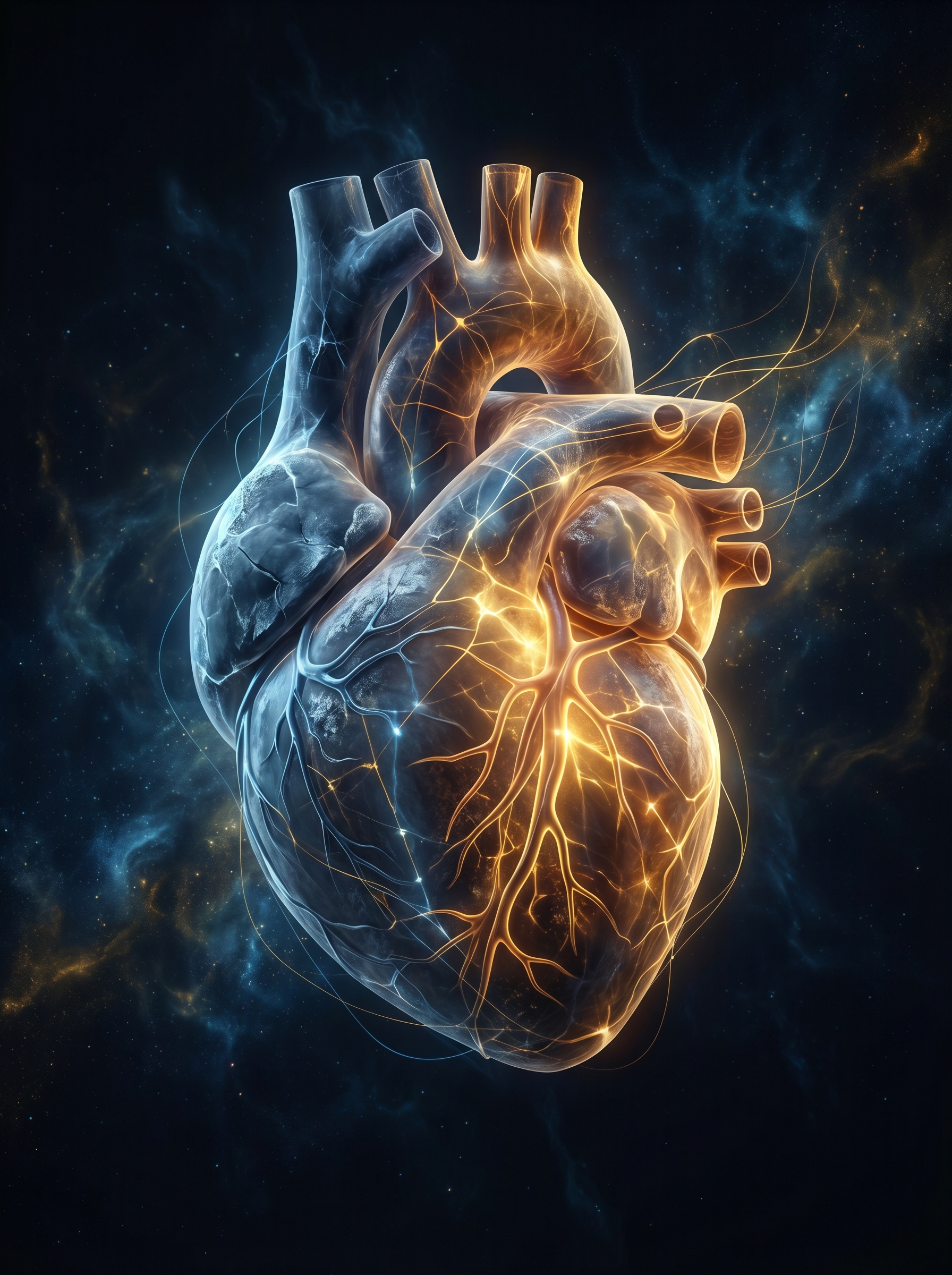
The Lonely Heart · Dark From Isolation · Warm From Connection · The Body Keeps the Score
The reason loneliness has such profound physical consequences is not metaphorical — it is evolutionary. For most of human evolutionary history, being separated from your social group was a death sentence. Alone in the ancestral environment meant no protection from predators, no sharing of food, no care in illness, no cooperative childrearing. The body evolved to treat social isolation as a life-threatening emergency — activating the same biological stress systems as physical danger.
When you are chronically lonely, your body is running in a continuous low-grade emergency state. Cortisol remains elevated. Inflammatory markers remain high. The immune system shifts from antiviral mode to wound-repair mode — as though bracing for the physical injury that predator attack or social conflict would historically have produced. This was adaptive in the ancestral environment. In the modern world, where the danger is social rather than physical and the loneliness is chronic rather than temporary, this emergency response runs continuously — and does to the body what any continuous emergency response does: it wears it out.
What Heals
Chapter 04 · The Remedy
What the Science Says Actually Works
The Space Between · Where Connection Happens · Or Doesn't · The Most Important Gap in the World
Physical presence is not replaceable by digital contact. The biological benefits of social connection — oxytocin release, cortisol reduction, immune activation, sleep improvement — are triggered by physical proximity to trusted people. Video calls, messages, and social media provide some psychological comfort but do not produce these physical effects. The body needs physical presence in a way that no technology yet replicated.
Quality dramatically outweighs quantity. The Harvard study's most consistent finding is that the number of social connections matters far less than their quality. One relationship characterised by genuine mutual knowledge, trust, and care provides more biological protection than dozens of shallow social contacts. You are not looking for more connections. You are looking for deeper ones.
Physical touch has specific, measurable biological effects. Hugging, handshaking, and physical contact between trusted individuals triggers oxytocin release and cortisol reduction within seconds. A twenty-second hug is sufficient to produce measurable physiological changes. Touch hunger — the physical deprivation of appropriate physical contact — is a documented contributor to loneliness's biological effects and one of the least-discussed consequences of modern social isolation.
Shared physical activities build connection faster than conversation alone. Synchronised physical activity — walking together, exercising together, singing together, even eating together — produces neurological bonding effects that conversation alone does not. Doing things together is not just culturally nice — it is biologically what connection is made of.
The loneliness loop requires active interruption. Cacioppo's research identified a self-reinforcing cycle: loneliness produces hypervigilance to social threat, which causes the lonely person to perceive social situations as more threatening, which increases avoidance, which deepens loneliness. Breaking this cycle requires deliberate action taken against the grain of what loneliness makes you feel like doing. The biology of loneliness pushes toward withdrawal. The cure requires moving toward connection precisely when the body is telling you to retreat.
Human Confessions · hezhinx Series
EP.09 · Now
The Loneliness