The phone in your pocket right now is the most sophisticated behaviour modification device ever created. It was not designed to connect you. It was designed to capture your attention, hold it, and sell it — using the same psychological mechanisms exploited by slot machines, and documented by the same neuroscience that guides addiction treatment. This is not a conspiracy. It is a business model. And it is working on your brain in ways that MRI scans can now measure, map, and confirm.
I
The Dopamine Hijack
Your Brain Was HACKED
Dopamine is your brain's reward chemical — the signal that says "that was good, do it again." It evolved to reinforce behaviours essential for survival: eating, social bonding, learning. Every time you find food, connect with a trusted person, or solve a problem, dopamine fires. It feels good. You repeat the behaviour. This system kept humans alive for 300,000 years.
In 2012, something changed. Social media platforms — following years of A/B testing, psychological research, and behavioural data from billions of users — began deploying what neuroscientists now call variable reward schedules. The same mechanism used in slot machines. You scroll. Sometimes you find something interesting. Sometimes you don't. The unpredictability is not accidental. Unpredictable rewards produce stronger dopamine responses than predictable ones — a fact documented in neuroscience since B.F. Skinner's experiments in the 1950s. Your phone is a slot machine. Every scroll is a pull of the lever.
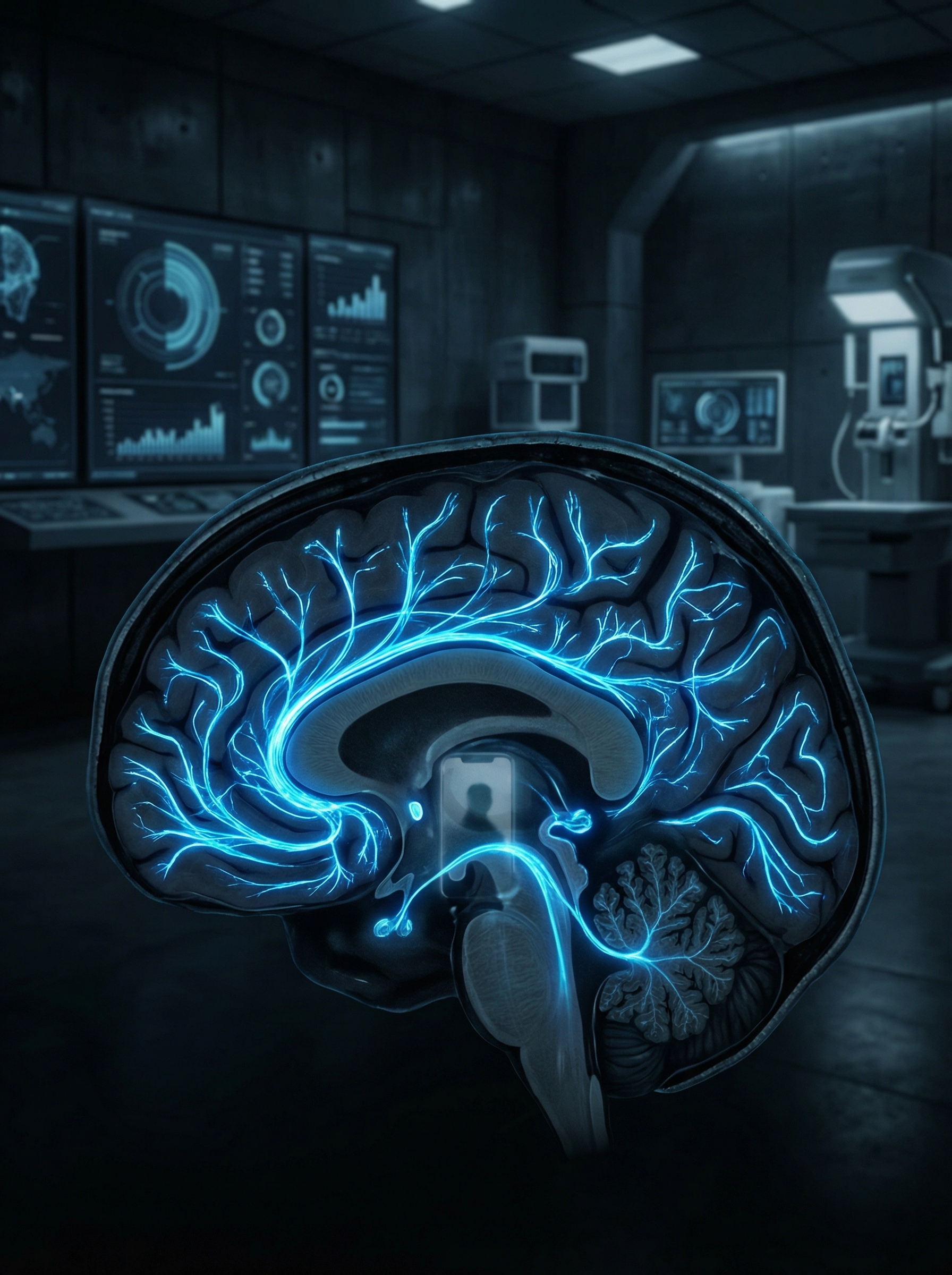
Dopamine Reward Pathway · Smartphone Hijack · The Same Mechanism As Slot Machines · Peer Reviewed
⚠ The Former Insider
The People Who Built It Are Warning You
Aza Raskin, the designer who invented the infinite scroll — the feature that eliminated the natural stopping point of a page end — later calculated that his invention causes approximately 200,000 additional hours of scrolling every day. He now runs the Center for Humane Technology alongside Tristan Harris, a former Google design ethicist. Both have testified before the US Senate. Both have said the same thing: the platforms were designed, with full knowledge of the neuroscience, to be as addictive as possible. This was not a side effect. It was the product.
"We have a business model that is predicated on the fact that you cannot stop using it — and we built it that way on purpose."
— Aza Raskin · Inventor of Infinite Scroll · Center for Humane Technology
The Attention Collapse
II
Harvard MRI Data
Your Attention Span Is COLLAPSING
In 2000 — before the smartphone era — the average human attention span was measured at approximately 12 seconds. By 2015, Microsoft's research division published a study showing it had fallen to 8 seconds. The same study noted that the average goldfish maintains focus for 9 seconds. This statistic is not amusing. It is the measurable result of a decade of dopamine conditioning.
Harvard neuroscientists conducting MRI studies of heavy smartphone users have documented something more alarming than reduced attention span: structural changes to the prefrontal cortex — the region of the brain responsible for planning, decision-making, impulse control, and sustained concentration. The grey matter in this region shows measurable reduction in heavy users. This is not reduced function. It is reduced physical structure. The hardware of attention is being physically degraded.
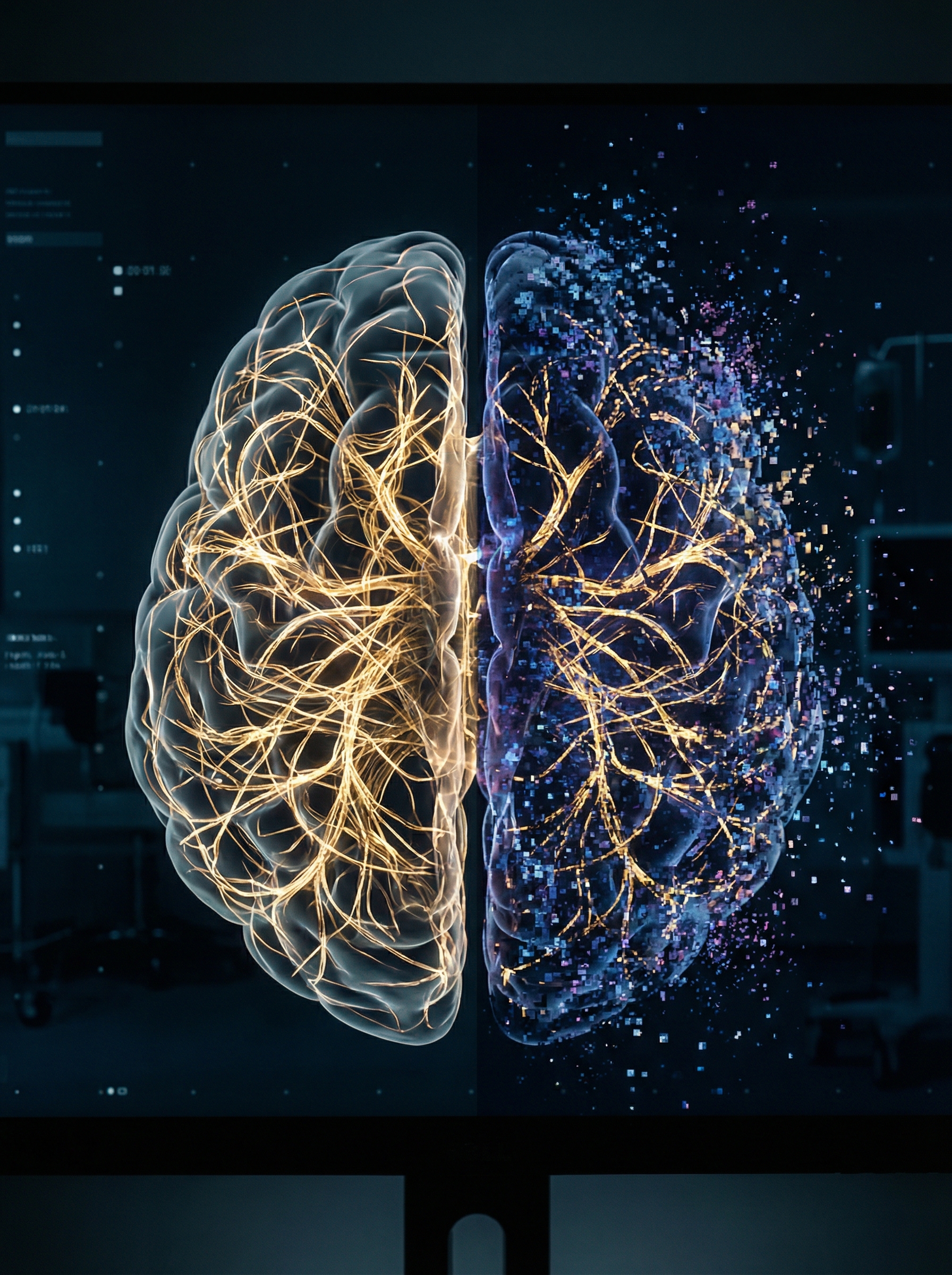
Prefrontal Cortex · Structural Grey Matter Loss · Heavy Smartphone Users · Harvard MRI Study
2,617
Times The Average Person Touches Their Phone Every Day
Research by Dscout, analysing smartphone usage across thousands of participants, found that the average person touches their phone 2,617 times per day — with heavy users reaching over 5,400 touches. Each touch is a micro-interruption to whatever cognitive task preceded it. Research by Gloria Mark at the University of California, Irvine found that after any interruption, it takes an average of 23 minutes and 15 seconds to return to the original task at full focus. You are interrupting yourself 2,617 times per day and wondering why you cannot concentrate.
The Hook
III
The Design Intention
You Were NEVER The Customer
There is a sentence spoken internally at every major social media company that its users are never told: "If you are not paying for the product, you are the product." Your attention is what is being sold. Not to you — to advertisers. The more of your attention the platform captures, the more it can charge. The more addictive the platform is, the more attention it captures. The incentive to make the product as addictive as possible is not incidental to the business model. It is the business model.
Sean Parker, the founding president of Facebook, said in 2017 that the platform was built around one question: "How do we consume as much of your time and conscious attention as possible?" He described the like button as a "social validation feedback loop" — deliberately engineered to exploit a vulnerability in human psychology. He said the inventors knew what they were building and built it anyway. The only people in Silicon Valley not using smartphones are, famously, the people who designed them. Steve Jobs did not give his children iPads.
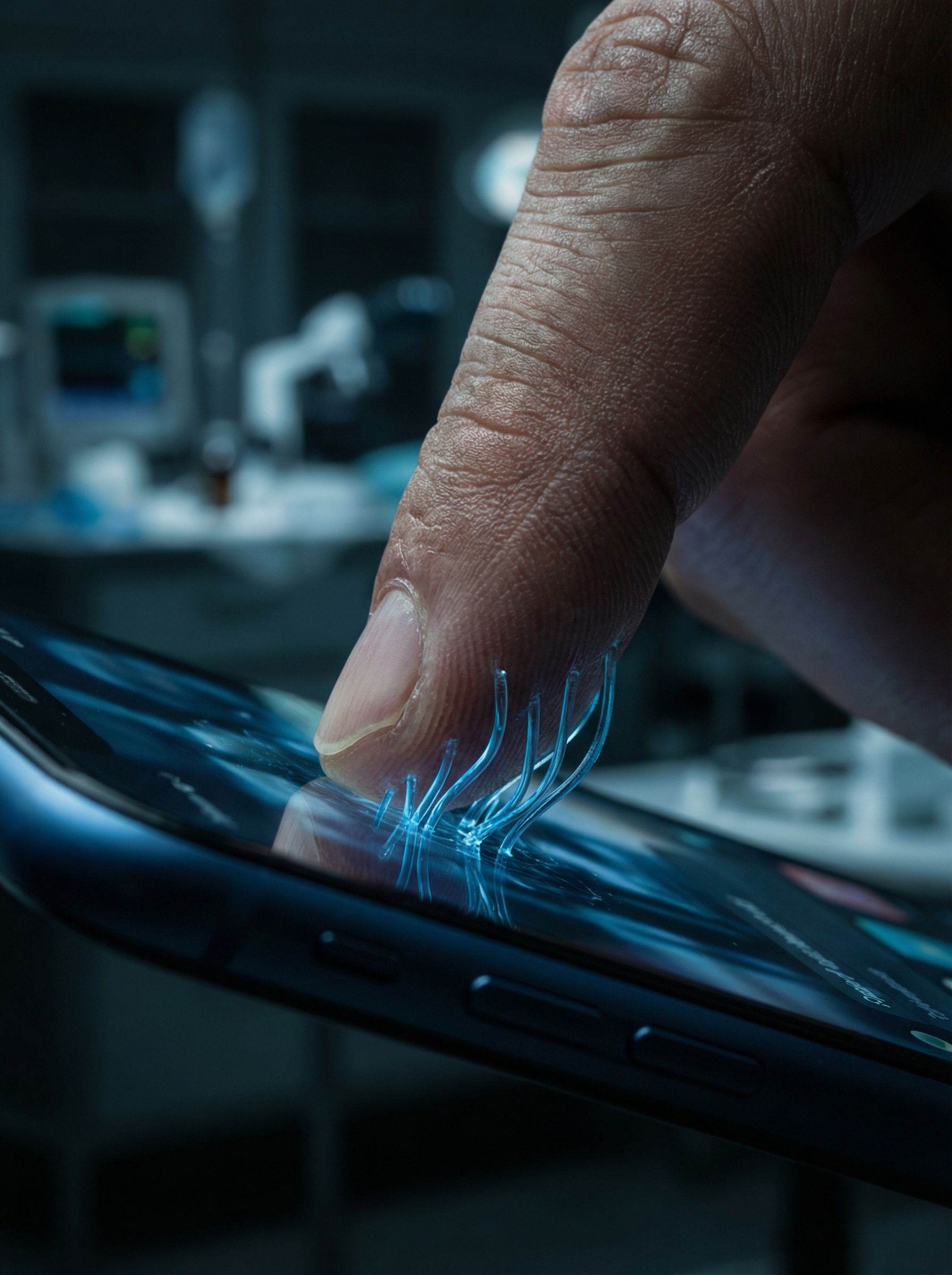
Variable Reward Schedule · The Hook Design · Slot Machine Psychology · Your Brain Is The Target
⚠ The Sleep Destruction
Blue Light Is Dismantling Your Sleep Architecture
The blue light spectrum emitted by smartphone screens directly suppresses melatonin production — the hormone that triggers and maintains sleep. Harvard Medical School research has shown that even two hours of screen exposure before sleep delays melatonin onset by up to three hours and reduces REM sleep duration by 90 minutes. REM sleep is when your brain consolidates memory, processes emotion, and clears the neurotoxic waste associated with Alzheimer's disease. The glymphatic cleaning system documented by Maiken Nedergaard — which runs only during deep sleep — is being systematically disrupted every night by the device on your bedside table. You are not just losing sleep. You are losing the repair process that keeps your brain functional.
The Generation
IV
The Data Since 2012
What Happened When EVERYONE GOT ONE
Social psychologist Jonathan Haidt at New York University has spent years compiling data from countries across the world on adolescent mental health since the widespread adoption of smartphones around 2012. The pattern is consistent across every country studied: rates of depression, anxiety, loneliness, and self-harm in teenagers began rising sharply in 2012 and have not stopped. The correlation is not proof of causation — but the consistency across cultures, countries, and demographics is a signal that researchers have described as impossible to ignore.
Anxiety in teenagers has increased 52% since 2012. The American Psychological Association has documented a sustained, significant rise in anxiety disorders among adolescents that began precisely as smartphone adoption became universal. No other variable changed as consistently across as many different populations at the same time.
Deep reading ability is declining measurably. Research by Maryanne Wolf at UCLA found that heavy digital device users show reduced capacity for deep reading — the slow, focused, immersive reading that builds complex comprehension and empathy. The brain circuits used for deep reading are being weakened from disuse. This is not a preference shift. It is a neurological change.
Social comparison is now continuous. Before smartphones, social comparison happened intermittently — at school, at work, at social events. Instagram has made it constant, real-time, and algorithmically curated to show you the most aspirational content first. Your brain was not designed for continuous social comparison at this scale. The psychological consequences are documented in dozens of peer-reviewed studies.
Memory is being outsourced. Research by Betsy Sparrow at Columbia University found that when people know information is stored digitally and retrievable, they are significantly less likely to remember it themselves — and more likely to remember where to find it than what it contains. The internet is becoming an external hard drive for human memory — and like any outsourced function, the internal capacity is atrophying.
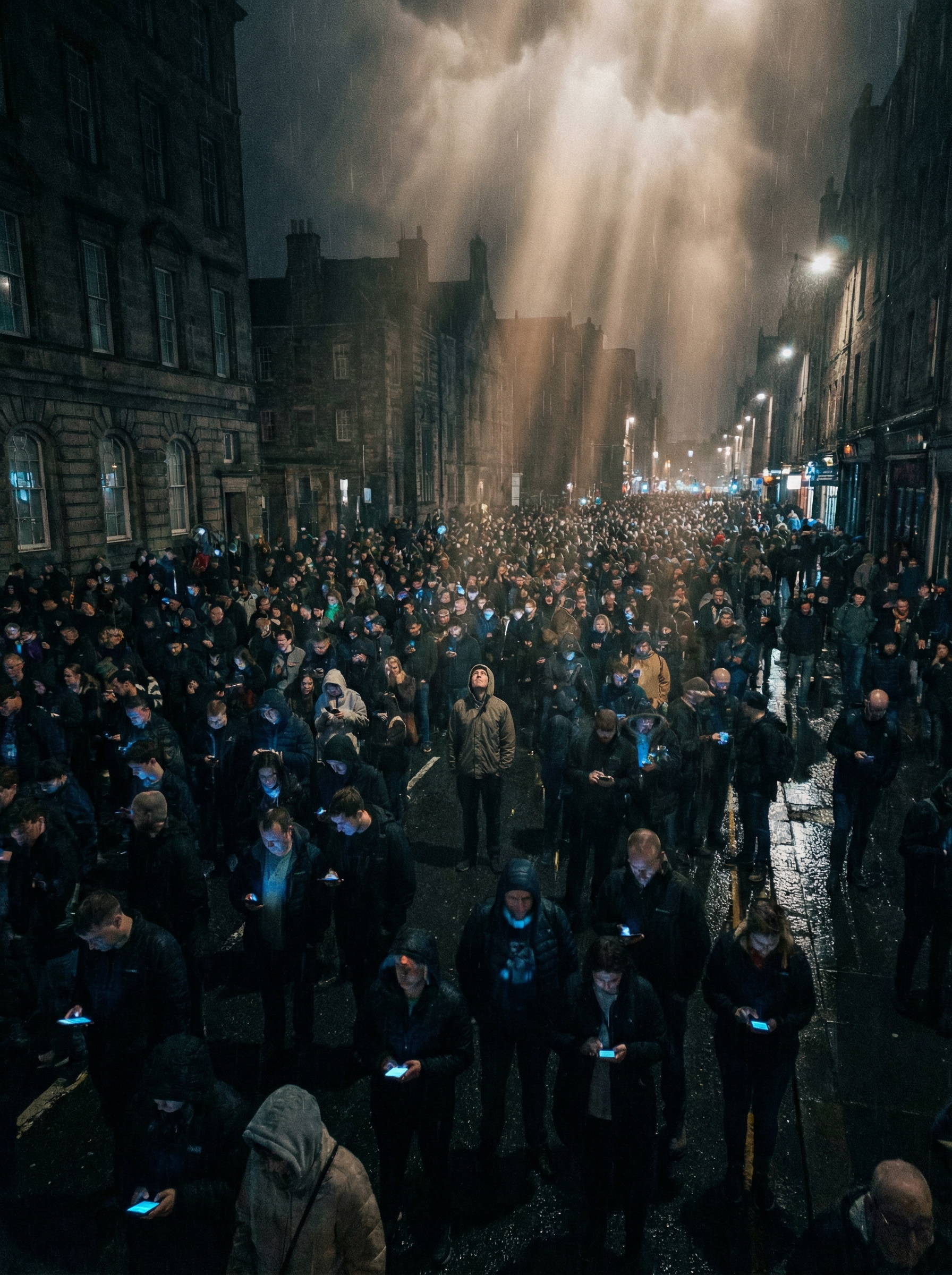
2026 Reality · 5.4 Billion Smartphone Users · Collective Attention Being Sold · Every Second
"The smartphone is the first technology in human history that has been deliberately designed, with scientific precision, to be more compelling than human relationships."
— Dr. Jean Twenge · Professor of Psychology · San Diego State University · iGen (2017)
V
What You Can Do
The Brain Can REPAIR ITSELF
The most important fact in this article is not the damage. It is this: the human brain is neuroplastic. It changes in response to use — and it can change back. The same plasticity that allowed smartphones to rewire your attention circuits can be used to rebuild them. The research on recovery is as clear as the research on damage.
Remove social media apps from your phone. Not deactivate — remove. Research by the University of Pennsylvania found that limiting social media use to 30 minutes per day produced significant reductions in depression and loneliness within three weeks. The apps are designed to be used on a phone. On a desktop, the compulsion is measurably lower.
No phone for the first 60 minutes of the day. Your prefrontal cortex — the region being damaged by chronic phone use — is most active and most plastic in the first hour after waking. Feeding it a scroll of notifications the moment you wake is feeding it the most addictive input at its most vulnerable moment. Protecting the first hour protects the quality of your cognition for the rest of the day.
Read physical books for 20 minutes daily. Maryanne Wolf's research shows that regular deep reading actively rebuilds the neural circuits being weakened by digital consumption. The brain does not merely benefit from this — it structurally repairs. Twenty minutes of sustained, focused reading is one of the most evidence-backed cognitive interventions available.
One hour before sleep — no screens. Harvard's research on blue light and melatonin suppression shows that a single hour of screen-free time before sleep is sufficient to allow normal melatonin onset and restore REM sleep architecture. This single change has more impact on cognitive function than any supplement, drug, or biohack currently marketed. It is free. It requires no purchase. And it works.