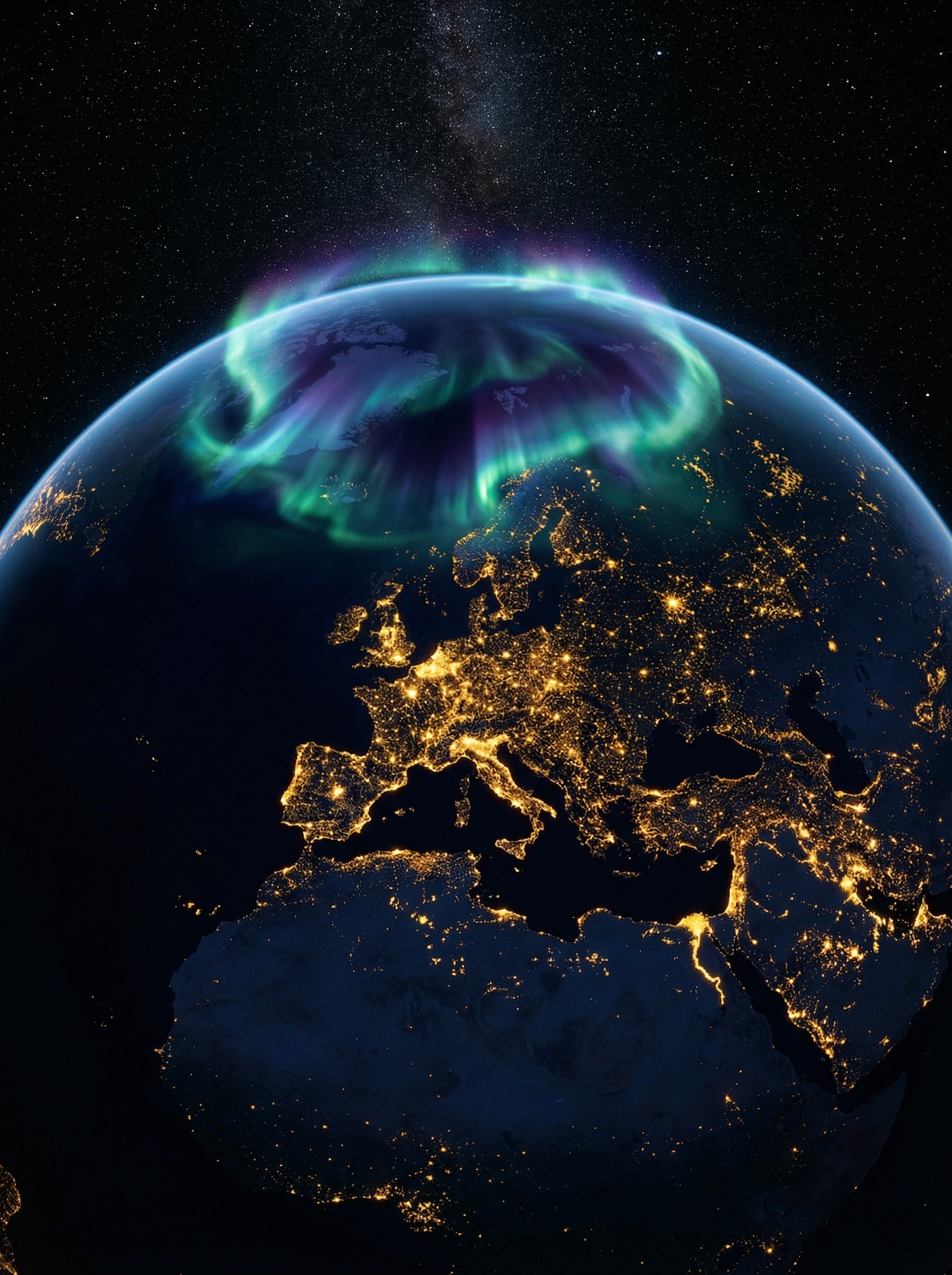
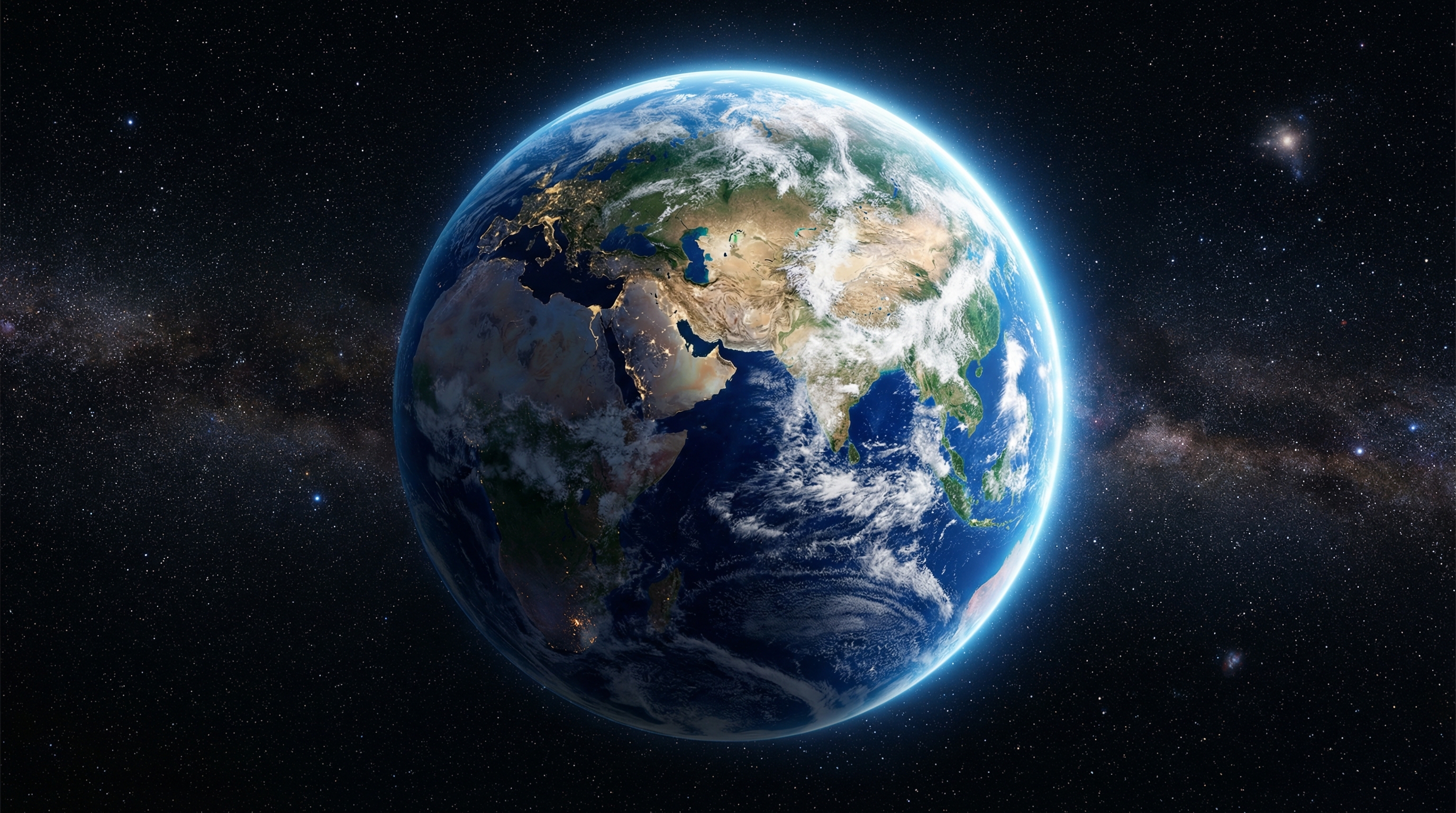
Every generation believes it lives at the most extraordinary moment in history. Every generation is right — and wrong. What makes 2026 to 2076 genuinely different from any previous fifty-year window is the convergence of multiple exponential technology curves simultaneously reaching maturity. Climate, biology, artificial intelligence, energy, and space are all transforming at once. The world in 2076 will not be a slightly improved version of today. It will be a fundamentally different civilisation operating on different principles. Here is what the science actually says about what is coming.
This is not speculation. Every prediction that follows is drawn from peer-reviewed research, published scientific roadmaps, and documented demographic and technological trends. Where uncertainty exists, it is stated. Where the science is clear, the language reflects that clarity. The future is not unknowable. It is calculable. And it is being calculated right now, in laboratories, universities, and research institutes around the world, by people whose findings almost never make the news.
Chapter 01 · Biology
The Human Lifespan
Will Change Forever
In 2076, a significant portion of the global population will be alive who, by any biological measure available today, should not be. The science of aging has undergone a transformation in the 2020s that most people have not noticed — because the results are not yet visible in human lifespans, though they will be. Senolytic therapies, epigenetic reprogramming, and continuous gene expression monitoring are not futuristic concepts. They are documented, published, and actively being developed by institutions including the Salk Institute, the Broad Institute, and a dozen well-funded private companies.
The fundamental discovery driving this revolution is that aging is not an inevitable biological process — it is a form of information loss. Specifically, the loss of epigenetic information that tells cells which genes to express. Nobel laureate David Sinclair's research at Harvard Medical School has demonstrated that this information can be partially restored in animal models, reversing measurable biological aging markers. In 2076, the expected human lifespan in high-income countries may well exceed 110 years — not through keeping people alive longer in decline, but through extending the period of biological youth.
🧬
Genetics
Personalised Gene Medicine
By 2076, every person will have their genome fully sequenced at birth. Diseases that have plagued humanity for millennia — hereditary cancers, genetic disorders, cardiovascular disease — will be corrected before birth using CRISPR-derived tools that are already in clinical trials today.
🩺
Medicine
AI Doctors That Never Miss
AI diagnostic systems in 2076 will outperform any human specialist across every medical domain — not because human doctors will be eliminated, but because AI will catch what humans miss, always, in real time, from continuous biosensor data every person will wear.
🧠
Neuroscience
Alzheimer's Solved
The amyloid hypothesis of Alzheimer's disease — the leading framework for understanding and treating dementia — is already yielding effective treatments. By 2076, dementia will be a managed condition rather than an inevitable consequence of aging for most people.
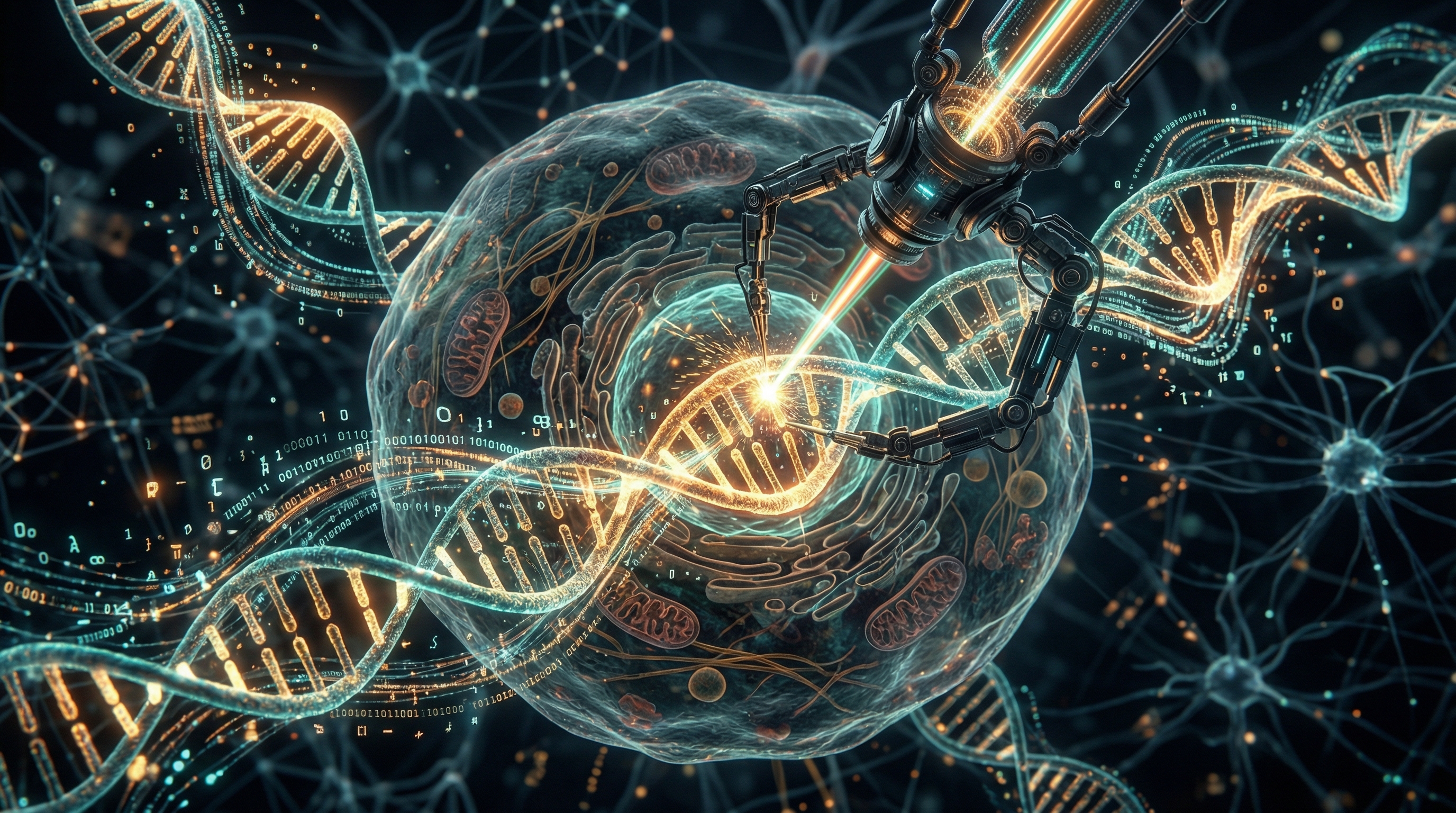
Longevity Science · Epigenetic Reprogramming · The Biology of 2076
Chapter 02 · Climate
The Climate Is
Not What You Think
The climate story of the next fifty years is not simply one of disaster and loss — though those elements are real and documented. It is a story of simultaneous crisis and transformation, of human civilisation reorganising itself around an energy system that, by 2076, will be fundamentally different from anything that has existed in human history.
The International Energy Agency's documented trajectory shows solar and wind energy costs falling to near zero at the point of generation within decades. By 2076, the majority of the world's energy will be generated by renewables at costs that are effectively free at source, with storage and distribution as the primary costs. Energy abundance — not scarcity — will be the defining economic reality of 2076. What this means for global poverty, for food production, for fresh water availability, and for industrial capacity is transformative beyond most current projections.
2030–2035 Near
⚡ Renewable Energy Majority
Solar and wind surpass fossil fuels as the primary electricity source globally. Electric vehicle fleets dominate new car sales in virtually every market. The last new petrol-only car is being manufactured somewhere for the final time.
2035–2045 Transition
🌊 Ocean-Based Food Systems
As agricultural land faces pressure from heat and drought, large-scale aquaculture and precision fermentation provide the majority of protein for growing populations. Lab-grown meat is cheaper than farmed meat in most markets.
2040–2055 Building
🏙️ Climate-Adapted Megacities
The world's largest cities are redesigned around cooling infrastructure, vertical farming, and flood management. Coastal cities either invest in sea wall systems or manage planned retreat. New cities are built in previously uninhabitable northern latitudes.
2050–2065 Peak
☀️ Nuclear Fusion Goes Commercial
Multiple private companies — including Commonwealth Fusion Systems and TAE Technologies — have published net-energy-gain results. By 2065, the first commercial fusion power plants are operational, delivering effectively limitless clean energy.
2065–2076 New World
🌍 Carbon Drawdown at Scale
Direct air capture technology, reforestation at planetary scale, and ocean alkalinity enhancement are actively removing carbon from the atmosphere. The peak warming period is behind humanity. The long work of restoration has begun.
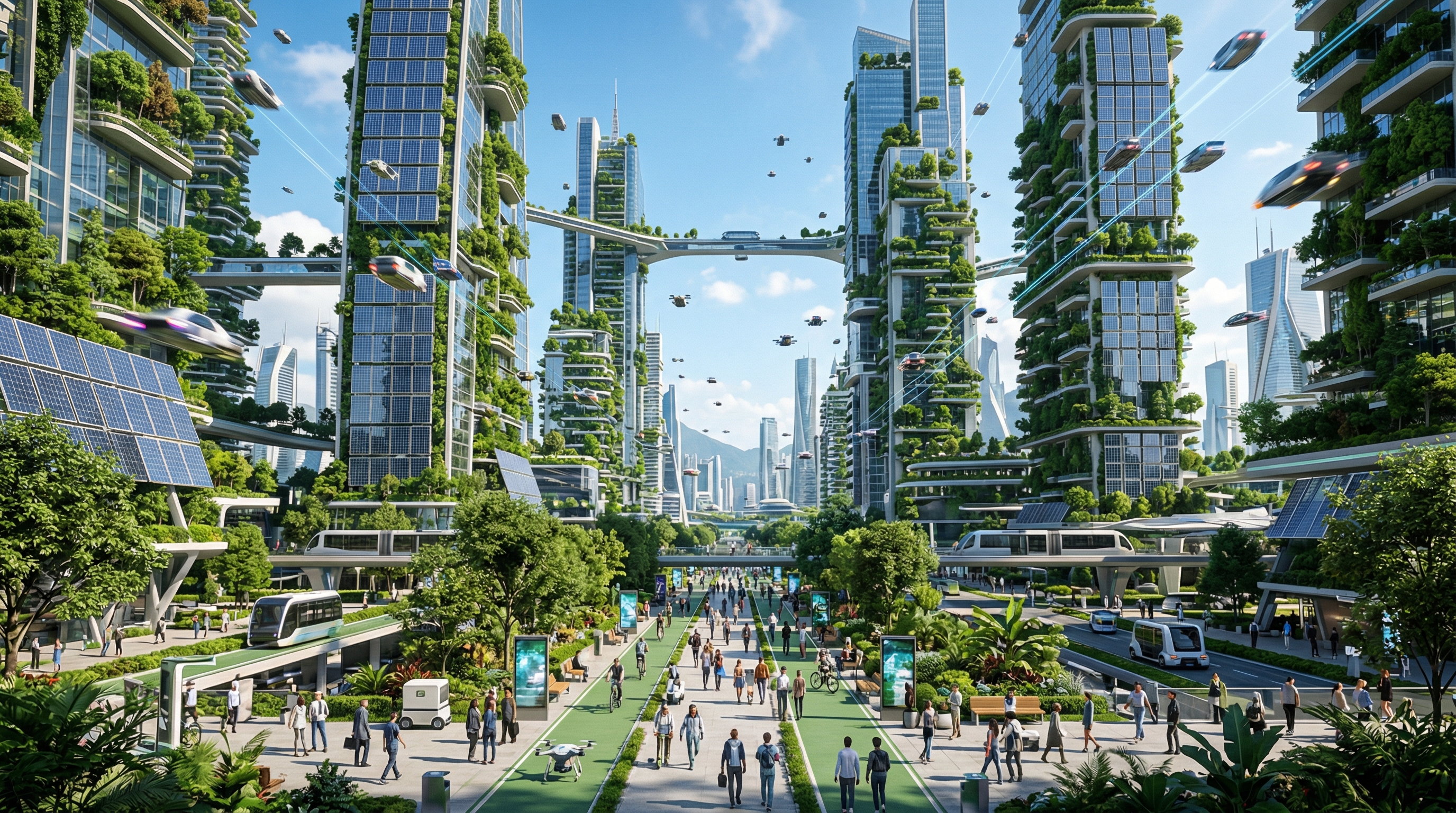
The Climate-Adapted City · 2076 · Vertical Farms · Solar Canopies · Ocean Views
9.7B
People on Earth in 2076 — Then Population Begins to Fall
The UN's median projection shows global population peaking at approximately 9.7 billion around 2064, then beginning a slow decline as fertility rates in every world region converge below replacement level. By 2076, the world's demographic challenge will not be overpopulation — it will be the management of aging, shrinking populations in the world's richest countries.
Chapter 03 · Intelligence
AI in 2076 —
Beyond What We Can Currently Imagine
The most honest thing that can be said about artificial intelligence in 2076 is that the trajectory from 2024 to 2026 already exceeded every projection made in 2020. Extrapolating fifty years forward with confidence is genuinely impossible — because the intelligence systems of 2076 will themselves be the primary drivers of their own development. What we can say with reasonable confidence is that AGI — artificial general intelligence, systems that match and exceed human cognitive ability across all domains — will exist.
The more important question is not whether AGI exists in 2076, but what relationship human beings have with it. The optimistic scenario — supported by the current trajectory of AI alignment research — is a world in which extraordinarily capable AI systems are genuinely aligned with human values, serving as the most powerful tool in human history for solving problems that have resisted human intelligence for millennia: disease, mental health, poverty, conflict, and environmental destruction. In this scenario, 2076 is not a world in which AI has replaced humanity. It is a world in which AI has made humanity vastly more capable than it was.
"The development of full artificial intelligence could spell the end of the human race — or the beginning of its greatest chapter. The difference lies entirely in the choices made in the decades before it arrives."
— Synthesised from statements by leading AI safety researchers — 2024–2025

Human + AGI · The Partnership · 2076 · Intelligence at a New Scale
Space & Cities
Chapter 04 · Beyond Earth
Humanity Becomes
a Multi-Planet Species
The question of whether humans will have a permanent settlement on Mars by 2076 is not scientifically controversial — it is logistically and politically uncertain. SpaceX's Starship system is designed specifically for Mars missions. NASA, ESA, China's CNSA, and multiple private entities have published Mars settlement timelines. The scientific consensus is that the technology required for a permanent Mars base exists or is in active development. Whether humanity chooses to prioritise it is a political question. Whether it is possible is not.
More certain than Mars in its timeline is the expansion of humanity's presence in near-Earth space. Space-based solar power — collecting solar energy in orbit and transmitting it to Earth — is already being researched by the European Space Agency and the UK Space Agency with planned demonstration missions in the early 2030s. By 2076, a significant portion of humanity's energy may literally come from space. The asteroid mining industry — accessing mineral resources worth quadrillions of dollars in the asteroid belt — will be in early commercial operation, removing the finite resource constraint that has governed human economics since the beginning of civilisation.
A permanent Moon base exists. The Artemis programme's long-term vision, combined with China's parallel lunar programme, makes a permanent crewed presence on the Moon by the late 2030s highly probable. By 2076, the Moon is a research station, a refuelling depot, and possibly a population centre of several hundred to several thousand people.
Mars has its first permanent settlement. Not a large city — a research base of hundreds to low thousands of people, facing extraordinary challenges of radiation, gravity, and psychological isolation. But it exists. For the first time in the four-billion-year history of life on Earth, living organisms are permanently resident on another planet.
Space tourism is ordinary. In 2076, suborbital and orbital travel is available to the upper middle class, not just billionaires. Orbital hotels exist. The experience of viewing Earth from space — the overview effect, the cognitive and emotional transformation that every astronaut has reported — is available to millions rather than dozens.
The first interstellar probe has launched. Breakthrough Starshot — the project to send gram-scale probes to Alpha Centauri at 20% of the speed of light using laser propulsion — is in active development. By 2076, it has either launched or is in final preparation. Humanity has reached beyond the solar system for the first time in its history.
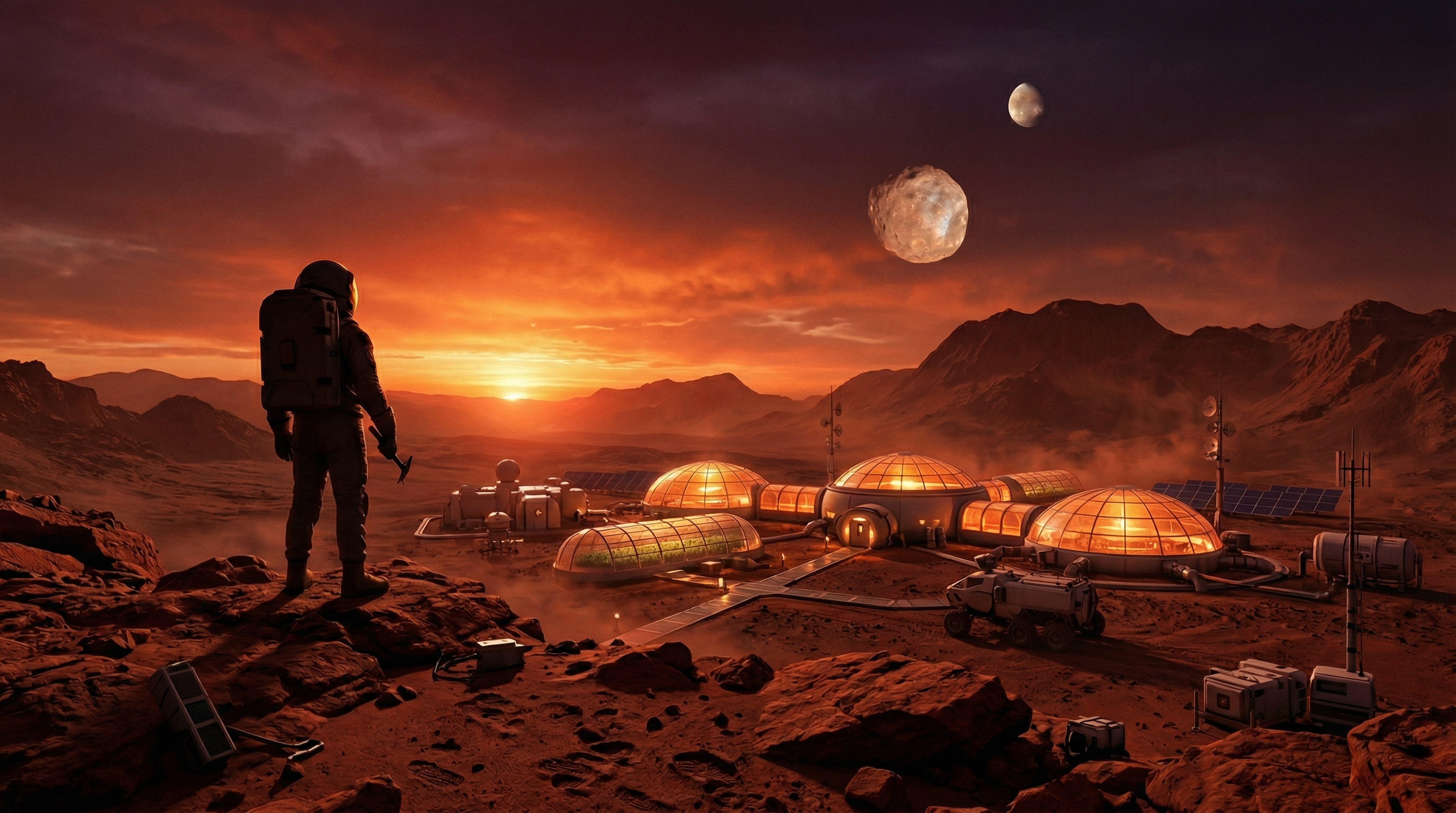
Mars Settlement · 2076 · The First Multi-Planet Civilisation in History
Chapter 05 · Society
How Human Life
Actually Feels in 2076
The technological changes described above are enormous. But technology alone does not describe a civilisation. What does it feel like to be a human being alive in 2076? What does daily life look like? What do people worry about? What do they love? These are questions that the data can begin to answer, even if incompletely.
Work has been redefined. The vast majority of repetitive cognitive and physical labour has been automated. The 40-hour work week — already eroding in 2026 — is no longer the standard in most high-income economies. People work in the ways that require human creativity, human judgment, human connection, and human care. Artists, therapists, scientists, teachers, caregivers, and community builders are the most valued workers in a world where machines do most of the rest. The question of how society distributes the extraordinary productivity gains from automation is the central political debate of the era — a debate that has been running since the 2030s and has produced radically different answers in different countries.
Cities are greener, quieter, and more walkable than at any point since the pre-automobile era. The elimination of internal combustion engines from urban environments has reduced air pollution to levels not seen since the industrial revolution. Buildings are covered in vegetation, generating power and food simultaneously. The concept of commuting — travelling long distances daily to perform work that could be done anywhere — has largely dissolved in the decade following the pandemic. Most people live closer to where they work, or work from where they live.
⚠️ The Challenges That Remain Real
The world of 2076 is not a utopia. Inequality between and within nations remains the defining moral challenge of the era. The benefits of longevity medicine, genetic treatment, and AI assistance are not evenly distributed — they flow first, as always, to those with wealth and access. The geopolitical tensions created by climate migration, resource competition, and AI-driven economic disruption have produced new forms of conflict. Mental health — the inner experience of human beings navigating a world that changes faster than any previous generation experienced — is the most significant health crisis of the era. The technology of 2076 has solved many of humanity's oldest problems while creating new ones that its creators did not anticipate.
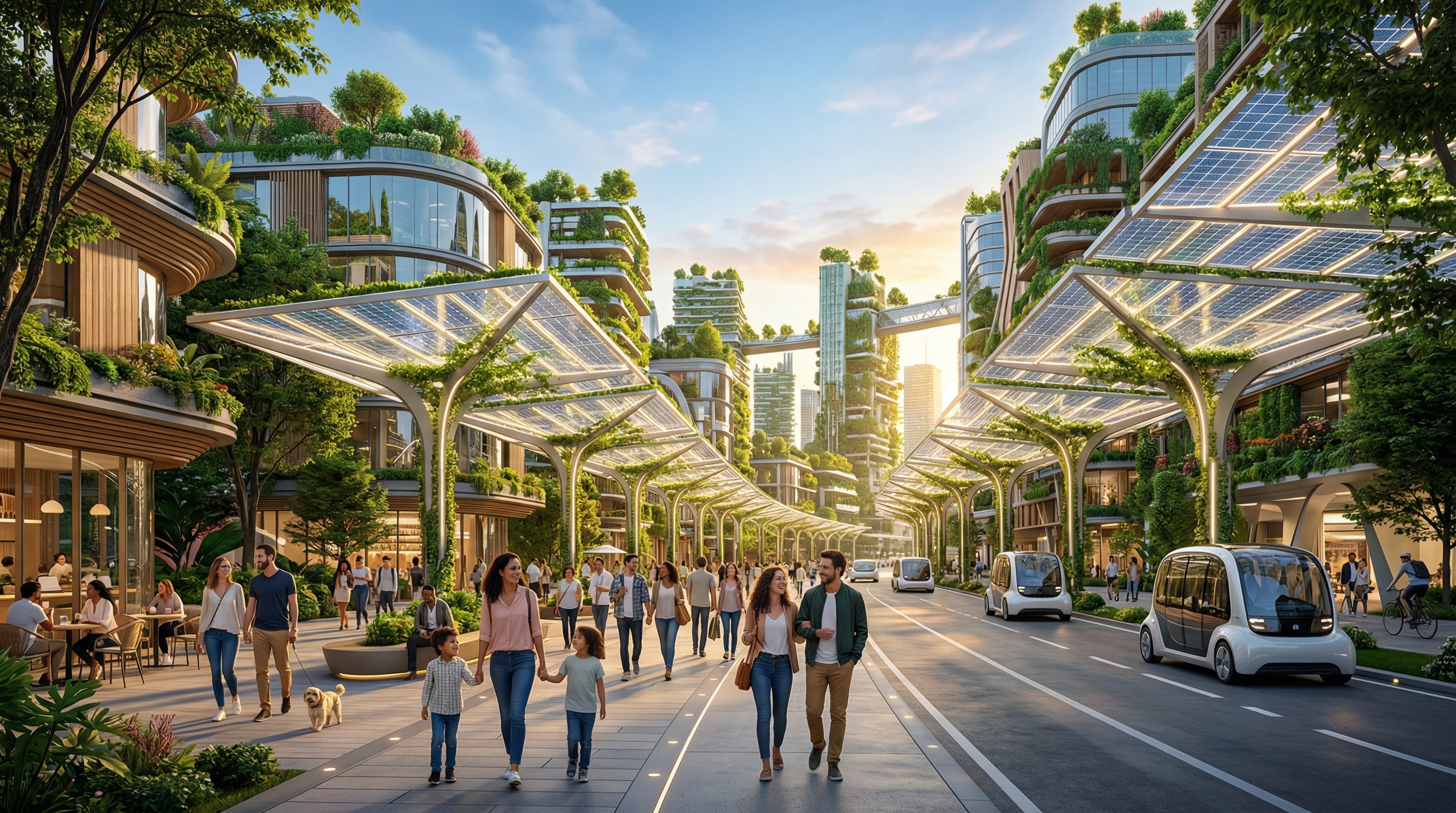
Daily Life 2076 · Green Cities · Clean Air · The Texture of Tomorrow
The Choice
Chapter 06 · Conclusion
The Most Important
Thing About 2076
The world of 2076 is not inevitable. Every single prediction in this article describes a possibility, not a certainty. The technologies are real. The trajectories are documented. But technology does not deploy itself. Energy systems do not transition on their own. Diseases do not cure themselves even when cures exist. The difference between the best and worst versions of 2076 is entirely determined by the decisions made by human beings — individually and collectively — in the years between now and then.
The people who will be most alive in 2076 — who will have made the most of what that world offers — are the ones who began today to live as if the future mattered. Who reduced what was harmful. Who built what was needed. Who educated themselves and others. Who chose, in the small daily decisions that accumulate into civilisations, to be on the right side of the changes that were always coming. The world in 2076 is already being built. The only question is by whom, and with what intention.
You are alive at the most consequential fifty years in the history of our species. The choices made in this window — in policy, in technology, in individual behaviour — will determine the kind of world that exists in 2076 with a completeness that no previous generation has had the power to match. That is not a burden. It is the most extraordinary privilege in the long story of human beings on this planet. And it belongs, entirely, to you.