You spend one third of your entire life unconscious. That is roughly 26 years, if you live to 80. For most of human history, we assumed sleep was simply rest — the body powering down, waiting for morning. Modern neuroscience has revealed something far more extraordinary. Sleep is not rest. It is the most active, most important, most architecturally complex thing your brain ever does.
What happens the moment you fall asleep would, if you could observe it from the outside, look less like rest and more like the launch of a highly coordinated emergency operation. Hormones flood your system. Electrical waves cascade through neural networks. Memories are replayed, sorted, and filed. Toxins that accumulated in your brain during the day are physically flushed out. Your immune system rebuilds. Your emotional regulation is reset. And somewhere in this storm of biological activity — you dream.
01
The Architecture
Sleep Is Not One Thing — It Is Five
The most common misconception about sleep is that it is a single, uniform state — a light switch that simply turns off. In reality, your brain cycles through five distinct stages of sleep, each with a completely different electrical signature, a different neurological function, and a different level of consciousness. You complete four to six full cycles every night, each lasting approximately 90 minutes.
😪
Stage 1 · N1
Light Drowse
The transition between waking and sleep. Lasts 1–5 minutes. Brain waves slow. You can be woken easily. Hypnic jerks — that falling sensation — occur here.
💤
Stage 2 · N2
Light Sleep
Body temperature drops. Heart slows. Sleep spindles — bursts of 12–14Hz activity — fire. These are believed to lock short-term memories into long-term storage.
🔒
Stage 3 · N3
Deep Sleep
Slow delta waves dominate. Growth hormone is released. Tissue repair, immune strengthening, and cellular regeneration peak. The hardest stage to wake from.
🌊
Stage 4 · N4
Slow-Wave Sleep
Deepest restorative sleep. The glymphatic system — your brain's waste-clearance network — activates fully, flushing toxic proteins linked to Alzheimer's disease.
🌀
Stage 5 · REM
Dream State
Rapid Eye Movement. Brain activity matches waking state. Body paralysed. Emotional memories processed. Creative connections formed. Where most vivid dreams occur.

Brain Wave Activity Across 5 Sleep Stages · EEG Visualization
02
The Brain Cleanse
Your Brain Washes Itself While You Sleep
In 2013, a research team at the University of Rochester, led by Dr. Maiken Nedergaard, made one of the most important neuroscience discoveries in decades. They discovered that the brain has its own dedicated waste-clearance system — the glymphatic system — and that it is almost entirely inactive while you are awake. It switches on fully only during deep sleep.
Here is what happens: during deep sleep, the brain cells themselves physically shrink by approximately 60%. This creates space between cells, allowing cerebrospinal fluid to flow rapidly through the brain tissue, flushing out metabolic waste products that accumulated during the day. Chief among these waste products are amyloid beta and tau proteins — the same proteins that form the plaques and tangles found in the brains of Alzheimer's patients.
Every night of good sleep is, quite literally, a brain-cleaning session that may be your most powerful protection against cognitive decline. Every night of poor sleep leaves a small residue of these toxic proteins behind. Decades of poor sleep may, according to multiple large-scale studies, significantly increase the risk of developing Alzheimer's disease.
60%
Brain Cells Shrink During Deep Sleep
This 60% volumetric reduction in brain cell size is not damage — it is the mechanism that allows cerebrospinal fluid to flood the brain and physically wash out toxic waste. Without this process, your brain accumulates its own pollution. Your pillow is doing more work than you ever imagined.
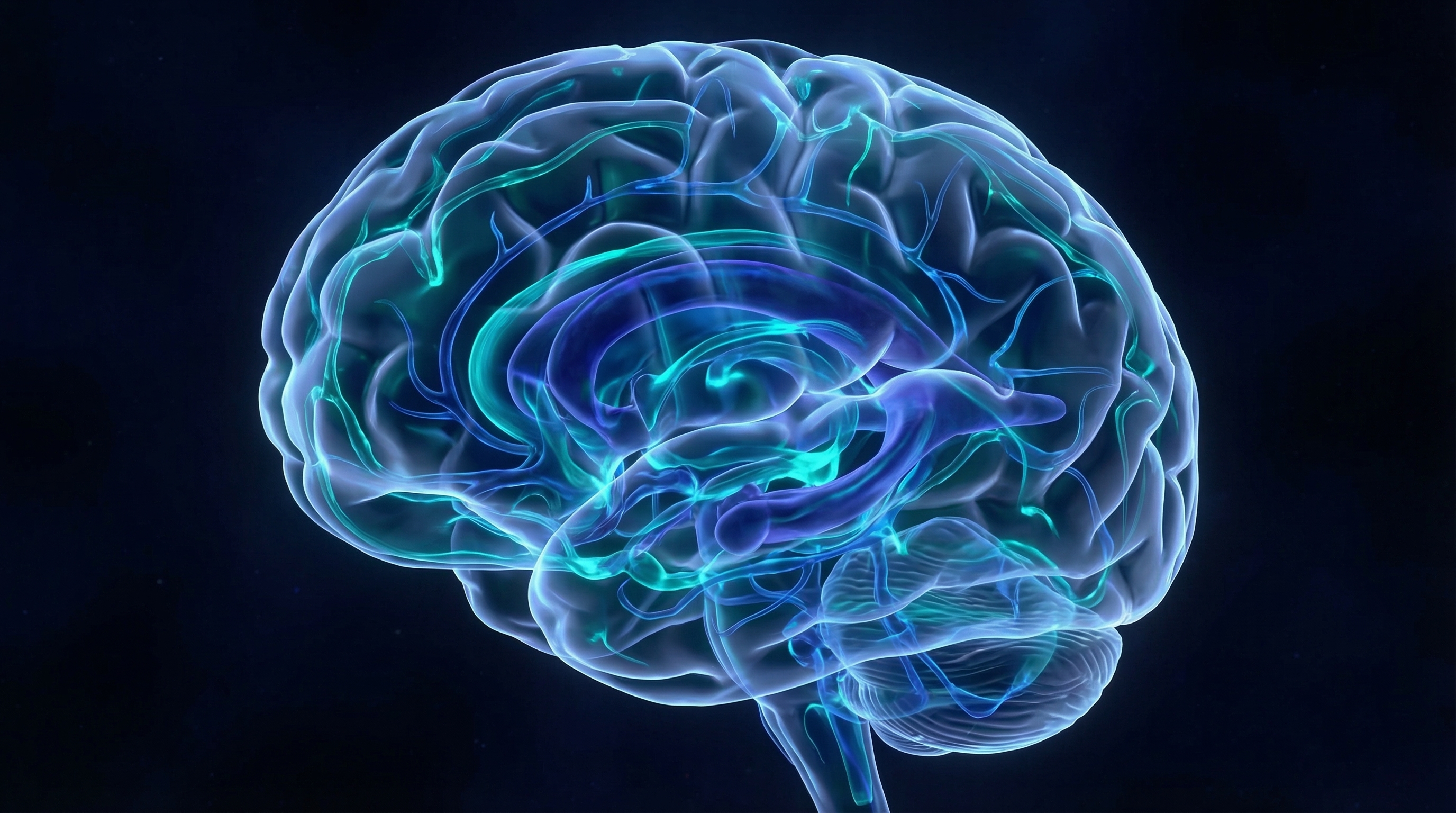
Glymphatic System · Brain's Waste-Clearance Network · Active Only in Sleep
03
Memory Science
Sleep Is Where You Actually Learn
You have been taught that learning happens while you study. That is only half true. The other half happens while you sleep. Memory consolidation — the process of converting short-term, fragile memories into stable long-term ones — occurs almost exclusively during sleep, and the process is far more sophisticated than simple storage.
During N2 sleep, your hippocampus — the brain's temporary memory holding area — replays the day's experiences to the neocortex, where long-term memories are permanently stored. This replay happens at roughly 20 times the speed of the original experience. Memories are not just copied — they are selectively edited, emotionally tagged, and integrated with existing knowledge. The brain decides what matters and what does not, retaining the meaningful and discarding the trivial.
Motor skill memories — learning to play an instrument, drive, or type — consolidate specifically during light N2 sleep. Studies show that a night of sleep after learning a physical skill improves performance by 20–30% compared to the same time period spent awake.
Declarative memories — facts, names, events — consolidate during slow-wave deep sleep. Students who sleep well before exams do not just feel better. They have measurably stronger memory retention for the material they studied.
Emotional memory processing happens during REM sleep. The brain re-experiences emotional events from the day, but does so in a neurochemical environment almost completely free of norepinephrine — the stress chemical. This allows the brain to extract the lesson of an experience without the pain of it, reducing the emotional charge of difficult memories over time.
Creative problem-solving peaks after REM sleep. The famously productive phenomenon of "sleeping on a problem" is neurologically real — REM sleep creates novel associations between memories that the waking brain, focused on linear logic, would never form. Many of history's greatest scientific insights arrived as dreams or immediately upon waking.
One night of poor sleep reduces the brain's ability to form new memories by up to 40%, according to research from UC Berkeley. This is not a subjective feeling of being foggy — it is a measurable, neurological impairment comparable to the effect of clinical intoxication.
"The shorter your sleep, the shorter your life. The evidence is overwhelming and consistent: sleep is the single most effective thing you can do to reset your brain and body health."
— Professor Matthew Walker, Director of the Centre for Human Sleep Science, UC Berkeley
Dream Science
04
The Dream State
What Dreams Actually Are
Dreams have fascinated human beings since the beginning of recorded history. Every major civilisation — Sumerian, Egyptian, Greek, Chinese, Mesoamerican — kept dream records and assigned them profound significance. Modern neuroscience has not stripped that significance away. If anything, it has deepened it. We now know that dreaming is not random noise. It is a neurologically specific, purposeful state with measurable functions.
During REM sleep, the prefrontal cortex — the rational, logical, self-monitoring part of your brain — is largely deactivated. Simultaneously, the limbic system — responsible for emotion — and the visual cortex become hyperactive. Your brain generates vivid, emotionally charged scenarios in the complete absence of logical gatekeeping. This is not a malfunction. It is a feature. The result is a simulation environment in which your brain rehearses social situations, processes threatening scenarios, and makes creative leaps that waking logic would suppress.
🎭
Threat Rehearsal Dreams
Being chased, falling, being unprepared. These are the brain rehearsing threat responses in a safe simulation — sharpening survival instincts without real-world risk.
💡
Creative Synthesis Dreams
The brain combines unrelated memories into novel associations. Kekulé discovered the benzene ring structure in a dream. Paul McCartney heard Yesterday in a dream. Literally.
🧹
Emotional Processing Dreams
Recurring dreams about anxiety-inducing situations are the brain repeatedly processing unresolved emotions — trying to neutralise their charge until resolution is reached.
🌀
Lucid Dreams
A state in which you become aware you are dreaming. Approximately 55% of people have experienced at least one. EEG shows a distinct neural signature — a hybrid of REM and waking consciousness.
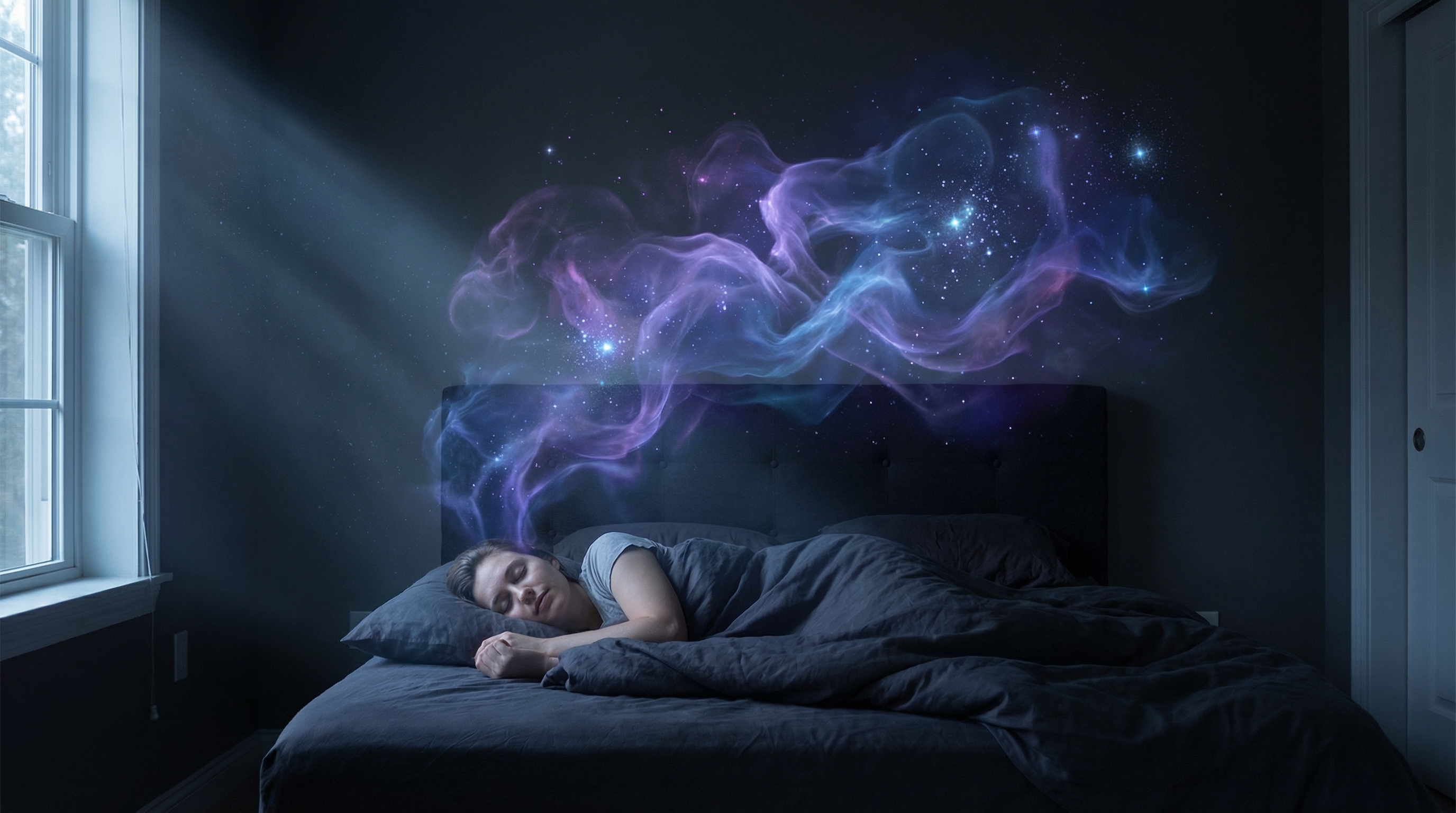
REM Sleep · The Brain's Private Simulation · Every Night Without Exception
05
The Data
What Sleep Deprivation Actually Does to You
The world has a sleep deprivation problem that it refuses to take seriously. In 1942, the average American slept 7.9 hours per night. Today that number is 6.5 hours. The World Health Organisation has classified insufficient sleep as a global health epidemic. And the consequences, documented across thousands of peer-reviewed studies, are severe in ways that society consistently underestimates.
| Hours Lost |
What Happens to Your Brain |
Documented Effect |
| 1 Hour |
Attention, reaction time reduced |
24% increase in cardiac events (DST studies) |
| 2 Hours |
Memory formation drops 20–30% |
Emotional regulation significantly impaired |
| 3 Hours |
Immune function reduced by 70% |
4× more likely to catch cold virus (UCSF study) |
| 20 Hours awake |
Cognitive impairment = 0.08% BAC |
Legally drunk level of impairment |
| Chronic (6h/night) |
Amyloid plaque accumulation begins |
Alzheimer's risk increases significantly |
| 11 Days zero sleep |
Maximum recorded human survival |
Randy Gardner, 1964 — severe hallucinations by day 4 |

Sleep Deprivation · A Silent Epidemic · 1.5 Billion People Affected Globally
The Science
06
The Final Truth
Six Facts That Will Change How You Sleep Tonight
Your brain temperature drops 2–3°C at sleep onset. This is not incidental — it is required. The brain's restorative processes only function efficiently at cooler temperatures. A cooler bedroom (16–18°C) measurably improves sleep quality. This is why you instinctively push your feet out from under the covers — your body is trying to release heat to lower core temperature.
You experience temporary paralysis every night. During REM sleep, your brain sends a signal to the spinal cord that paralyses every voluntary muscle in your body. This prevents you from physically acting out your dreams. People with REM Sleep Behaviour Disorder — where this mechanism fails — literally act out their dreams, sometimes causing injury.
Your brain grows new neurons during sleep. Neurogenesis — the creation of new brain cells — occurs primarily during deep sleep, concentrated in the hippocampus. Sleep is not just protecting the neurons you have. It is generating new ones. A consistent lack of deep sleep directly reduces the rate of neurogenesis and has been linked to depression and anxiety.
Alcohol destroys REM sleep. A widespread belief holds that alcohol helps sleep. It does not. Alcohol suppresses REM sleep, replacing it with sedation. You lose all the emotional processing, memory consolidation, and creative synthesis that REM provides. The result is that you wake feeling rested but cognitively and emotionally unrestored. The hangover is partly a REM sleep debt.
Dreams are forgotten within 5 minutes of waking. 95% of dream content is gone within five minutes of opening your eyes unless you immediately focus on recalling it. This is because norepinephrine — the chemical required for memory formation — is absent during REM sleep. The dream forms no lasting neural trace. The act of recalling it upon waking is the first time it exists in permanent memory.
The longest anyone has stayed awake was 11 days, 25 minutes. Randy Gardner, a San Diego high school student, set this record in 1964 under medical supervision. By day four he was experiencing hallucinations and paranoia. By day eleven he could barely form sentences. He recovered with no lasting effects — but the experiment stands as the clearest human proof that sleep is not optional. It is as biologically necessary as food or water.

The Most Extraordinary Thing You Do · Every Single Night · Without Knowing
🌙 Sleep Science · Verified · 2026
Tonight, When You
Close Your Eyes,
Everything Begins.
You are not going to sleep. You are launching the most sophisticated biological restoration system ever evolved. Every memory worth keeping, every emotion worth releasing, every neuron worth growing — it all happens in the dark, while you breathe slowly, and the world believes you are doing nothing.
💦· 100% Verified Science · Sleep Research 2026 ✦
Sleep Science
Brain Health
REM Sleep
Dream Science
Memory
Neuroscience
Alzheimer's Prevention
Mental Health
Wellness
Mind Blowing
Viral Science
Human Biology