Notification texts go here [ Permium Write, world & All ] join Now!

The Last Driver: How Autonomous Luxury Vehicles Will Replace You by 2035

Waymo. Tesla FSD. Mercedes Drive Pilot. The driverless revolution is not coming — it's here. 20 million rides. Zero drivers. $1.3 trillion market. The
Please wait 0 seconds...
Scroll Down and click on Go to Link for destination
Congrats! Link is Generated
NO DRIVER · NO LIMIT · NO STOPPING · THE AUTONOMOUS AGE IS HERE
Luxury autonomous self-driving vehicle night highway 2035
2025 — 2035 · The Autonomous Revolution

THE LAST
DRIVER

The roads of tomorrow have no steering wheel, no accelerator, no human fear.
Only speed, intelligence, and silence.

300+ Sensors
·
$1.3T Market 2030
·
94% Fewer Crashes
·
0 Drivers Needed
Scroll to discover
THE CAR SEES EVERYTHING.
THE CAR DECIDES IN NANOSECONDS.
THE CAR NEVER GETS TIRED.
And the human? Sits back. Arrives safely. Every time.
$0B
Market Size by 2030
McKinsey Global Institute
0%
Crash Reduction Potential
NHTSA / WHO Data
0+
Sensors Per Vehicle
Waymo / Tesla Tech Specs
0M
Autonomous Vehicles by 2035
IEA Future Mobility Report
The Shift

A Century of Human Driving.
Ending in This Decade.

In 1886, Karl Benz built the first automobile. For 139 years, every car on every road shared one essential requirement: a human being in the driver's seat, awake, alert, responsible. That requirement is ending. Not gradually. Not partially. The vehicles being built today — in California, Munich, Shenzhen, and Tokyo — are designed from the ground up for a world where the driver is optional.

Waymo's fully driverless taxis have completed over 20 million miles of passenger trips with no safety driver. Tesla's Full Self-Driving is active in over two million vehicles. Mercedes-Benz received the world's first legally certified Level 3 autonomous driving approval in 2023. The technology is not on the horizon. It is on the road.

How the Car Sees the World
360° PERCEPTION AT 200KM/H
👁️
LIDAR
360° laser · 200m range · 2.4M points/sec
📡
RADAR
Sees through fog · Rain · Night · 300m
🎥
CAMERAS
12–16 cameras · Signs · Gestures · Lane marks
🧠
AI CHIP
144 TOPS · Decisions in <10ms · Never fatigues
🛰️
GPS + V2X
Centimetre precision · Talks to other cars
🌡️
ULTRASONIC
Near-field · Parking · Pedestrian detection
The Vehicles Changing Everything
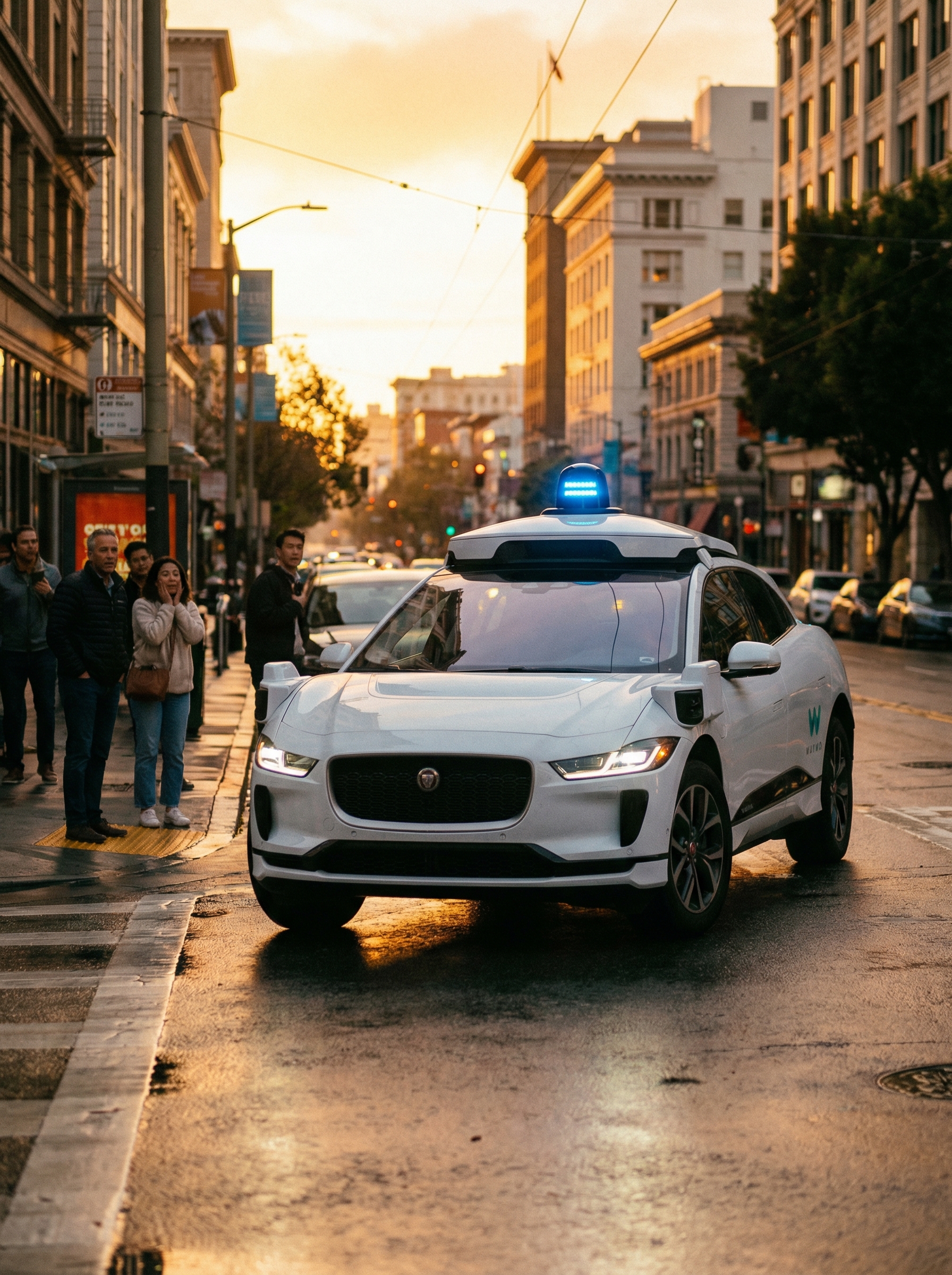
Waymo robotaxi autonomous driverless operating city
◉ LIVE NOW · SAN FRANCISCO & PHOENIX
2025
Waymo One · Alphabet / Google

The Robotaxi That Has Already Given 20 Million Driverless Rides — Zero Humans in the Front Seat

Waymo One is not a prototype. It is a commercial service in San Francisco, Phoenix, and Los Angeles — giving fully driverless rides to paying passengers, 24 hours a day, in real city traffic. It navigates construction zones, jaywalking pedestrians, and emergency vehicles without any human intervention.

Waymo's published safety data: 7.1 million driverless miles, zero fatalities, 85% fewer injury-causing crashes than human-driven benchmarks in the same cities. This is a peer-reviewed, publicly available dataset — not a marketing claim.

The Waymo vehicle knows every building, traffic light, and lane restriction in its operating area from high-definition maps updated in real time, and millions of simulation miles before ever touching a real road.

2030 EXPANSION: Waymo is scaling to 10 US cities by end of 2026. Each expansion takes months, not years. The service handling hundreds of thousands of rides per month is scaling toward millions — and the economics transform dramatically as fleet costs drop and data compounds.
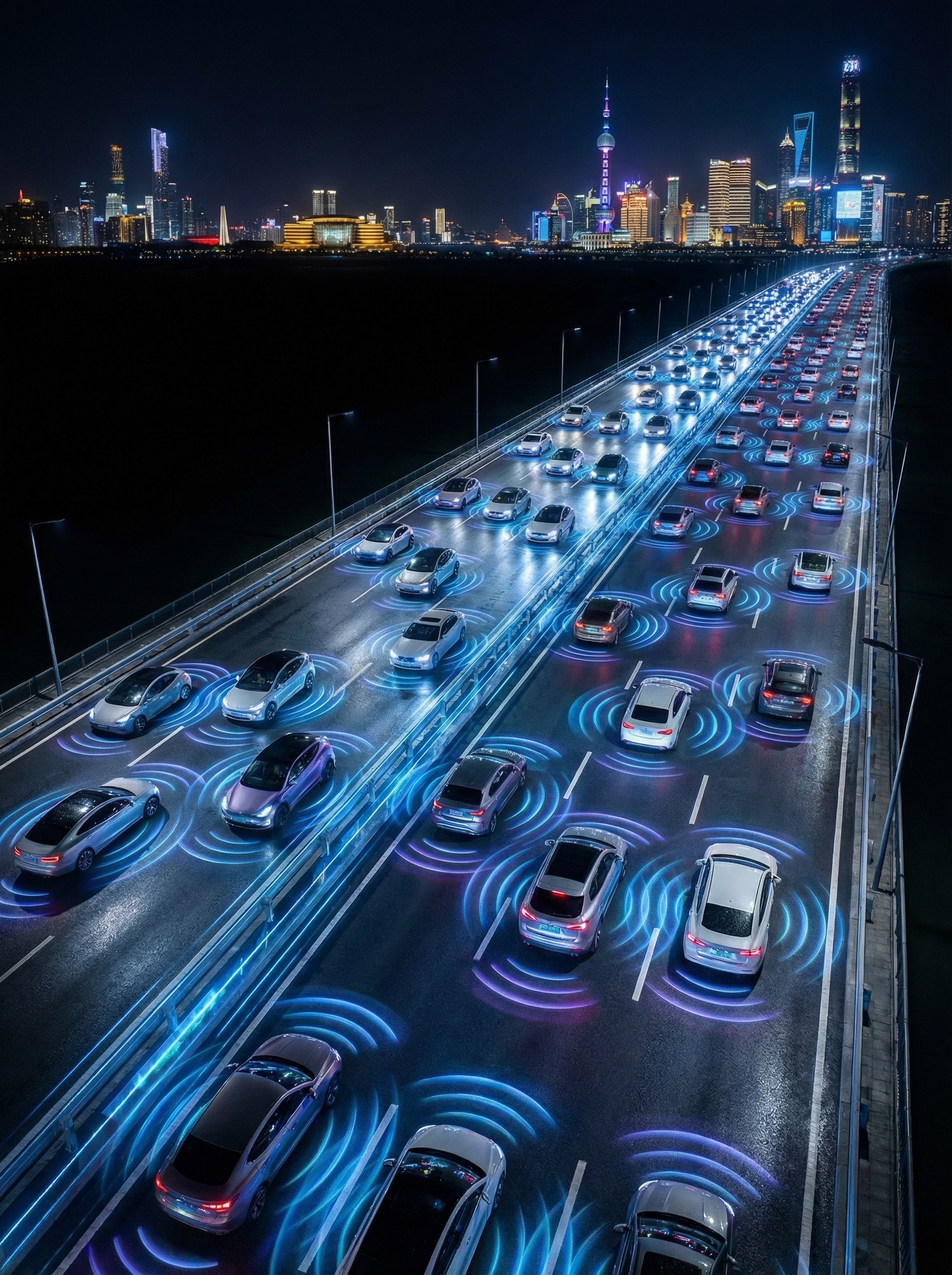
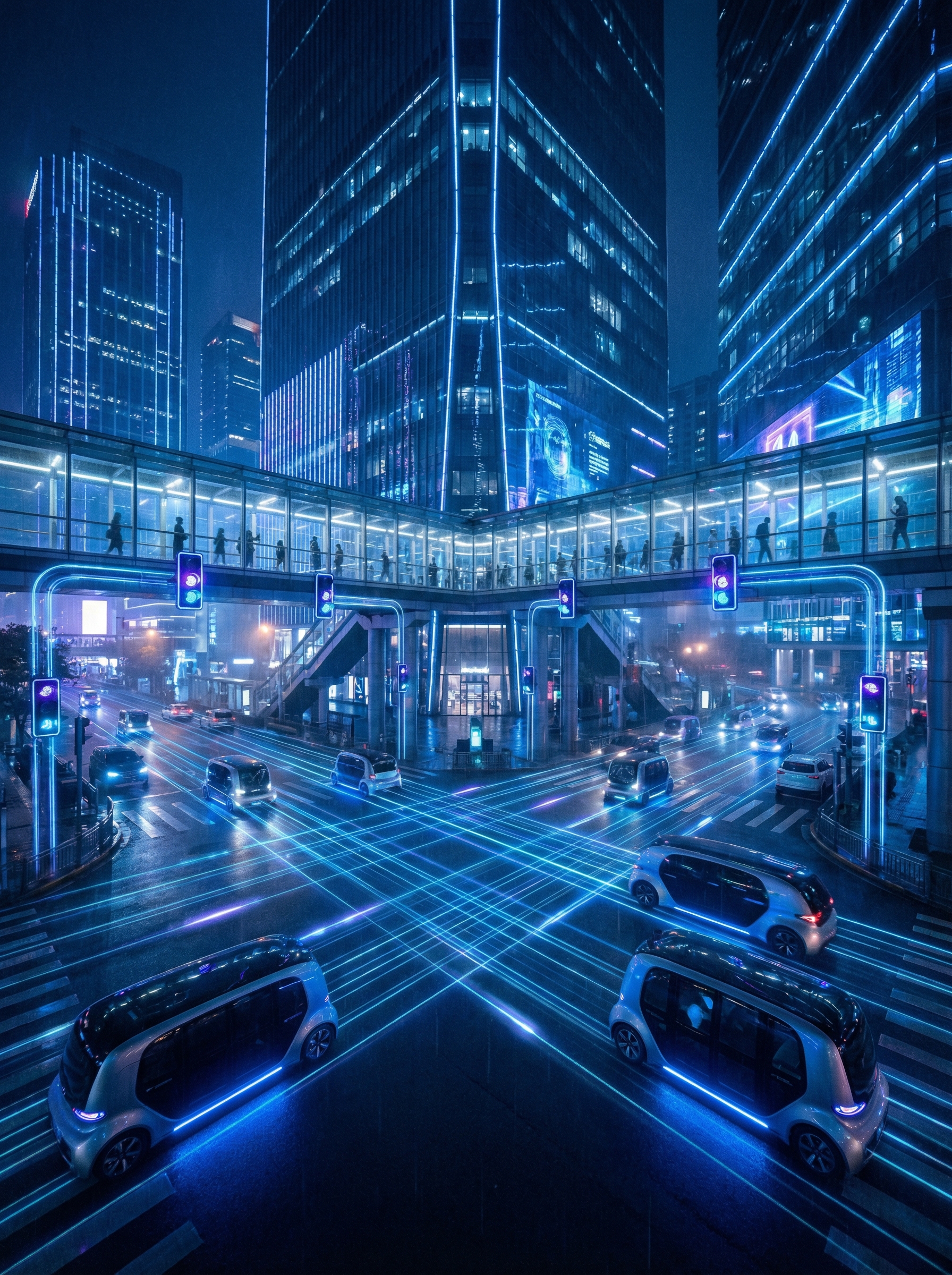
Autonomous vehicles synchronized smart highway night future 2035
THE HIGHWAY OF 2035 V2V · V2I · ZERO HUMAN ERROR
Mercedes luxury autonomous Level 3 certified self-driving
◉ LEGALLY CERTIFIED · GERMANY · USA
2026
Mercedes-Benz Drive Pilot · Level 3

The First Car in History Where the Law Says the Manufacturer — Not the Driver — Is Responsible

Mercedes Drive Pilot is the world's first legally certified Level 3 autonomous system. At Level 3, the vehicle — not the human — is legally responsible for driving when active. The driver may look away, check a phone, work, or sleep. The car is in charge.

Germany granted certification in 2022. California followed in 2023. The system operates on certified highway segments at up to 60km/h — the world's most common and most tedious driving scenario. At handover, the car gives a 10-second warning. No response? The car executes a safe stop.

This liability shift is historic. For the first time ever, an automaker has legally accepted responsibility for the vehicle's decisions. This will cascade through insurance law, traffic law, and liability frameworks globally for decades.

THE INSURANCE REVOLUTION: When the manufacturer accepts liability, the automotive insurance model collapses and rebuilds. Why insure a human for a car where the manufacturer bears responsibility? Drive Pilot is not just a technology milestone — it is the first brick removed from a legal wall that has stood for 139 years.
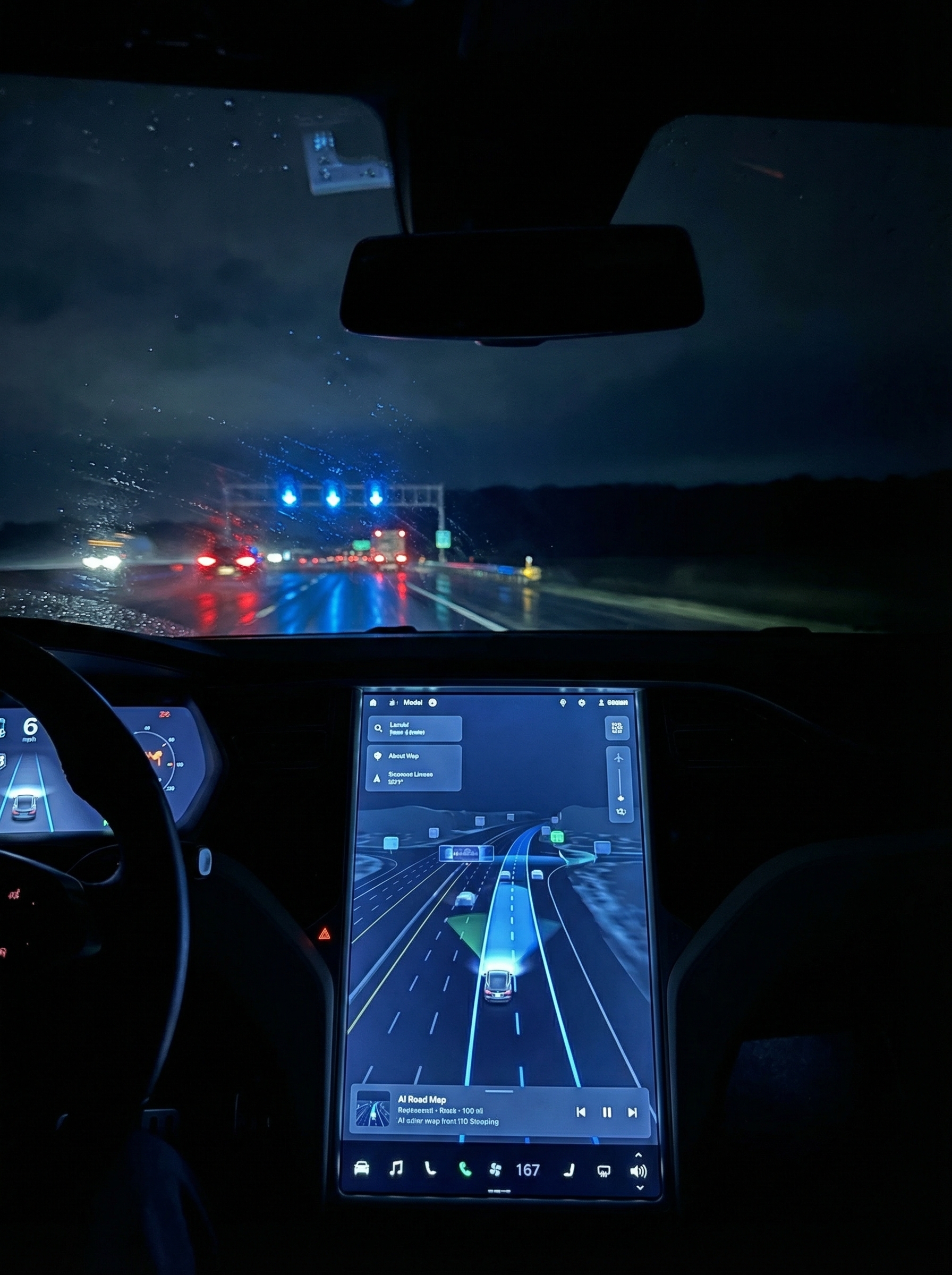
Tesla FSD full self-driving autonomous neural network AI 2026
◉ 2M+ VEHICLES · 3 BILLION MILES OF DATA
2026
Tesla Full Self-Driving · End-to-End Neural AI

Two Million Moving Cameras Training a Single AI Brain — Every Mile Makes Every Tesla Smarter

Tesla uses a pure vision approach — cameras only — processed by a neural network trained on billions of real-world miles from its global fleet. Every Tesla on every road feeds data back to a single training brain. No competitor is close to this data volume.

FSD v12 uses end-to-end neural networks — the AI generates steering, acceleration, and braking directly from camera input, with zero human-written rules in between. It learned to drive the way humans do: by watching.

Waymo has 20 million real-world miles. Tesla has over 3 billion. In machine learning at this scale, data volume is the decisive variable — and the gap compounds with every mile driven by every Tesla, worldwide, every day.

THE CYBERCAB: Tesla's purpose-built robotaxi has no steering wheel and no pedals — it is designed for a world where human driving is structurally impossible because there is no mechanism to perform it. Production began 2025. The Cybercab is not designed to give humans the option to drive. It is designed for a world that no longer needs that option.
Smart city autonomous vehicles V2X connected infrastructure 2035
THE CONNECTED CITY · 2035 EVERY VEHICLE TALKING · ZERO COLLISION ZONES
The Road Ahead

From Today
to Total Autonomy

2026
Robotaxi Expansion — 10 Cities
Waymo operational in 10 US cities. Tesla Cybercab commercial launch. First fully driverless highway corridor opens in Germany. China's Baidu Apollo surpasses 1 million autonomous rides.
2027
Level 3 Goes Mainstream
Mercedes, BMW, Hyundai ship Level 3 globally. First autonomous highway in Asia — Tokyo to Osaka opens. Insurance premiums for human drivers begin rising sharply against autonomous safety benchmarks.
2029
The Urban Transformation
Autonomous vehicles outnumber human-driven taxis in major cities. First pedestrian-priority zones mandating autonomous vehicles. Parking structures begin converting as car ownership models collapse.
2032
Level 4 Commercially Available
First Level 4 personal vehicles on sale — full autonomy, no steering wheel. New designs abandon the driver-centric layout entirely. The interior becomes a lounge, an office, a bedroom. "Driving" becomes optional.
2035
The Last Human Driver
Countries announce sunset dates for human-only driving on major roads. 58 million autonomous vehicles operational globally. Road fatalities at historic lows. The last driver was not the last human who could drive — they were the last human who needed to.
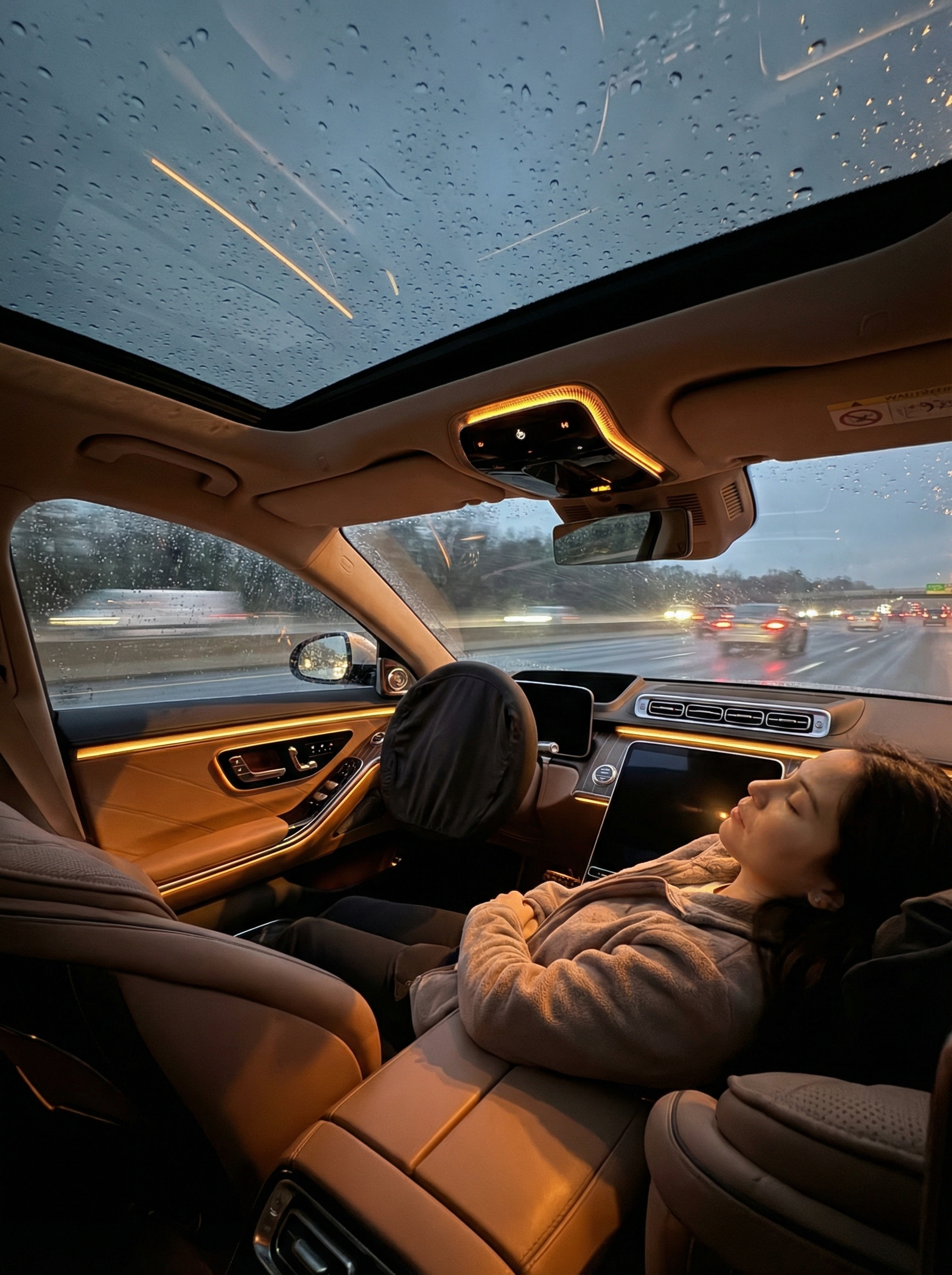
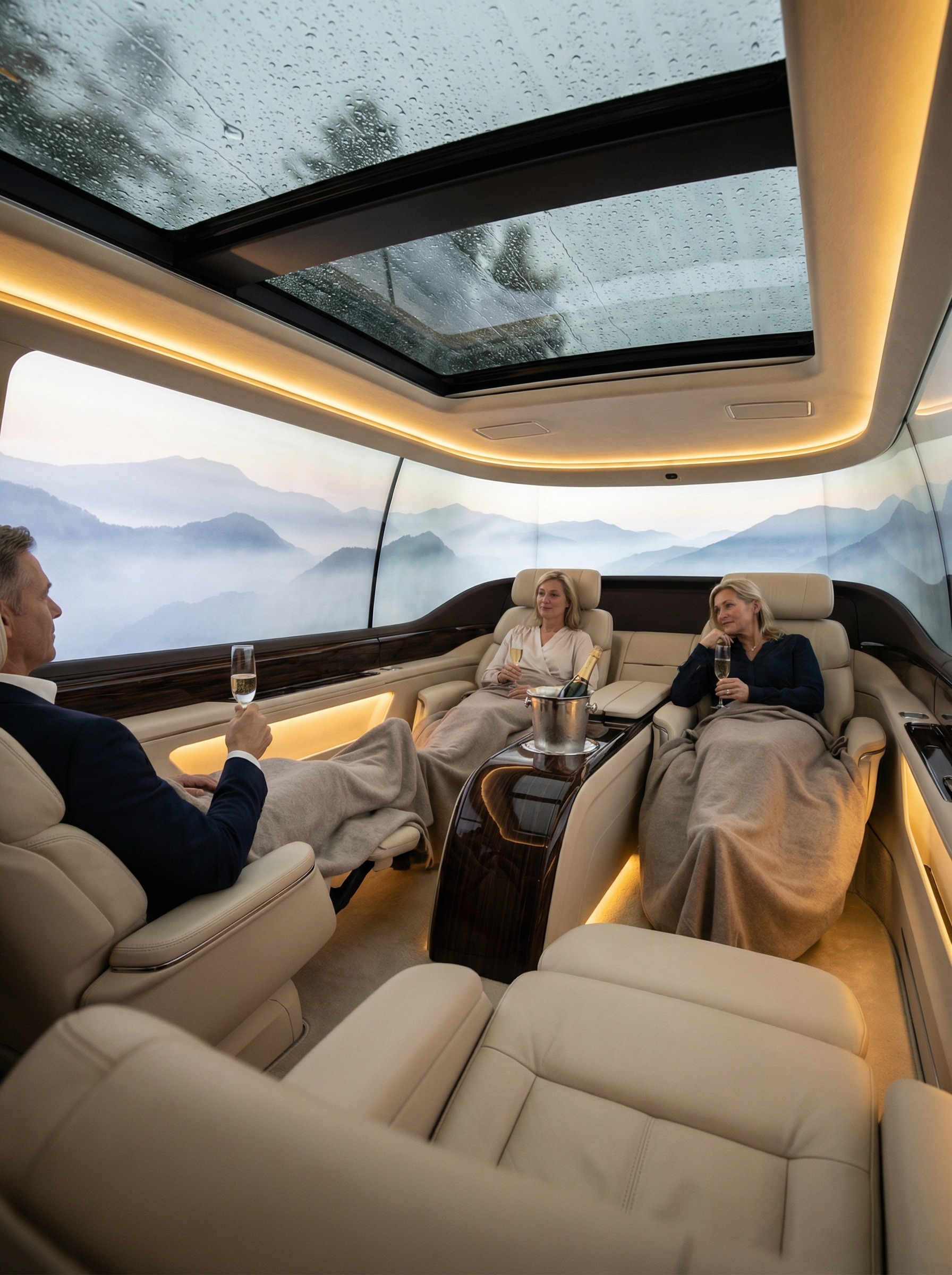
Luxury autonomous vehicle interior lounge no steering wheel 2032
◉ REDESIGNING THE INTERIOR · 2030+
2032
The Vehicle Interior Revolution

When Nobody Is Driving, the Car Becomes Something Entirely New — A Space You Live In, Work In, Sleep In

Every automotive interior since 1886 was built around one assumption: a human must see the road and react in an emergency. Remove that assumption and the entire design space opens. Rolls-Royce, Mercedes, BMW, and emerging luxury EV brands are already building concept interiors on this premise — and they look nothing like cars.

Mercedes Vision EQXX faces seats inward. Rolls-Royce Silent Shadow replaces the dashboard with a full-width display wall. BMW Neue Klasse has no steering wheel in autonomous mode. The premium market is racing to redefine luxury not as a better driving experience but as a better living experience.

The average urban person spends 250+ hours per year in a car. In a fully autonomous vehicle, those 250 hours become productive time, rest time, entertainment time. The value proposition is not how fast it goes — it is what it gives back to you.

THE NEW LUXURY METRICS: Horsepower, handling, 0–60 — irrelevant in an autonomous vehicle. The new metrics are interior space quality, acoustic isolation, air quality, display technology, and reclining comfort. The brands that grasp this first will own the next era of premium automotive. Those that do not will sell commodities in a market defined by someone else.
2035
The Final Word

The Road Has No
More Drivers.

The question was never if autonomous vehicles would arrive. The data, the investment, the regulatory approvals, and the miles already driven have settled that. The only question was when. The answer in 2026 is: sooner than almost anyone predicted, faster than almost any industry has ever transformed. The last human driver will not be celebrated or mourned. They will simply be the last of something the world quietly stopped needing.

#AutonomousVehicles #SelfDrivingCars #FutureTech2035 #LuxuryEV #Waymo #TeslaFSD #NoDriver #FutureOfTransport #AIVehicles #ShareNow
Oops!
It seems there is something wrong with your internet connection. Please connect to the internet and start browsing again.