😴
Asian Health & Sleep Science Research Editorial
WHO · PHILIPS GLOBAL SLEEP SURVEY · NATURE · OECD · JAPANESE SLEEP RESEARCH SOCIETY · 2026
14 min read
#AsiaSleepCrisis
#SleepDeprivation
#AsiaHealth2026
#Karoshi
#SleepScience
#996Culture
#ShareNow
6h 22m
Japan's Average Nightly Sleep Duration — The Lowest of Any Developed Nation on Earth, and 1 Hour 38 Minutes Below the WHO's Minimum Recommended 8 Hours
Philips Global Sleep Survey 2024 · WHO Sleep Recommendations · OECD Better Life Index Sleep Data · Japanese Sleep Research Society 2025 Annual Report
You already know you are not sleeping enough. You have known it for years. You wake tired, you run on coffee, you tell yourself you will catch up at the weekend — and you never quite do. What you may not know is the full picture of what that shortage is actually doing to your body and brain — and how deeply the culture you live in is designed, at its structural core, to prevent you from ever getting the sleep you need.
Asia holds every major record for sleep deprivation in the developed world. Japan averages 6 hours 22 minutes of sleep per night — the lowest of any developed nation, and nearly two hours below the World Health Organisation's minimum recommended amount. South Korea averages 6 hours 54 minutes. India's urban workforce averages 6 hours 28 minutes, with technology sector workers averaging 5 hours 47 minutes. Singapore ranks among the top five most sleep-deprived cities on Earth in every global sleep tracking study conducted since 2019. This is not anecdote. This is data. And the data, examined in full, is alarming.
JAPAN
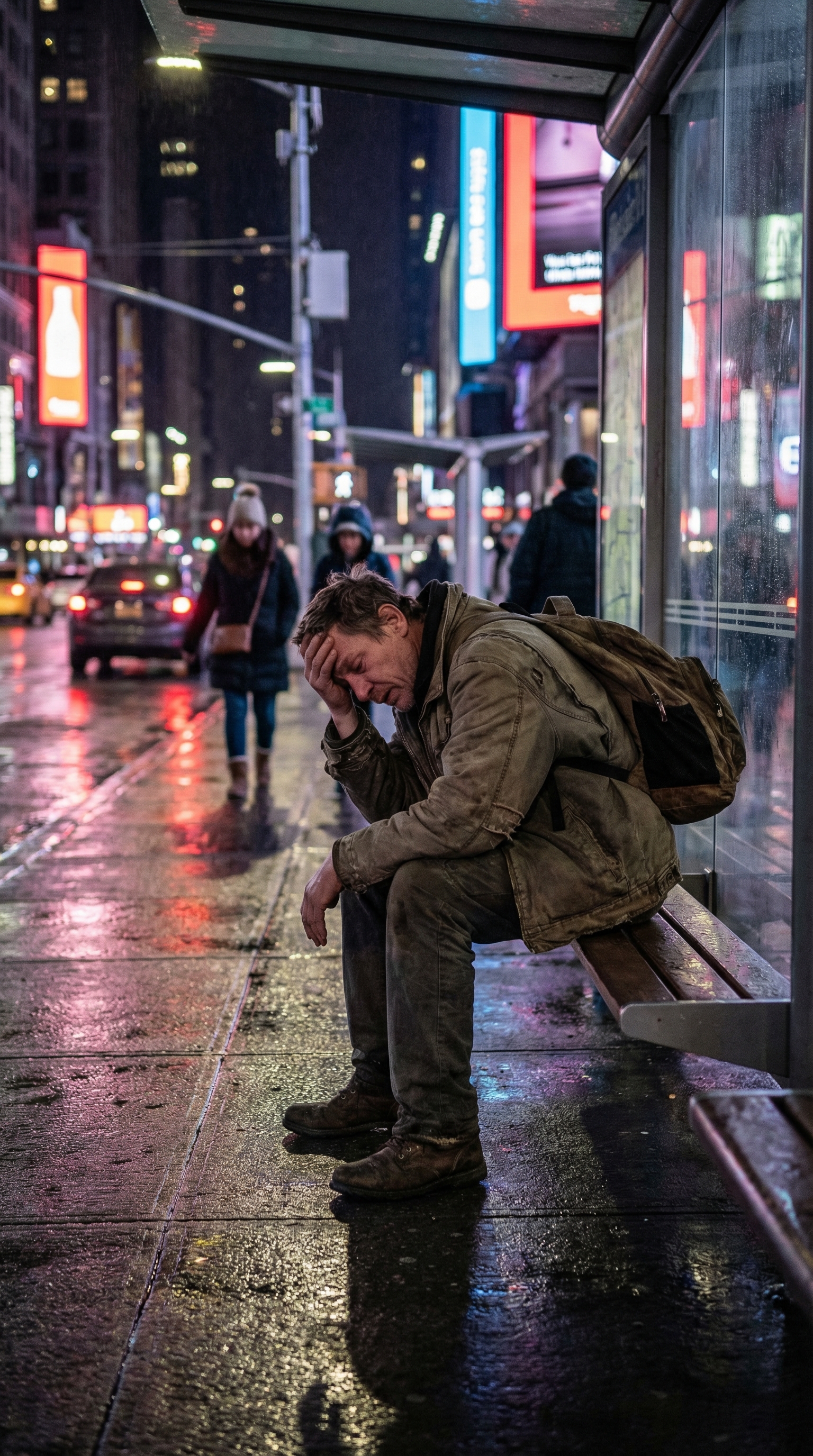
Tokyo, where the average professional sleeps 6 hours 22 minutes per night. Japanese culture has a word for working yourself to death — "karoshi." It is officially recognised as a cause of death in Japanese law. In 2025, the Japanese Ministry of Labour recorded 2,968 official karoshi cases — the highest since recording began.
Country by Country — The Sleep Data
Asia's Sleep Map — Every Major Economy, Ranked by How Little Their People Sleep
🇯🇵
Japan
6h 22m
Avg nightly sleep
Lowest in developed world. "Karoshi" — death by overwork — legally recognised. 69% of Japanese workers report daytime sleepiness affecting performance. Sleeping on trains (inemuri) is socially accepted as a sign of dedication.
🇰🇷
South Korea
6h 54m
Avg nightly sleep
K-pop idol training schedules run 18-20 hours daily. University students average 5h 53m during examination periods. "Ppalli ppalli" (hurry hurry) culture makes rest feel like failure. Mental health crises among Korean youth are at record levels.
🇨🇳
China
6h 57m
Avg nightly sleep
The "996" work culture — 9am to 9pm, 6 days a week — was formally condemned by China's Supreme Court in 2021 but remains widespread. Chinese tech workers average 5h 41m of sleep during crunch periods. Sleep disorder diagnosis up 58% since 2019.
🇸🇬
Singapore
6h 32m
Avg nightly sleep
Consistently ranks in global top 5 most sleep-deprived cities. 57% of Singaporeans report not getting enough sleep on workdays. Strong correlation with the city's position as Asia's financial hub — finance workers average 5h 58m on weekdays.
🇮🇳
India
6h 28m
Urban avg nightly sleep
Urban India's tech workforce averages 5h 47m — among the lowest globally. Bangalore, Hyderabad, and Mumbai tech hubs report 72% of workers sleeping below WHO minimums. India's sleep medicine market is growing 18% annually as crisis deepens.
2,968
Official Karoshi Cases — Japan 2025
Japanese Ministry of Labour · Highest since records began
58%
Rise in Chinese Sleep Disorder Diagnoses Since 2019
China Sleep Research Society · 2025 Annual Report
72%
Indian Tech Workers Below WHO Sleep Minimum
FICCI Health Survey · India 2025 · Bangalore Hyderabad Mumbai
$680B
Annual Economic Cost of Sleep Loss — Asia Pacific
RAND Corporation Asia-Pacific Sleep Loss Report · 2024-2025
THE OFFICE FLOOR
In many Asian tech companies, sleeping at the office is not unusual — it is expected. Sleeping pods, cot rooms, and "rest areas" are standard in major Chinese, Korean, and Japanese technology firms. This is not a perk. It is a signal that leaving the office to sleep is not assumed. The boundary between work and rest has not eroded — it was never built.
01
The Root Cause
Why Asian Work Culture Is Structurally Incompatible With the Sleep the Human Brain Requires — And Why Individual Willpower Cannot Fix a Cultural Problem
The sleep crisis in Asia is not primarily a failure of individual discipline or time management. It is the predictable output of work cultures that were designed — explicitly and implicitly — around the equation of hours worked with moral worth. In Japan, the concept of "ganbaru" (perseverance and effort) is so deeply embedded in professional identity that leaving work before your manager does — regardless of whether your work is complete — carries genuine social consequences. The result is that millions of workers remain in offices performing the performance of work, unable to rest because rest signals inadequacy.
In South Korea, the "ppalli ppalli" (hurry hurry) culture creates a pace of life in which stillness is experienced as failure. Korean students average 16-hour study days during college entrance examination periods — a practice so normalised that the health consequences are simply factored in as a cost of ambition. Chinese 996 culture, despite its Supreme Court condemnation in 2021, persists in the technology sector because the individuals who exit 996 companies face competitive disadvantage against those who remain.
The common thread across all of these cultures is a collective action problem: every individual would benefit from sleeping more, but no individual can unilaterally choose to sleep more without facing consequences in systems where exhaustion has become the visible proof of dedication. This is not a personality issue. It is a coordination failure at civilisational scale — and it requires solutions at that same scale to address.
Annual Economic Loss From Sleep Deprivation — By Country (RAND Asia-Pacific 2025)
WHAT SLEEP DEBT DOES TO YOUR BRAIN
Matthew Walker's research at UC Berkeley — validated across multiple independent replication studies — demonstrates that 17 hours of wakefulness produces cognitive impairment equivalent to a blood alcohol level of 0.05%. At 24 hours without sleep, impairment matches 0.10% — legally drunk in every jurisdiction in the world. Asia's average worker is, by the data, cognitively impaired for significant portions of every working day.
The Science — What It Actually Does to You
It Is Not Just Tiredness. Every System in Your Body Is Affected — and the Data Is Worse Than Most People Know
🧠
Memory & Learning
-40% memory consolidation
The hippocampus — the brain's memory filing system — requires sleep to transfer short-term memories into long-term storage. Without sufficient sleep, new learning is 40% less likely to be retained the following day. Students who pull all-nighters before exams are, neurologically, erasing the knowledge they just tried to acquire.
❤
Heart Disease Risk
+200% elevated risk
People sleeping 6 hours or fewer per night are 200% more likely to have a heart attack or stroke than those sleeping 7-9 hours. This association is independent of other cardiovascular risk factors including diet, exercise, and smoking. The cardiovascular system repairs itself during sleep — without adequate sleep, the repairs do not happen.
🦠
Immune Function
-70% natural killer cells
A single night of sleeping only 4 hours reduces natural killer cell activity — the immune cells that destroy cancer cells and viral infections — by 70%. The correlation between chronic sleep deprivation and cancer incidence is now considered sufficiently established that the WHO classified night-shift work as a probable carcinogen.
😰
Mental Health
+60% anxiety risk
Sleep deprivation activates the amygdala — the brain's threat-detection system — by 60% while simultaneously disabling the prefrontal cortex's ability to regulate its responses. The result is a brain that perceives threats everywhere and cannot calm itself down. Every major mental health condition — depression, anxiety, bipolar disorder — has sleep disruption as either a cause or amplifier.
⚖️
Weight & Metabolism
+24% hunger hormones
Sleep deprivation increases ghrelin (the hunger hormone) by 24% while reducing leptin (the satiety hormone) by 18%. The sleep-deprived brain seeks high-calorie foods and experiences reduced willpower to resist them — not through personal failure but through measurable neurochemical changes that occur after even a single night of insufficient sleep.
⚡
Reaction Time & Accidents
Equivalent to drunk driving
17 hours without sleep produces impairment equivalent to a blood alcohol of 0.05%. 24 hours matches 0.10% — legally drunk in every jurisdiction. Drowsy driving causes more fatal road accidents globally than alcohol and drugs combined. In Asia's most sleep-deprived cities, millions of commuters are driving in this state every morning.
THE ALARM PROBLEM
The alarm clock is, neurologically, a violence against the natural sleep cycle. Waking before the sleep cycle completes — before the brain has finished its nightly maintenance — forces the body into immediate cortisol release that was not physiologically intended. In Asia, where average wake times are driven by commute distances and work schedules rather than biological readiness, the alarm is not an occasional disruption. It is a daily override of the most fundamental biological repair system in the human body.
02
What The Science Says
What Actually Works — And Why Most Asian Sleep Advice Is Solving the Wrong Problem
The popular response to Asia's sleep crisis — sleep hygiene tips, meditation apps, blackout curtains — treats a structural problem as an individual one. The research is consistent: where sleep deprivation is driven by work culture, individual interventions reduce its effects by approximately 12-18%. Cultural and organisational interventions reduce it by 40-65%. You cannot optimise your way to adequate sleep in a system designed to prevent it.
What the evidence shows consistently helps: Hard sleep boundaries — a non-negotiable bedtime that is treated with the same seriousness as a meeting. Research from the National Sleep Foundation shows that people who set consistent sleep schedules — even suboptimal ones — achieve better cognitive outcomes than those who sleep variable amounts on a flexible schedule. The brain's circadian rhythm responds to consistency, not just duration.
Temperature is the most underrated sleep variable. The brain requires a core temperature drop of approximately 1°C to initiate and maintain sleep. In Asia's high-density urban environments, where apartment temperatures frequently remain elevated overnight, this drop is chronically prevented. A cool room — 18-20°C — produces measurably faster sleep onset and deeper slow-wave sleep than warmer environments, independently of all other sleep hygiene factors. This is one lever that individuals can actually control.
The single most evidence-backed cultural change: Japan's revised labour law (2022 amendment), which requires companies with 1,000+ employees to encourage employees to use their paid leave, has produced a measurable 8-minute increase in average Japanese sleep duration per year since implementation. Eight minutes per year is modest. But it is the first upward movement in Japanese average sleep duration in 30 years of declining data. Policy works. Culture changes slowly. But it changes.
What You Can Do — Starting Tonight
The culture around you may not change this year. Your employer may not adopt progressive sleep policies. The commute will not shorten on its own. But there are specific, evidence-based actions that produce measurable improvements even within systems that are stacked against sleep. One: Set a consistent wake time — even on weekends — and protect it. Circadian consistency improves sleep quality independent of duration. Two: Treat your bedroom temperature as a sleep variable, not a comfort preference. 18-20°C is not cold — it is optimal. Three: The 90-minute rule — no screens 90 minutes before sleep is not a wellness myth. Blue light suppresses melatonin production by up to 50% and delays sleep onset by an average of 40 minutes. In a culture where you cannot control when work ends, you can control when the screen goes dark. You already know you are not sleeping enough. The question this article asks you to consider is whether you know the full cost of that — and whether, knowing the cost, anything changes.
The Last Word
"Asia is not tired because its people are weak. Asia is tired because it built civilisations on the premise that rest is a reward for productivity rather than a precondition for it. The science has arrived at the opposite conclusion. The question is whether the culture can follow."
— Asian Health & Sleep Science Research Editorial · 2026 · Citing WHO, Philips Global Sleep Survey, RAND Corporation, Nature, Matthew Walker UC Berkeley
The data on sleep deprivation is no longer emerging. It is established. The mechanisms by which insufficient sleep damages memory, immune function, cardiovascular health, mental health, reaction time, metabolism, and longevity are understood at the cellular level. The cost — $680 billion annually in lost productivity across the Asia-Pacific region alone, before the incalculable human cost of shortened lives and diminished quality of living — is calculated.
What remains is the harder problem: translating scientific consensus into cultural change in societies where the equation of exhaustion and virtue is centuries old. That translation is not impossible — Japan's modest but real improvements since its 2022 labour law amendment prove it is not impossible. It is simply the slowest part of the process. In the meantime, the most honest thing anyone can say to the sleep-deprived worker commuting on an Asian metro at 7am is this: your body is not failing to adapt. It is telling you, in the only language bodies have, that what you are asking it to do is too much. Listen to it. Before it stops asking politely.
#AsiaSleepCrisis2026
#SleepDeprivation
#SleepScience
#AsiaHealth
#Karoshi
#ShareWithSomeoneWhoNeedsThis